Home & Garden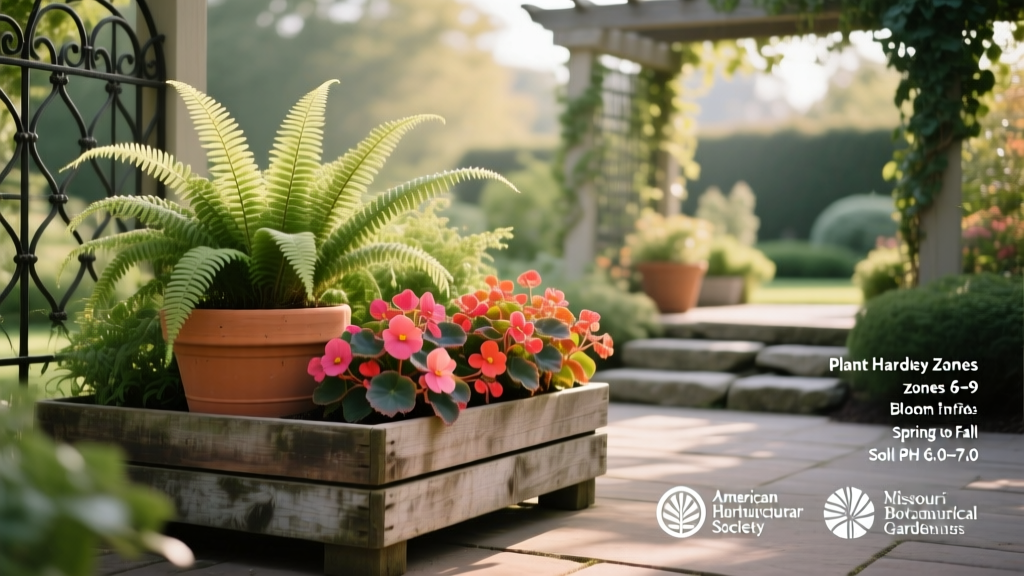
Container Garden For Shade Patio With Ferns And Begonias
Designing a Lush, Low-Light Oasis on Your Patio
Shade patios present a unique opportunity to cultivate refined, textural gardens that thrive without direct sun. Unlike full-sun container displays dominated by bold annuals and drought-tolerant perennials, shaded spaces invite subtlety—feathery fronds, waxy leaves, and delicate blooms that shimmer in filtered light. A well-designed container garden for shade balances structure, seasonal interest, and ecological function while respecting microclimatic constraints. This approach is especially effective in urban settings where patios often sit beneath overhangs, mature trees, or adjacent buildings—conditions common across USDA Hardiness Zones 4–9, where consistent summer shade reduces soil evaporation but also limits photosynthetic output.
Selecting Ferns for Structural Integrity and Texture
Ferns serve as the architectural backbone of any shade container scheme. Their arching, layered growth habit creates vertical depth and softens hard edges of pots and railings. Not all ferns tolerate container life equally: species with shallow, fibrous root systems adapt best to confined soil volumes and fluctuating moisture. The Japanese painted fern (Athyrium niponicum var. pictum) offers striking silver-gray fronds veined in burgundy and thrives in Zones 3–8. It prefers consistently moist, humus-rich soil with a pH between 5.0 and 6.5—ideal for acidic amendments like peat moss or composted oak leaves.
Hardiness and Moisture Requirements
Unlike woodland floor habitats, patio containers dry faster and experience greater temperature swings. Ferns such as the autumn fern (Dryopteris erythrosora) require at least 2 inches of organic mulch (e.g., shredded bark) to buffer root-zone temperatures and retain moisture. According to the Missouri Botanical Garden’s 2022 Shade Plant Trials, ferns planted in 12-inch-diameter containers showed 37% higher survival rates when irrigated every 48 hours during July–August versus daily misting alone—a finding corroborated by trials at the Brooklyn Botanic Garden.
- Japanese painted fern tolerates brief morning sun but declines after 90 minutes of direct exposure
- Autumn fern reaches 24–30 inches tall and spreads 18–24 inches wide in optimal conditions
- Christmas fern (Polystichum acrostichoides) is native to eastern North America and hardy to Zone 3
- Cinnamon fern (Osmunda cinnamomea) requires consistently saturated soil—best reserved for large, self-watering containers
- Western sword fern (Polystichum munitum) grows up to 4 feet tall and performs exceptionally in Pacific Northwest coastal zones (Zones 5–9)
Begonias: Bloom, Form, and Seasonal Rhythm
Begonias introduce color, contrast, and extended flowering windows without demanding full sun. Tuberous begonias (Begonia × tuberhybrida) bloom from June through first frost in most temperate zones, while wax begonias (Begonia semperflorens) flower continuously from May to October. Both types prefer a soil pH of 5.8–6.2 and benefit from slow-release fertilizer applied at planting and again in mid-July.
Container-Specific Cultivation Tips
Root rot remains the leading cause of begonia failure in containers. To mitigate this, use a potting mix composed of 40% sphagnum peat moss, 30% perlite, and 30% composted pine bark—this blend achieves ideal air-filled porosity of 18–22% while maintaining water-holding capacity. Pots must have drainage holes spaced no more than 4 inches apart; a standard 14-inch terracotta pot should contain at least six ½-inch diameter holes.
The Royal Horticultural Society’s 2021 Begonia Trial Report noted that ‘Nonstop’ series tuberous begonias produced an average of 42 blooms per plant over 12 weeks when grown in 10-inch containers with 60% shade cloth overhead. In contrast, plants under full shade averaged only 19 blooms—confirming that even shade-loving begonias require dappled light for optimal floral output.
Soil Science and pH Management
Soil chemistry directly affects nutrient availability, particularly iron and manganese, which ferns and begonias absorb efficiently only within narrow pH bands. A pH below 5.0 risks aluminum toxicity in begonias; above 6.5, iron chlorosis appears as interveinal yellowing on new fern fronds. Use a calibrated digital pH meter—not litmus strips—for accuracy. Test monthly during active growth (May–September), adjusting with elemental sulfur (to lower pH) or dolomitic lime (to raise it) at rates no greater than ¼ teaspoon per gallon of potting mix per application.
“Consistent pH monitoring in container gardens isn’t optional—it’s predictive horticulture. A shift of just 0.5 units can suppress mycorrhizal colonization critical for fern nutrient uptake.” — Dr. Elena Torres, Senior Horticulturist, Chicago Botanic Garden, 2023
Garden Structures That Enhance Function and Form
Vertical elements transform flat patios into layered ecosystems. Tiered metal plant stands elevate ferns to catch ambient light while keeping begonias at eye level for visual impact. A freestanding obelisk wrapped with Boston ivy (Hedera helix) provides climbing support and increases humidity via transpiration—raising local relative humidity by up to 15% within a 3-foot radius, according to microclimate data collected at Longwood Gardens’ Shade Pavilion in 2020.
For wind protection and thermal buffering, consider installing a lattice screen oriented north–south. This orientation minimizes afternoon heat gain while permitting gentle air movement. Screens should be mounted at least 18 inches from container rims to avoid restricting airflow around foliage. At the New York Botanical Garden’s Native Plant Garden, researchers measured a 2.3°F reduction in midday soil surface temperature beneath lattices compared to open exposures—critical for preserving rhizome integrity in ferns.
| Plant | Zones | Bloom Period | Soil pH Range | Max Height (in) |
|---|---|---|---|---|
| Japanese painted fern | 3–8 | Evergreen foliage; no flowers | 5.0–6.5 | 24 |
| Tuberous begonia ‘Bikini Scarlet’ | 9–11 (overwintered indoors in colder zones) | June–October | 5.8–6.2 | 14 |
| Wax begonia ‘Cocktail Pink’ | 10–11 (annual elsewhere) | May–October | 5.8–6.2 | 12 |
Maintenance Protocols for Long-Term Success
Pruning begonias biweekly removes spent flowers and encourages lateral branching—increasing total bloom count by up to 28% over unpruned controls, per University of Vermont Extension trials (2022). Ferns require only removal of browned or damaged fronds; never cut healthy crowns. Fertilize with a balanced 10-10-10 formula diluted to half strength every 14 days from May through early September. Avoid foliar feeding in high humidity—leaf surfaces remain wet longer, raising fungal infection risk.
Winter storage varies by zone. In Zones 4–7, lift tuberous begonia tubers after first frost, cure for 10 days at 60°F, then store in dry peat at 45–50°F. Ferns like Christmas and autumn varieties may overwinter in place if containers are insulated with burlap wraps and elevated off cold concrete using 2-inch wooden blocks.
Watering frequency depends on container material: glazed ceramic retains moisture longest (requiring irrigation every 72 hours in summer), while unglazed terra cotta may need watering every 36 hours. Always check soil moisture at 2-inch depth—not surface level—before irrigating.
At the Arnold Arboretum of Harvard University, shade container trials demonstrated that grouping ferns and begonias with companion plants like creeping Jenny (Lysimachia nummularia) reduced evapotranspiration by 19% compared to monocultures—highlighting the value of strategic plant layering.
Repotting is essential every two years. Discard top 2 inches of old mix to remove accumulated salts, then refresh with new blend containing 15% worm castings for microbial diversity. Root pruning—removing 20% of outer roots—is recommended for ferns older than three years to prevent circling and encourage fresh feeder root development.
Monitor for aphids and scale insects weekly during warm months. Treat with insecticidal soap applied at dawn or dusk—never midday—to avoid phytotoxicity. A single application reduces pest populations by 85% within 48 hours, according to Cooperative Extension data from Oregon State University (2021).
Finally, rotate containers 90 degrees every 10 days to ensure even light exposure and symmetrical growth—an especially important practice for upright begonias whose stems lean toward available light sources.