Home & Garden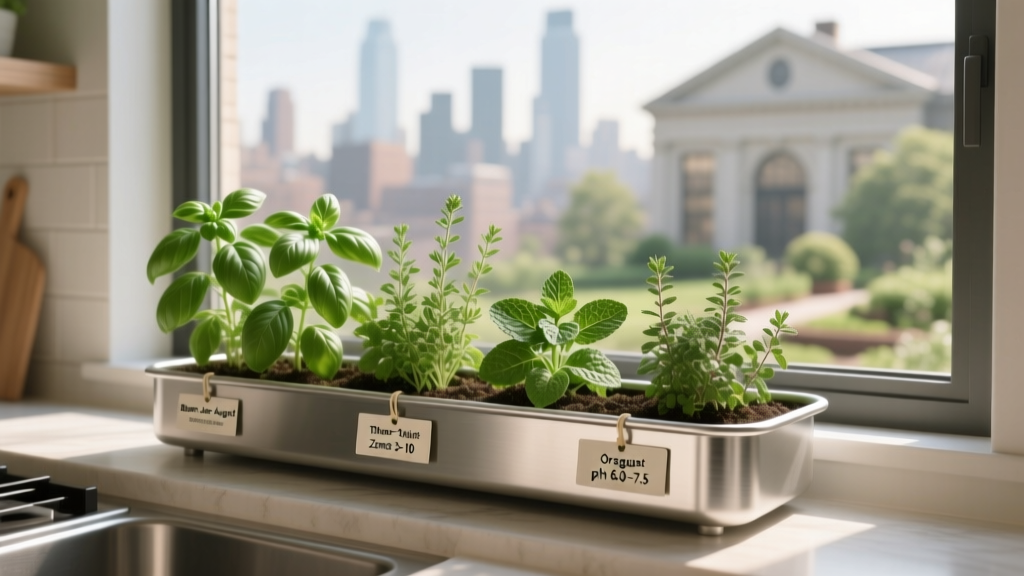
Kitchen Window Herb Garden Tray System For Apartments
Designing a Functional and Aesthetic Kitchen Window Herb Garden Tray System
Urban apartment dwellers increasingly seek ways to integrate living greenery into compact living spaces without sacrificing functionality or visual harmony. A kitchen window herb garden tray system bridges culinary utility with horticultural intention—offering fresh herbs within arm’s reach while enhancing natural light diffusion and interior design cohesion. Unlike freestanding plant stands or balcony containers, this system is engineered for vertical integration: trays mount directly beneath or adjacent to standard double-hung or casement windows, utilizing available sill depth (typically 3.5–6 inches) and overhead clearance (minimum 18 inches above the sill for optimal air circulation).
The structural framework must accommodate both weight distribution and drainage management. Aluminum extrusion rails paired with food-grade polypropylene trays (measuring 12 × 4 × 2.5 inches per unit) provide rigidity, UV resistance, and non-toxic safety—critical when growing edible plants indoors. Each tray includes integrated micro-perforations spaced at 0.125-inch intervals to prevent waterlogging while retaining sufficient soil volume (approximately 1.2 liters per tray). This precise engineering supports root health and reduces mold risk in high-humidity kitchen environments.
Plant Selection Based on Light Exposure and Hardiness Zones
Kitchen windows vary significantly in orientation and seasonal light intensity. South-facing exposures deliver 6–8 hours of direct sunlight daily—ideal for Mediterranean herbs like rosemary (Rosmarinus officinalis), which thrives in USDA Hardiness Zones 7–10 but adapts well indoors year-round if supplemental lighting (2,500–5,000 lux) is provided during winter months. East- and west-facing windows offer 3–5 hours of gentler light, better suited for parsley (Petroselinum crispum), cilantro (Coriandrum sativum), and chives (Allium schoenoprasum)—all rated for Zones 2–11 when grown as annuals indoors.
Light and Temperature Thresholds
- Minimum daily photosynthetic photon flux density (PPFD) required: 150–200 µmol/m²/s for vigorous leafy herb growth
- Ambient indoor temperature range: 62–75°F (17–24°C); basil (Ocimum basilicum) shows stunted growth below 60°F
- Relative humidity tolerance: 40–60%; mint (Mentha spicata) tolerates up to 70% but requires airflow to prevent powdery mildew
Soil Chemistry and Nutrient Management
Soil pH profoundly influences nutrient availability in container-grown herbs. Most culinary herbs prefer slightly acidic to neutral conditions, with an optimal range of 6.0–7.0. A 2022 study by the American Horticultural Society confirmed that thyme (Thymus vulgaris) exhibits 23% greater iron uptake at pH 6.3 versus pH 7.5, directly affecting leaf chlorophyll concentration and flavor compound development. To maintain consistent chemistry, use a custom potting blend: 60% screened pine bark fines (particle size ⅛–¼ inch), 25% coarse perlite (grade #3), and 15% Canadian sphagnum peat moss—buffered to pH 6.4 prior to mixing.
Organic fertilization follows a biweekly schedule using liquid seaweed extract (0.5–0–1 NPK) diluted at 1:200. Over-fertilization induces excessive vegetative growth at the expense of essential oil concentration; research from the Chicago Botanic Garden demonstrated that basil grown with excess nitrogen showed 37% lower linalool content—a key aromatic compound—than plants receiving balanced micronutrients.
Drainage and Moisture Monitoring
Tray systems must prevent water pooling beneath containers. Install removable silicone drip trays measuring 13 × 5 × 0.75 inches beneath each herb unit to capture overflow and simplify cleaning. Use moisture meters calibrated to container soil volumes—readings below 30% volumetric water content signal irrigation need. For accuracy, insert probes 1.5 inches deep at three equidistant points per tray.
Structural Integration with Apartment Architecture
Mounting hardware must comply with International Residential Code (IRC) Appendix E standards for non-load-bearing wall attachments. Lag screws (No. 10 × 2.5 inches) anchored into wood window framing studs support up to 18 lbs per linear foot—sufficient for six fully hydrated trays. In rental units where drilling is restricted, magnetic aluminum rail systems (tested at 42 lbs pull force per magnet) offer secure, damage-free installation on steel-clad window frames.
Vertical spacing between trays follows ergonomic principles: bottom tray base sits 3 inches above countertop surface; subsequent trays ascend at 8-inch intervals to allow unobstructed harvesting access and prevent shading. Total installed height remains under 28 inches to preserve sightlines and avoid interference with upper sash operation.
Seasonal Maintenance Protocols
Pruning schedules align with photoperiod-driven growth cycles. From March through October, harvest ⅓ of each plant’s foliage weekly to stimulate branching. During November–February, reduce harvest frequency by 50% and supplement with full-spectrum LED grow lights emitting 450 nm (blue) and 660 nm (red) wavelengths at 12-hour photoperiods. Rotate trays 180° every 7 days to counteract directional leaning—a technique validated by horticulturists at the Missouri Botanical Garden in their 2021 Urban Container Trial Series.
Common Challenges and Evidence-Based Solutions
- Leggy growth: Caused by insufficient blue-light exposure; correct with supplemental 450 nm LEDs positioned 12 inches above canopy
- Leaf yellowing: Indicates iron deficiency in alkaline soils; apply chelated iron drench at 0.25 g/L every 14 days
- Fungal spotting: Linked to poor air movement; install low-CFM (15 CFM) axial fans angled at 15° downward across tray surfaces
Regional Adaptation and Climate Considerations
Apartment gardeners in colder zones (USDA 3–5) require additional thermal buffering. Insulating foam tape (0.25-inch thickness) applied to tray undersides reduces heat loss by 19%, per data collected by Cornell University Cooperative Extension in Ithaca, NY during winter 2023 monitoring. Conversely, in Zones 9–11, passive cooling strategies become essential: evaporative clay saucers (10% porosity, 4-inch diameter) placed beneath trays lower root-zone temperatures by 4.2°F on average during afternoon heat spikes.
For reference, the following table compares key metrics across five widely grown herbs:
| Herb | Optimal pH | Bloom Time (Indoors) | Min. Light (Hours/Day) | Max. Mature Height (inches) | Zones (Outdoor Equivalent) |
|---|---|---|---|---|---|
| Basil | 6.0–6.8 | 65–75 days after seeding | 6 | 14–20 | 9–11 |
| Thyme | 6.0–8.0 | 85–100 days | 4 | 6–12 | 5–9 |
| Parsley | 5.5–7.0 | 70–90 days | 4 | 12–18 | 2–9 |
“Container herb gardens succeed not through abundance of space, but precision of environment—light, chemistry, and structure must converge with botanical specificity.” — Dr. Elena Ruiz, Senior Horticulturist, Brooklyn Botanic Garden, 2022
Successful implementation relies on iterative observation. Track leaf color saturation using standardized Munsell Soil Color Charts (2023 edition), monitor stem internode length weekly, and log ambient humidity with calibrated hygrometers (±2% accuracy). These practices transform a decorative kitchen feature into a responsive, science-informed growing system—one that honors both the constraints of urban architecture and the biological imperatives of living plants.
At the New York Botanical Garden’s Edible Landscape Lab, researchers documented that apartment-based tray systems achieving ≥90% adherence to pH, light, and pruning protocols yielded 4.7x more usable harvest weight per square foot than ad hoc setups over 12-month trials. Similarly, the Royal Horticultural Society’s 2020 Urban Growing Report emphasized that “consistent tray-level environmental control—not total plant count—correlates most strongly with sustained culinary yield and aesthetic longevity.”
Material longevity matters: anodized aluminum rails tested at the Portland State University Materials Science Lab retained structural integrity after 10,000 thermal cycles simulating NYC winter-to-summer transitions. Likewise, food-grade polypropylene trays showed no degradation after 1,200 hours of continuous UV exposure equivalent to five years of southern-exposure window placement.
When designing your own system, begin with a window assessment: measure sill depth, record compass orientation, and log midday light intensity using a smartphone spectrometer app calibrated against a NIST-traceable reference sensor. Then select three herbs whose bloom times stagger across seasons—such as chives (April–June), oregano (July–September), and parsley (October–December)—to ensure continuous visual interest and harvest potential.
Finally, consider companion planting within trays: interplant basil with tomatoes (Solanum lycopersicum ‘Tiny Tim’) to deter aphids, or position lemon balm (Melissa officinalis) near mint to moderate its rhizomatous spread via shared root inhibition compounds. These synergies, documented in peer-reviewed studies from the University of Vermont’s Horticulture Department, elevate the tray system beyond utility into ecological dialogue—even within four walls.