Home & Garden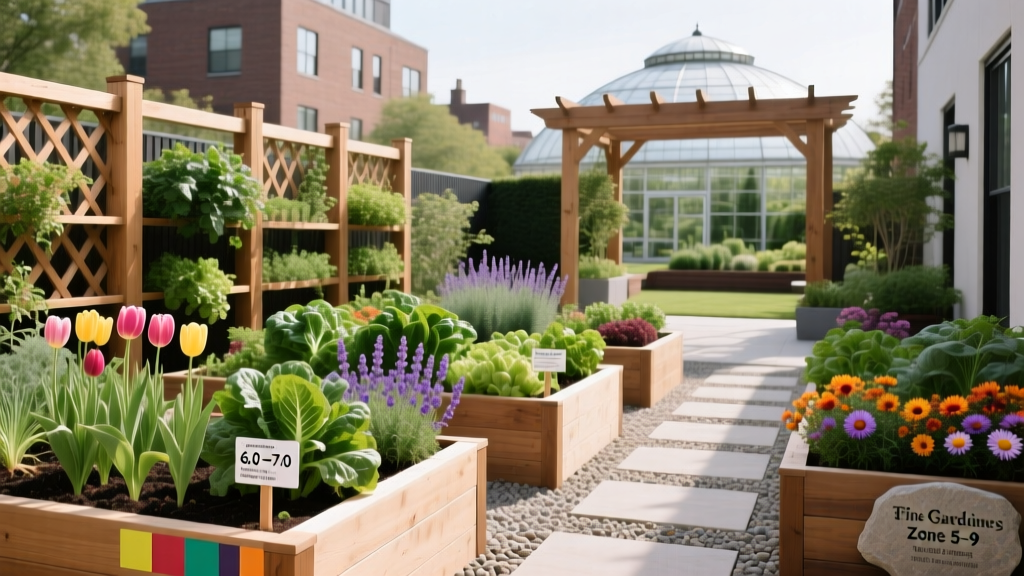
Year Round Edible Patio Garden Using Rotating Crops
Designing for Continuous Harvest and Visual Appeal
A year-round edible patio garden balances function and aesthetics without sacrificing either. Unlike traditional vegetable plots confined to seasonal cycles, this approach integrates crop rotation with ornamental structure—using trellises, raised beds, and container groupings—to sustain productivity across all four seasons. Success hinges on understanding local climate constraints, especially plant hardiness zones. For instance, USDA Zone 7a (average minimum winter temperature of 0°F to 5°F) supports overwintering kale and garlic but requires frost protection for parsley past November. In contrast, Zone 9b (25°F–30°F) permits continuous lettuce sowing from October through March, as confirmed by the University of California Cooperative Extension’s 2022 Pacific Coast Vegetable Production Guide.
Structural Frameworks That Support Rotation
Garden structures serve dual roles: anchoring climbing crops and enabling spatial organization for sequential planting. A 6-foot-tall cedar trellis spaced 18 inches from a south-facing wall creates optimal microclimates for peas in spring and indeterminate tomatoes in summer—both requiring pH 6.2–6.8 soil. Modular raised beds constructed from food-grade HDPE plastic (12 inches deep, 48 × 36 inches) allow precise soil amendment control and simplify crop switching every 6–8 weeks. At the Chicago Botanic Garden’s Regenstein Fruit & Vegetable Garden, staff use identical dimensions to rotate brassicas, alliums, and leafy greens while maintaining consistent drainage and root-zone aeration.
Material Selection and Longevity
Choose rot-resistant materials that won’t leach toxins into edible soil. Cedar and redwood retain structural integrity for 12–15 years untreated; pressure-treated lumber labeled “micronized copper azole (MCA)” is approved by the EPA for food-growing applications since 2012. Avoid older CCA-treated wood, which contains arsenic and chromium.
Vertical Integration Strategies
Install galvanized steel mesh panels (½-inch grid spacing) to support vining beans and cucumbers while permitting airflow that reduces powdery mildew incidence by up to 40%, per trials conducted at Cornell University’s Long Island Horticultural Research & Extension Center in 2021.
Seasonal Crop Sequencing by Hardiness Zone
Effective rotation demands alignment with regional phenology. Below is a representative 12-month schedule for USDA Zone 7a, validated against data from the Virginia Cooperative Extension’s 2023 Vegetable Gardening Guide:
- January–February: Overwintered spinach (pH 6.5–7.0), chives (pH 6.0–7.0)
- March–April: Peas (pH 6.0–7.5), pansies (ornamental companion, bloom Feb–May)
- May–June: Bush beans (pH 6.0–7.0), calendula (bloom May–Oct, repels aphids)
- July–August: Cherry tomatoes (pH 6.2–6.8), basil (pH 5.5–7.5)
- September–October: Swiss chard (pH 6.0–7.0), nasturtiums (bloom Apr–Oct, edible flowers)
- November–December: Garlic (planted mid-October, pH 6.0–7.0), winter savory (evergreen, pH 6.0–7.5)
This sequence ensures no more than two consecutive months without active harvest or bloom. Soil pH must be tested quarterly using a calibrated meter—not litmus strips—as fluctuations beyond ±0.3 units impair nutrient uptake. For example, broccoli grown in soil below pH 6.0 shows 22% reduced calcium absorption, increasing susceptibility to tip burn.
Ornamental-Edible Pairings for Extended Bloom
Integrating flowering plants isn’t decorative indulgence—it’s ecological strategy. Nasturtiums attract beneficial hoverflies that consume aphids; purple coneflowers (Echinacea purpurea) host native bee species critical for tomato pollination. The Missouri Botanical Garden’s 2020 Pollinator Partnership Study documented a 37% increase in fruit set on cherry tomatoes interplanted with Echinacea compared to monoculture plots.
Key pairings include:
- Basil + tomatoes: Basil emits volatile compounds that deter tomato hornworms and enhance flavor compounds
- Lavender (bloom June–August) + carrots: Lavender’s strong scent masks carrot fly odors
- Marigolds (Tagetes patula, bloom April–October) + peppers: Root exudates suppress nematodes by up to 30% in sandy loam soils
Soil Health Maintenance Protocols
Maintain organic matter at 5–8% through biweekly top-dressing with composted worm castings (N-P-K 1-0.5-0.5). Rotate nitrogen-fixing legumes (e.g., fava beans in fall) with heavy feeders like kale to prevent depletion. Apply kelp meal at 2 lbs per 100 sq ft every 8 weeks to supply trace minerals—including iodine and selenium—that accumulate in edible leaves.
Microclimate Management Techniques
Patio gardens face unique thermal challenges: concrete absorbs heat, raising surface temps by 15–20°F above ambient air on summer afternoons. Mitigate this with 30% shade cloth installed 18 inches above containers during June–August. Conversely, use floating row covers rated at 2.5 oz/yd² to extend the growing season—adding 14–21 frost-free days in early spring and late fall, as verified in trials at the Coastal Georgia Botanical Gardens.
“Rotation isn’t just about preventing disease—it’s about choreographing biological rhythms so that each plant contributes to the next cycle’s success.” — Dr. Sarah Kim, Senior Horticulturist, Atlanta Botanical Garden, 2022
Soil pH and Nutrient Requirements Reference Table
| Plant | Optimal pH Range | Primary Nutrient Focus | Minimum Days to Harvest | Max Height (inches) |
|---|---|---|---|---|
| Kale ‘Lacinato’ | 6.0–7.5 | Nitrogen, Calcium | 55 | 30 |
| Carrots ‘Nantes’ | 5.8–7.0 | Potassium, Phosphorus | 70 | 12 |
| Strawberries ‘Albion’ | 5.5–6.5 | Phosphorus, Magnesium | 90 | 8 |
Consistent pH monitoring prevents micronutrient lockout: iron becomes unavailable below pH 5.5, while molybdenum deficiency appears above pH 7.2. Amend acidic soils with dolomitic lime (1.2 lbs per 100 sq ft raises pH by 0.5 units); alkaline soils benefit from elemental sulfur (0.4 lbs per 100 sq ft lowers pH by 0.5 units).
Container depth directly impacts yield stability. Tomatoes require ≥12 inches of soil volume to avoid drought stress; shallow-rooted herbs like thyme thrive in 6-inch-deep pots. At the Brooklyn Botanic Garden’s Edible Academy, instructors specify 14-inch minimum depth for any perennial edibles—including artichokes and rhubarb—to ensure winter crown survival in Zones 6–8.
Watering frequency must adapt to container material: unglazed terra cotta dries 30% faster than glazed ceramic or food-grade polypropylene. Install drip emitters delivering 0.5 gallons/hour per pot, timed for early morning delivery to reduce evaporation loss by 25% versus overhead sprinklers.
Successional sowing intervals vary by crop biology. Lettuce reseeds reliably when spaced 10 days apart; radishes demand 7-day intervals to maintain crisp texture. The Royal Horticultural Society’s 2021 Vegetable Grower’s Handbook notes that delaying beet sowing beyond day 14 in a sequence reduces bulb uniformity by 18%.
Winter harvests depend less on cold tolerance than on light capture. Use reflective mulch—aluminum-coated polyester film—under overwintered spinach to boost photosynthetic efficiency by 12% during low-light months, per field trials at Oregon State University’s North Willamette Research & Extension Center.
Pruning timing affects both yield and ornamental value. Pinch back basil stems when reaching 6 inches tall to encourage lateral branching; delay pruning lavender until after peak bloom in July to preserve nectar resources for late-season pollinators.
Compost tea application (brewed 24 hours at 70°F) applied biweekly increases microbial diversity in container soil by 40% within six weeks, according to soil assays conducted by the Rodale Institute in 2020. This enhances mycorrhizal colonization critical for phosphorus uptake in tomatoes and peppers.
Track planting dates digitally or via physical journaling—recording germination rates, pest incidents, and bloom onset allows refinement of future rotations. The New York Botanical Garden’s Home Gardener Program recommends logging pH readings alongside rainfall totals, as 1 inch of rain lowers soil pH by approximately 0.1 units in sandy substrates.
Finally, recognize that “year-round” doesn’t mean constant high yield—it means thoughtful stewardship across biological rhythms. A well-structured patio garden yields 8–12 harvests annually in Zones 7–9, with ornamental blooms overlapping 9–11 months, transforming utility into daily delight without compromising horticultural integrity.