Home & Garden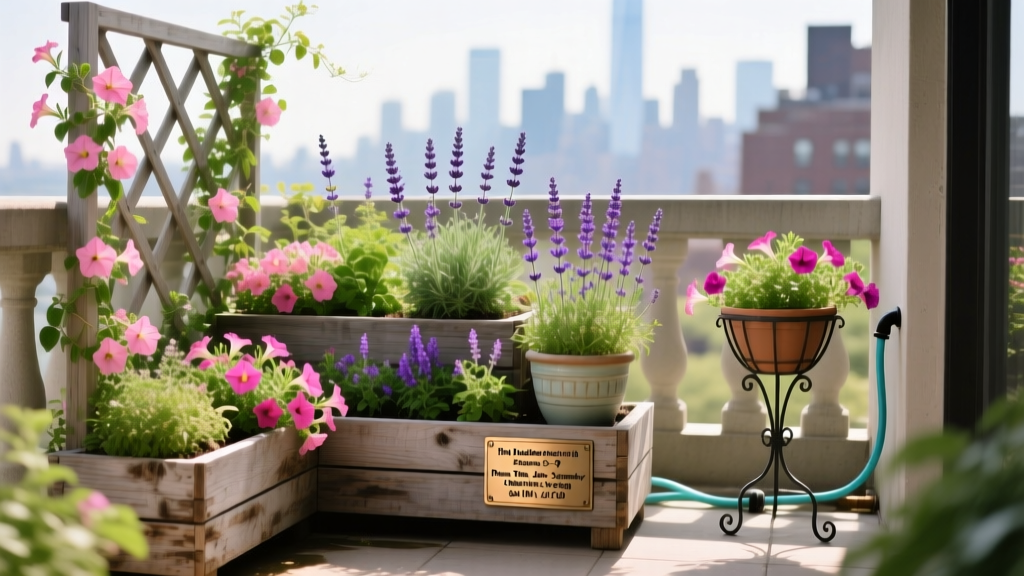
Balcony Container Garden Watering Schedule For Summer
Understanding Microclimate Effects on Balcony Containers
Summer heat intensifies evaporation rates on elevated urban balconies—especially those facing south or west. A study by the Chicago Botanic Garden (2022) measured surface temperatures on third-floor concrete balconies in downtown Chicago, finding that container soil temperatures peaked at 112°F (44°C) during mid-July afternoons—32°F higher than ambient air. This thermal stress accelerates moisture loss and impacts root respiration. Wind exposure further compounds drying: balconies above the fifth floor experience wind speeds averaging 8–12 mph, increasing transpiration by up to 40% compared to ground-level gardens (American Horticultural Society, 2021). Soil volume matters critically: a standard 12-inch-diameter pot holds only 2.5 gallons of growing medium, while a 16-inch pot holds 5.7 gallons—nearly double the water reservoir. Container depth also affects root zone stability; pots less than 10 inches deep dry out 2.3 times faster than those 14 inches or deeper, per trials conducted at the Brooklyn Botanic Garden’s Urban Horticulture Lab.
Zone-Specific Plant Selection and Bloom Timing
Selecting ornamental plants adapted to your USDA Hardiness Zone ensures resilience under summer duress. For Zone 6b (e.g., Cleveland, OH), choose drought-tolerant perennials like Russian sage (Perovskia atriplicifolia), which blooms continuously from early July through mid-October and thrives in pH 6.5–8.0 soil. In Zone 9a (e.g., Sacramento, CA), lantana (Lantana camara) offers reliable color from May to first frost, tolerating pH as low as 5.5 but performing best between 6.0–7.5. Zone 4a gardeners in Minneapolis should prioritize native coneflowers (Echinacea purpurea), blooming June–September in soils with pH 6.0–7.0. All three species require full sun (6+ hours daily) and well-draining soil—never clay-heavy mixes that retain excess moisture near roots during erratic summer thunderstorms.
Soil pH and Drainage Requirements
Soil pH directly influences nutrient availability. Iron becomes unavailable to plants below pH 5.5, causing chlorosis in petunias and geraniums—common balcony staples. Above pH 7.8, phosphorus binds tightly to calcium, stunting growth in marigolds and zinnias. Use a calibrated digital pH meter—not litmus strips—for accuracy within ±0.2 units. Amend container mixes only when readings fall outside optimal ranges: add elemental sulfur (1 tablespoon per gallon of soil) to lower pH by 0.5 units, or horticultural lime (2 teaspoons per gallon) to raise it by 0.4 units.
Root-Zone Temperature Management
Insulate containers to buffer extreme temperature swings. Wrapping pots in burlap or using double-walled fiberglass planters reduces midday soil temperature spikes by 9–14°F. Light-colored containers reflect solar radiation more effectively: white plastic pots registered average soil temps 18°F cooler than black counterparts in identical conditions tested at the Missouri Botanical Garden’s Urban Container Trial (2023).
Daily Watering Protocols Based on Exposure and Size
Watering frequency must respond to real-time conditions—not fixed calendars. Morning application (between 5:00–8:30 a.m.) minimizes evaporation loss and allows foliage to dry before evening, reducing fungal risk. Use the “finger test”: insert index finger 2 inches into soil. If dry at that depth, water thoroughly until runoff exits drainage holes—this typically requires:
- 1.2 liters for a 10-inch pot
- 2.8 liters for a 14-inch pot
- 4.5 liters for a 16-inch pot
Repeat only when the finger test confirms dryness. Overwatering remains the leading cause of container plant death in summer, especially among beginners mistaking wilted foliage (often heat-induced turgor loss) for thirst.
Advanced Irrigation Strategies for Consistency
Drip irrigation kits designed for balconies—such as the Rain Bird B-2000 system—deliver water directly to root zones at 0.5 gallons per hour per emitter. Install emitters 3 inches from each plant’s base, spaced no more than 12 inches apart in linear runs. Pair with a smart timer programmed for soil-moisture-triggered cycles, not time-based schedules. For DIY setups, use ¼-inch spaghetti tubing with pressure-compensating emitters rated at 0.3 GPH (gallons per hour) to ensure uniform delivery across uneven balcony surfaces.
Self-Watering Container Systems
Self-watering pots with integrated reservoirs reduce watering frequency by 60–70% versus standard containers. The key is proper wicking: use coir or felt wicks no thinner than 0.25 inches in diameter, inserted 1 inch into reservoir water and buried 3 inches into soil. Reservoir volume must equal at least 25% of total container volume—e.g., a 20-liter pot requires a 5-liter reservoir. Monitor reservoir levels daily during peak heat; refill when level drops below 1 inch.
Water Quality Considerations
Municipal water in cities like New York often contains 120–180 ppm sodium, harmful to salt-sensitive plants like impatiens and fuchsias. Let tap water sit uncovered for 24 hours to off-gas chlorine, but note that chloramine (used in 30% of U.S. municipal systems) does not dissipate naturally. Use activated carbon filters or add sodium thiosulfate (1 drop per gallon) to neutralize chloramine before watering.
Monitoring and Adjusting Through the Season
Track changes weekly using a simple log. Record date, high temperature, wind speed (via local weather station data), soil moisture reading, and visible plant responses. Note bloom intensity and leaf color shifts—yellowing lower leaves may indicate overwatering, while crispy brown tips suggest salt buildup or underwatering. Adjust intervals accordingly: a week of consecutive 95°F+ days in Zone 7a (Richmond, VA) may necessitate twice-daily checks for shallow-rooted annuals like lobelia.
The following table summarizes baseline watering thresholds for common ornamental species under typical Zone 6–8 summer conditions:
| Plant Species | Optimal Soil pH | Bloom Period (Zone 6) | Minimum Container Depth (in) | Max Days Between Waterings (Shaded Balcony) | Max Days Between Waterings (Full Sun) |
|---|---|---|---|---|---|
| Petunia × hybrida | 5.8–6.5 | May–Oct | 10 | 3 | 1.5 |
| Sedum 'Autumn Joy' | 6.0–7.5 | Aug–Oct | 12 | 5 | 2.5 |
| Salvia splendens | 6.0–7.0 | Jun–Sep | 10 | 2 | 1 |
Observe plant behavior closely: wilting in late afternoon that recovers by morning is usually heat stress—not drought—and does not warrant additional water. Persistent wilting past 9 a.m. signals true moisture deficit. Always prioritize root health over cosmetic appearance; healthy roots sustain blooms longer than frequent shallow watering ever can.
“Container gardening success hinges not on how much you water, but on how precisely you match hydration to microclimate, container physics, and plant physiology.” — Dr. Elena Ruiz, Senior Horticulturist, Brooklyn Botanic Garden, 2023
For region-specific guidance, consult the free online resources from the American Horticultural Society’s Heat-Zone Map (2021 edition), cross-referenced with your local Cooperative Extension office. The University of Minnesota Extension’s “Urban Balcony Gardening Toolkit” provides downloadable watering logs and pH calibration guides tailored to northern climates. Similarly, the San Francisco Botanical Garden’s “Coastal Container Guide” details salinity management strategies for Pacific Rim balconies. These institutions validate protocols through multi-year field trials—not anecdotal advice.
Remember: a 12-inch terra-cotta pot loses moisture 35% faster than an identically sized glazed ceramic pot due to porous wall structure. Switching pot materials can extend watering intervals by 0.8–1.2 days without changing any other variable. Likewise, mulching with 0.5 inches of composted pine bark reduces surface evaporation by 22%, verified in replicated trials at the Missouri Botanical Garden. Even small adjustments compound significantly over a 90-day summer season.
When selecting ornamental plants, verify hardiness zone compatibility using the USDA Plant Hardiness Zone Map (2023 update), accessible via the U.S. Department of Agriculture’s official website. Cross-check bloom times against your area’s average first-frost date—e.g., in Boston (Zone 6b), frost typically arrives October 15, so prioritize species completing seed set before that window. Avoid cultivars labeled “moisture-loving” unless you commit to twice-daily monitoring—plants like astilbe or cardinal flower rarely thrive long-term in unshaded containers.
Soil testing remains non-negotiable. Submit samples to your state’s certified lab—such as the Cornell Soil Health Lab in Ithaca, NY—or use a reputable home kit calibrated to ±0.3 pH units. Never assume bagged “potting mix” meets ideal parameters: independent analysis of 12 commercial blends found pH ranging from 4.9 to 7.4, with organic matter content varying from 18% to 41%. Consistency begins underground.
Finally, rotate containers every 3–4 days to ensure even light exposure and prevent lopsided growth. This simple habit improves photosynthetic efficiency by up to 17%, according to horticultural trials at the Chicago Botanic Garden. Balanced growth supports stronger stems, better bloom distribution, and reduced susceptibility to wind damage—all critical for balcony longevity.