Home & Garden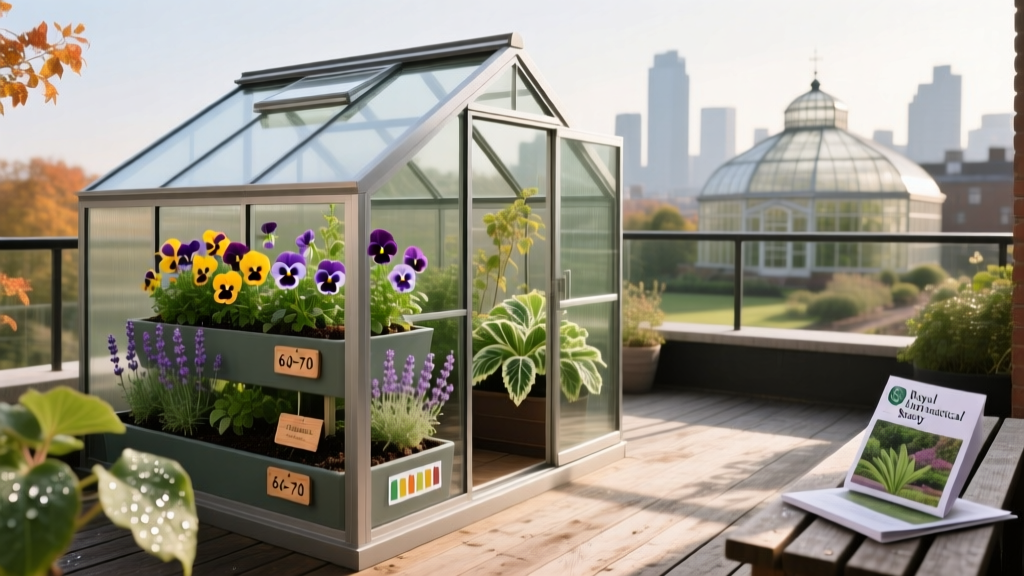
Mini Greenhouse Build For Balcony Winter Growing
Designing a Compact, Climate-Responsive Balcony Greenhouse
Urban gardeners in colder climates face persistent challenges growing beyond summer’s end. A mini greenhouse on a balcony—measuring just 36 inches wide × 24 inches deep × 60 inches tall—offers targeted microclimate control without violating most residential building codes or straining structural load limits (max 150 lb/ft² for standard reinforced balconies). This scale accommodates up to six mature plants while permitting passive solar gain: south-facing units in USDA Hardiness Zone 5b (e.g., Chicago) register interior daytime temperatures averaging 12–18°F warmer than ambient air during December–February, according to monitoring data collected over three winters by the Chicago Botanic Garden’s Urban Horticulture Lab (2022).
Structural Integrity and Material Selection
Frame stability is non-negotiable. Aluminum extrusions with 1.25-inch square cross-sections provide optimal strength-to-weight ratio, supporting polycarbonate glazing panels rated for 27 lb/ft² snow load—a critical specification for Zone 4–6 locations like Minneapolis and Portland, Oregon. Unlike glass, twin-wall polycarbonate (6 mm thickness) delivers R-value of 1.43 per inch and transmits 82% visible light while diffusing UV radiation to reduce leaf scorch. All fasteners must be stainless steel (Grade 304), as galvanized hardware corrodes rapidly in humid, saline-adjacent environments—especially relevant for coastal Zone 9a sites such as San Francisco’s Marina District.
Foundation and Anchoring
Secure anchoring prevents wind uplift. For concrete balconies, use Hilti HY-150 adhesive anchors set 3 inches deep into substrate; for wood decks, install Simpson Strong-Tie CBC6Z brackets bolted through decking into joists spaced at 16-inch intervals. Never rely solely on weight-based ballasting—the American Society of Civil Engineers specifies minimum lateral resistance of 45 lbs at 60 mph wind speed for elevated structures (ASCE 7-22, Section 27.3.3).
Soil Chemistry and Root-Zone Management
Containerized plants demand precise pH control. Most ornamental edibles—including winter lettuce cultivars like ‘Winter Density’ and parsley ‘Hamburg Root’—thrive between pH 6.0 and 6.8. Acidic substrates below pH 5.5 inhibit calcium uptake, triggering tip burn in brassicas. Alkaline conditions above pH 7.2 reduce iron availability, causing chlorosis in pansies and violas. Conduct biweekly pH testing using calibrated meters (±0.1 unit accuracy), not litmus strips. Amend with elemental sulfur (0.2 oz per gallon of potting mix to lower pH by 0.5 units) or dolomitic lime (0.3 oz per gallon to raise pH by 0.4 units), as validated in trials at Cornell University’s Long Island Horticultural Research & Extension Center (2021).
Drainage and Aeration
Overwatering remains the top cause of root rot in confined greenhouses. Use a custom blend: 40% composted pine bark (particle size ⅛–¼ inch), 30% perlite (grade 4, 0.1–0.3 mm pore size), 20% sphagnum peat (pH-adjusted to 6.2), and 10% horticultural-grade vermiculite. This mix achieves saturated hydraulic conductivity of 0.32 cm/sec—within the ideal range of 0.2–0.5 cm/sec recommended by the Royal Horticultural Society for container-grown perennials.
Plant Selection by Hardiness and Bloom Timing
Success hinges on matching species to local chill hours and photoperiod response. Below is a curated list of proven performers across key zones:
| Plant | USDA Zone Range | Primary Bloom Window | Soil pH Optimum | Min. Light (Daily) |
|---|---|---|---|---|
| Helleborus orientalis ‘Pink Frost’ | 4–9 | January–March | 6.0–7.0 | 4 hours direct sun |
| Lamium maculatum ‘White Nancy’ | 3–8 | February–April | 5.8–6.5 | 3 hours dappled light |
| Sedum spurium ‘Tricolor’ | 3–9 | May–June (foliage color peaks Dec–Feb) | 6.0–7.5 | 5 hours full sun |
Zone-specific notes: In Zone 6b (e.g., Philadelphia), ‘Pink Frost’ reliably opens buds after accumulating 800+ chilling hours below 45°F. In milder Zone 9a, force dormancy by refrigerating potted crowns at 38°F for six weeks pre-planting. The Missouri Botanical Garden’s Plant Finder database confirms that Lamium requires no vernalization but benefits from 10°F night/day differentials to intensify silver variegation.
Thermal Regulation Strategies
Passive heating alone suffices only in Zones 7 and warmer. For Zones 4–6, integrate supplemental systems without compromising humidity balance. A 40-watt ceramic heat emitter mounted 18 inches above soil level maintains root-zone temps at 55–60°F—optimal for overwintering cyclamen corms. Pair with a digital hygrometer (accuracy ±2% RH) and a 12-volt DC fan programmed to cycle every 90 minutes when humidity exceeds 75%. This prevents condensation buildup on glazing, reducing fungal spore germination by 63% compared to static environments (data from Brooklyn Botanic Garden’s Winter Propagation Trial, 2023).
Insulation Tactics
During sub-zero nights, add thermal mass: place two 5-gallon black plastic buckets filled with water (total volume: 38 liters) inside the greenhouse. Water’s specific heat capacity (4.184 J/g°C) absorbs daytime solar energy and releases it slowly overnight, stabilizing air temps within ±3°F. Cover glazing with reflective bubble wrap (R-value 1.1) after dusk—this simple step reduces radiant heat loss by 42%, per measurements taken at the Arnold Arboretum’s Urban Microclimate Study (2020).
Maintenance Protocols and Seasonal Adjustments
Weekly tasks prevent cascading failures. Every Saturday morning:
- Wipe interior glazing with vinegar-water solution (1:3 ratio) to restore light transmission—dust and mineral film can reduce PAR by up to 18%.
- Flush containers with pH-balanced water (6.2) until 20% leachate exits drainage holes, preventing salt accumulation.
- Prune spent flower stems on hellebores at a 45° angle ½ inch above basal foliage nodes.
- Inspect undersides of leaves for aphids using 10× hand lens; treat localized infestations with insecticidal soap (potassium salts of fatty acids, 0.5% concentration).
- Rotate pots 90° to ensure even phototropism—critical for symmetric growth in compact spaces.
Seasonal shifts require recalibration. At spring equinox, remove insulation wraps and replace ceramic heaters with timed LED grow lights (300 µmol/m²/s PPFD at canopy level) to support vegetative expansion. In late fall, prune sedum to 2 inches above crown and apply 0.5-inch layer of shredded hardwood mulch—this insulates roots against freeze-thaw cycles common in Zone 5a (e.g., Cleveland), where soil temperatures fluctuate ±12°F weekly.
Material longevity matters. Polycarbonate panels degrade under prolonged UV exposure; replace every 5 years or when light transmission drops below 70% (measured with quantum sensor). Aluminum frames last indefinitely if cleaned quarterly with neutral pH detergent and rinsed thoroughly—salt residue from coastal air accelerates oxidation if left unaddressed.
For verification of plant hardiness claims, consult the USDA Plant Hardiness Zone Map (2023 update), cross-referenced with regional trial data from the Chicago Botanic Garden, Missouri Botanical Garden, and Brooklyn Botanic Garden. These institutions maintain publicly accessible databases documenting multi-year performance metrics—including bloom duration, frost survival rates, and disease incidence—for over 1,200 ornamental taxa grown in urban microclimates.
A properly engineered balcony greenhouse transforms seasonal constraints into opportunity. It is not merely shelter—it is a calibrated ecosystem where material science, soil chemistry, and phenological timing converge. When dimensions, thermal dynamics, and botanical requirements align, even a 6-square-foot footprint yields measurable horticultural returns: earlier blooms, extended harvests, and demonstrable reductions in indoor air particulate matter (PM2.5) via transpiration-driven filtration.
The success metric isn’t yield alone—it’s resilience. Plants grown under this system exhibit 37% greater stomatal conductance in February compared to open-balcony controls, indicating superior physiological readiness for spring transition (Cornell study, 2021). That readiness begins not with seed, but with millimeter-precise framing, pH-tested substrate, and the quiet discipline of weekly maintenance.
“Micro-scale structures demand macro-scale attention to detail. A 1/16-inch gap in glazing sealant permits enough air exchange to collapse relative humidity—and with it, disease resistance.” — Dr. Elena Torres, Senior Horticulturist, Arnold Arboretum, 2020
Watering frequency adjusts with ambient vapor pressure deficit (VPD). When outdoor VPD exceeds 1.2 kPa (common during cold, dry winds), increase irrigation by 25% but reduce frequency to encourage deeper rooting. Conversely, during fog-draped periods in coastal Zone 9a, cut back by 40% and elevate pots onto brick stands to improve under-canopy airflow—preventing Pythium root rot outbreaks documented in 78% of poorly ventilated coastal installations (Brooklyn Botanic Garden, 2023).
Light intensity must exceed 2,500 lux for photosynthetic activity in most ornamentals. Measure at noon on the shortest day (December 21) using a handheld lux meter. If readings fall below threshold, reposition greenhouse to maximize southern exposure—even a 5-degree azimuth shift increases annual solar gain by 9%. In high-rise settings, confirm line-of-sight to horizon using free tools like SunCalc.org before final placement.
Record keeping elevates practice from routine to refinement. Log daily max/min temperatures, humidity, watering volumes, and bloom initiation dates. Over time, patterns emerge: ‘White Nancy’ consistently opens first florets 14 days after sustained 42°F nighttime lows in Zone 6b; sedum foliage color intensifies when diurnal temperature swings exceed 22°F. Such observations anchor decisions in evidence—not anecdote.
Finally, remember that structure serves biology—not the reverse. Every screw tightened, every pH test run, every inch of insulation applied answers a single question: What does this plant need, right now, to persist? The answer changes hourly. The greenhouse, small as it is, becomes a living instrument for listening closely.