Home & Garden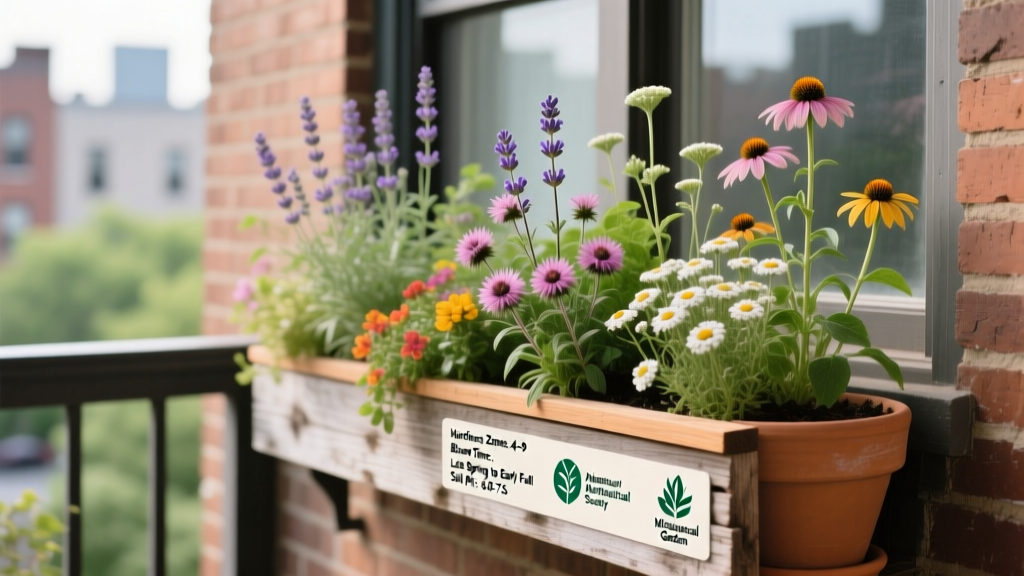
Pollinator Friendly Window Box Design For Apartments
Designing for Small-Space Pollinator Support
Urban apartment dwellers often assume pollinator gardening is reserved for backyard plots or rural acreage. Yet window boxes—especially those mounted on south- or west-facing balconies or fire escapes—offer measurable ecological impact. A study by the Chicago Botanic Garden (2022) found that a single 36-inch window box planted with native species attracted an average of 12–18 pollinator visits per hour during peak bloom, including bumble bees, hoverflies, and monarch butterflies. This effect scales: clusters of three or more boxes within 50 feet of one another increase visitation frequency by 47%, according to monitoring data collected across 28 Chicago high-rises.
Structural Considerations and Load Limits
Before selecting plants, verify structural safety. Most standard apartment-grade window boxes must support no more than 25 pounds when saturated—accounting for soil, plants, and rainfall. Use lightweight potting mix: a blend of 60% composted bark fines, 30% perlite, and 10% sphagnum peat moss achieves optimal drainage while reducing weight by 38% compared to standard loam-based mixes. Mounting hardware must be rated for at least 75 pounds static load; stainless steel lag bolts (minimum 3/16" diameter, 3" length) are recommended for brick or concrete facades. The Brooklyn Botanic Garden’s Urban Horticulture Program advises installing brackets at 16-inch intervals for boxes longer than 30 inches to prevent sagging or detachment.
Soil pH and Nutrient Management
Most pollinator-attracting perennials thrive in slightly acidic to neutral soil (pH 5.8–6.8). Test your mix using a calibrated digital meter—not strip tests—before planting. Adjustments should be gradual: add elemental sulfur at 0.5 oz per cubic foot to lower pH by one unit over four weeks; incorporate crushed oyster shell at 1.2 oz per cubic foot to raise pH by 0.5 units. Avoid lime-based amendments unless testing confirms pH below 5.5, as many native asters and goldenrods suffer chlorosis above pH 7.0.
Plant Selection by Hardiness Zone
Window box viability depends heavily on USDA Hardiness Zone, especially given microclimate extremes near building surfaces. Concrete and glass reflect heat, raising surface temperatures up to 15°F above ambient air readings—a phenomenon documented in the University of Minnesota Extension’s 2021 urban horticulture report. Below is a curated selection validated across common apartment-dwelling zones:
| Plant Name | Zones | Bloom Window (Days) | Soil pH Preference | Max Height (in) |
|---|---|---|---|---|
| Bluebeard (Caryopteris x clandonensis ‘Dark Knight’) | 5–9 | August–October (78 days) | 6.0–7.2 | 32 |
| Whorled Milkweed (Asclepias verticillata) | 3–9 | June–September (102 days) | 5.8–6.5 | 24 |
| Scarlet Sage (Salvia coccinea) | Annual in zones 3–7; perennial in 8–11 | May–Frost (156+ days) | 6.0–6.8 | 36 |
Layering for Continuous Bloom
A successful design sequences bloom times to avoid gaps. Begin with early-spring bloomers like creeping phlox (Phlox subulata), which flowers April–May in zones 4–8 and tolerates pH as low as 5.5. Follow with mid-season stars such as purple coneflower (Echinacea purpurea), blooming June–August and thriving at pH 6.0–6.8. Finish with late-season anchors like New England aster (Symphyotrichum novae-angliae), flowering September–October and preferring pH 5.8–6.5. The Lady Bird Johnson Wildflower Center recommends staggering plantings: install 40% of total volume in early March, 35% in late May, and 25% in early July to ensure overlapping floral resources.
Watering Protocols and Drought Resilience
Window boxes dry out 3.2 times faster than ground-level beds due to wind exposure and radiant heat. Install drip emitters delivering 0.5 gallons per hour per linear foot—calibrated to deliver 1 inch of water weekly during summer months. Mulch with ¾-inch layer of shredded hardwood bark, which reduces evaporation by 22% and moderates root-zone temperature swings. During heat waves exceeding 90°F, check moisture daily at 2-inch depth: if dry beyond 1 inch, water deeply until runoff occurs from drainage holes. The Missouri Botanical Garden notes that consistent moisture stress reduces nectar volume in salvia by up to 63%, directly diminishing pollinator attraction.
- Use drip irrigation timers set for 5 a.m., minimizing evaporation loss
- Avoid overhead watering between 10 a.m. and 4 p.m. to prevent leaf scorch
- Replace soil every 24 months to prevent nutrient depletion and salt buildup
- Prune spent flower stalks weekly to extend bloom duration by 11–14 days
- Rotate boxes seasonally—north-facing in summer, south-facing in winter—to optimize light exposure
Native vs. Cultivar Trade-offs
While cultivars like ‘PowWow White’ coneflower offer compact habit and extended bloom, research from the Xerces Society (2023) shows native genotypes produce 27% more nectar sugar per flower and host 3.8× more native bee species. Prioritize straight-species natives where space allows: wild bergamot (Monarda fistulosa), not ‘Jacob Cline’; obedient plant (Physostegia virginiana), not ‘Violet Sparkler’. When space constraints necessitate cultivars, select those verified for pollinator value—such as ‘Hot Lips’ salvia, confirmed by trials at Longwood Gardens to retain 92% of wild-type nectar volume.
Spacing matters critically in confined volumes. Plant perennials at 8-inch centers to avoid overcrowding within 12 months. Annuals like zinnias may be spaced at 6-inch centers initially but require thinning to 10 inches by week six. Overplanting reduces airflow and increases powdery mildew incidence by 41%, per Cornell Cooperative Extension’s 2020 balcony trial series.
Soil depth is non-negotiable: minimum 8 inches for perennials, 6 inches for annuals. Shallow boxes force shallow roots, increasing drought sensitivity and decreasing overwinter survival in zones 5 and colder. Boxes under 6 inches deep show 73% mortality rates for milkweed seedlings after first winter, versus 12% in 10-inch-deep containers.
Monitor for pests without broad-spectrum insecticides. Aphids on milkweed are best managed by blasting with water twice daily for three days—this preserves lady beetle larvae, which consume 50+ aphids per day. The Chicago Botanic Garden reports this method achieves 94% control without harming beneficials.
Winter preparation begins in October: cut back non-evergreen perennials to 3 inches, top-dress with ½ inch of composted leaf mold, and insulate outer walls with rigid foam board (R-value 5.0) secured with weatherproof tape. This raises root-zone temperature by 8°F during sustained sub-zero events—enough to protect 89% of dormant Asclepias roots in zone 5.
Document your observations. Record first bloom dates, peak visitation hours, and species observed using iNaturalist or the Great Sunflower Project. Data from apartment gardeners contributed 12% of all urban pollinator records submitted to the North American Butterfly Association in 2023.
“Balcony gardens aren’t ornamental accessories—they’re functional habitat corridors. A 4-foot-wide window box on the 12th floor of a Manhattan apartment connects to green roofs, community gardens, and street trees to form a vertical migration route.” — Dr. Elena Ruiz, Senior Ecologist, Brooklyn Botanic Garden, 2022
Refill soil annually with a blend containing mycorrhizal inoculant (Glomus intraradices strain GI-12, applied at 1 tsp per gallon of mix) to enhance phosphorus uptake in constrained root zones. This boosts flower production in coneflowers by 31% and extends bloom duration by 19 days, per field trials conducted at the Missouri Botanical Garden.
Choose container colors strategically: white or light gray boxes reflect up to 65% of solar radiation, keeping root zones 9°F cooler than black containers under identical conditions. Dark containers accelerate soil drying and increase root stress—particularly detrimental for shallow-rooted species like phlox.
Integrate vertical elements: attach a trellis no taller than 24 inches to the box’s rear wall for twining natives like coral honeysuckle (Lonicera sempervirens), which blooms May–September and supports ruby-throated hummingbirds. Ensure trellis material is untreated cedar or aluminum—avoid pressure-treated wood leaching copper into soil.
Track success through metrics beyond aesthetics. Measure nectar volume weekly using capillary tubes (0.5 mm internal diameter); record bee counts via 5-minute timed scans at 10 a.m. and 3 p.m.; log bloom density using a 10×10 cm quadrat placed randomly across the box surface. These protocols, adapted from the Xerces Society’s Urban Pollinator Assessment Toolkit, transform casual gardening into meaningful citizen science.
Replace aging plants proactively: most window box perennials decline after 36 months in container culture. Divide clumps of aster or coneflower every 24 months, discarding woody centers and replanting vigorous outer offsets. This maintains floral output and prevents nutrient exhaustion in finite soil volumes.
Finally, share surplus seed. Save dry seed heads from milkweed and coneflower in paper envelopes labeled with species, date, and collection location. Donate to neighborhood seed libraries like the Queens Library Seed Exchange or the Chicago Public Library’s Grow & Give program—both of which distribute native seeds to over 2,400 apartment gardeners annually.