Lawn Care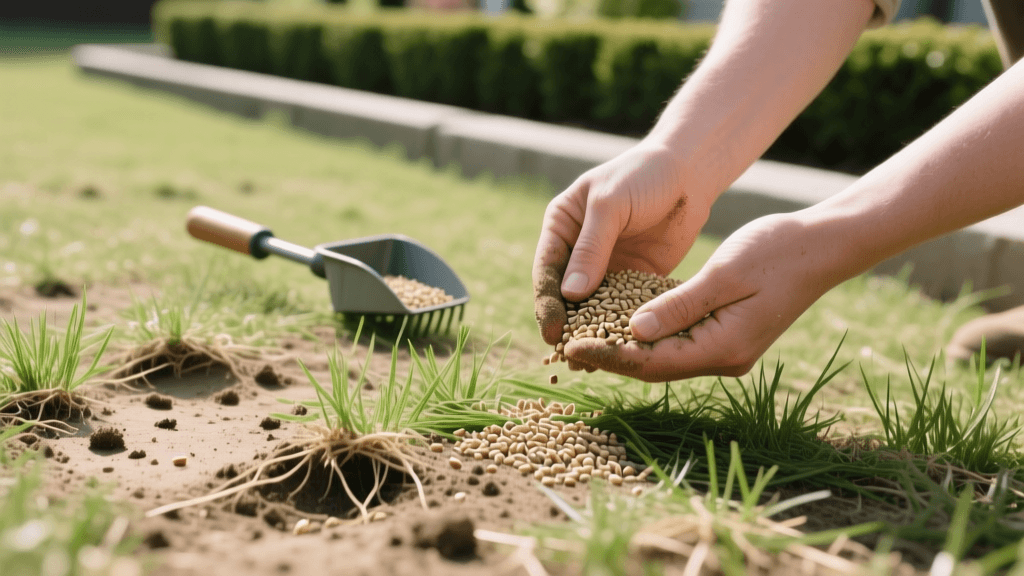
A Beginner Guide To Overseeding A Thin And Patchy Lawn
What is Overseeding and Why Do Beginners Need It?
If your lawn is looking thin, patchy, or tired, you are not alone. Turfgrass naturally ages over time, and individual grass plants slow down their reproduction rate, leaving your yard vulnerable to weed invasions and soil erosion. Overseeding is the process of planting new grass seed directly into your existing turf without tearing up the soil or starting from scratch. For beginners, overseeding is the single most effective and cost-efficient way to restore a lush, carpet-like lawn.
By introducing younger, more vigorous grass plants to your yard, you naturally crowd out broadleaf weeds and crabgrass. A thick lawn is a healthy lawn. However, simply throwing handfuls of seed onto your existing grass will result in wasted money and poor germination. Success requires proper soil preparation, precise timing, and a dedicated watering schedule. This beginner-friendly guide will walk you through every step of the overseeding process, complete with product recommendations, measurements, and expert tips.
How to Choose the Right Grass Seed
Walking into a garden center and staring at a wall of grass seed bags can be overwhelming. As a beginner, your primary goal is to match the new seed to your existing lawn and your yard's sunlight conditions. Never buy a generic 'contractor mix' without checking the label.
Understanding the Seed Label
Every commercial grass seed bag is required by law to display a detailed label. Here is what you need to look for:
- Purity Percentage: Look for a purity of 99% or higher. This tells you how much of the bag is actually grass seed versus weed seeds or inert filler.
- Germination Rate: Aim for a germination rate of 85% or higher. This is the percentage of seeds expected to actually sprout.
- Endophyte-Enhanced: For cool-season grasses like Tall Fescue and Perennial Ryegrass, look for 'endophyte-enhanced' on the bag. Endophytes are naturally occurring fungi that live inside the grass plant and make it highly resistant to surface-feeding insects like chinch bugs and sod webworms.
Top Product Recommendations for Beginners
For cool-season lawns, Jonathan Green Black Beauty Ultra is an excellent premium blend that features deep-rooting Tall Fescues and a dark green color. If you are dealing with heavy shade, **Pennington Smart Seed Dense Shade** is a highly reliable option that requires up to 30% less water than standard seed. For warm-season lawns, overseeding is typically done with annual or perennial ryegrass in the fall to maintain a green color while the Bermuda or Zoysia grass goes dormant.
The Ideal Overseeding Timeline
Timing is everything. If you overseed when the soil is too cold or too hot, your seeds will fail to germinate, or the young seedlings will burn up in the summer sun. Cool-season grasses thrive when overseeded in the early fall, while warm-season grasses are best seeded in late spring.
| Grass Type | Best Time to Overseed | Ideal Soil Temperature | Expected Germination Time |
|---|---|---|---|
| Cool-Season (Tall Fescue, Kentucky Bluegrass) | Late August to mid-October | 50°F to 65°F | 7 to 21 days |
| Cool-Season (Perennial Ryegrass) | Early September to mid-October | 50°F to 65°F | 5 to 10 days |
| Warm-Season (Bermuda, Zoysia) | Late May to early July | 70°F to 80°F | 10 to 30 days |
Note: Always measure soil temperature using a standard soil probe thermometer inserted two inches into the ground, rather than relying on air temperature.
Essential Tools and Materials
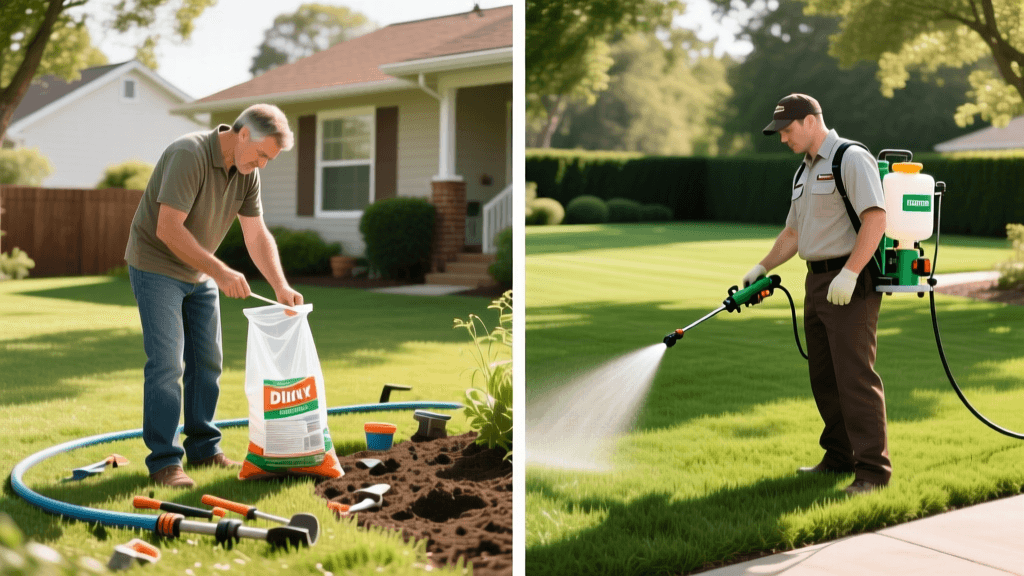
Before you begin, gather the following supplies. Budget between $80 and $150 depending on the size of your lawn and the tools you already own.
- Grass Seed: $40 to $70 per 50lb bag (covers roughly 5,000 to 10,000 sq ft depending on the blend).
- Starter Fertilizer: $25 to $40. Look for an NPK ratio high in phosphorus, such as Scotts Turf Builder Starter Food for New Grass (24-25-4).
- Broadcast Spreader: $30 to $50. A basic Scotts Classic Drop Spreader or Turf Builder EdgeGuard Mini Broadcast Spreader works perfectly for beginners.
- Thatch Rake or Lawn Mower with Bagging Attachment: To remove debris and cut grass low.
- Core Aerator (Optional but Recommended): Renting a gas-powered core aerator from a local hardware store typically costs $60 to $80 for a half-day rental.
Step-by-Step Overseeding Guide
Step 1: Mow Low and Bag the Clippings
Set your lawnmower deck to a height of 1.5 to 2 inches, which is significantly lower than your normal mowing height. Mowing low exposes the soil surface and removes the canopy that blocks sunlight from reaching new seeds. You must use a bagging attachment or thoroughly rake up all the clippings. If grass clippings are left on the soil, they will form a mat that prevents seed-to-soil contact, which is the number one requirement for germination.
Step 2: Dethatch and Core Aerate
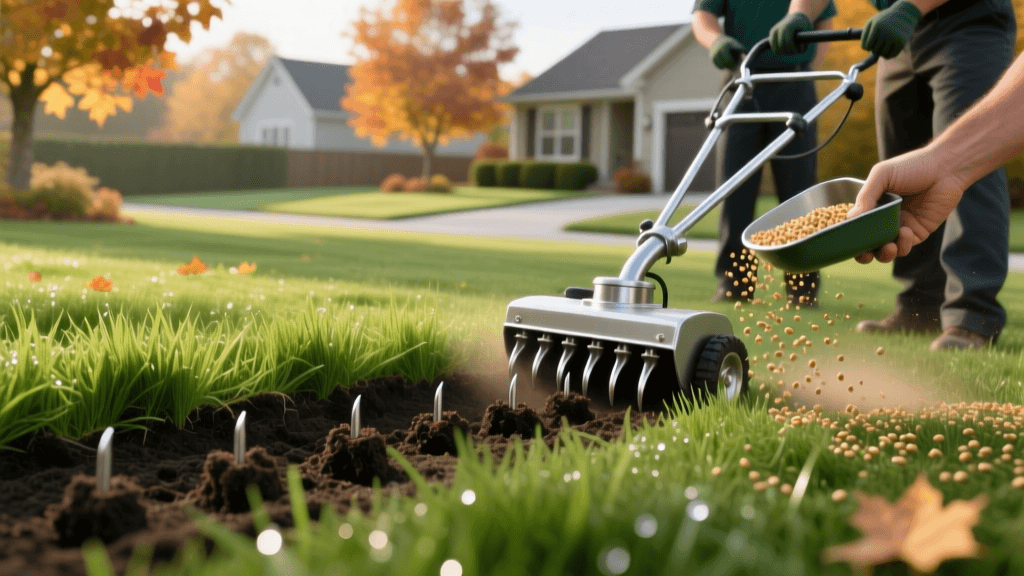
If your lawn has a layer of dead organic matter (thatch) thicker than half an inch, use a thatch rake to vigorously pull it up. Next, perform core aeration. A core aerator pulls small plugs of soil out of the ground, relieving compaction and creating perfect little pockets for grass seed to fall into. Leave the soil plugs on the lawn; they will break down naturally over the next few weeks and help top-dress the new seed.
Step 3: Spread the Seed
Load your broadcast spreader with the grass seed. Check the back of the seed bag for the specific spreader dial setting. For overseeding an existing lawn, you generally need 3 to 5 pounds of Kentucky Bluegrass or 4 to 6 pounds of Tall Fescue per 1,000 square feet. Walk at a steady, normal pace. To ensure even coverage and avoid striping, spread half the seed walking in a North-South direction, and the other half walking in an East-West direction (a cross-hatch pattern).
Step 4: Apply Starter Fertilizer
Immediately after seeding, apply a high-quality starter fertilizer. New grass seedlings require a rapid burst of phosphorus to develop strong, deep root systems. Standard lawn fertilizers are high in nitrogen, which promotes leaf growth but neglects the roots. A product like Scotts Turf Builder Starter Food (24-25-4) provides the exact nutrient profile needed for the first 30 days of growth.
Step 5: The Critical Watering Schedule
Grass seed must remain consistently moist until it germinates. If the seed dries out even once during the first ten days, the sprout will die. You must commit to the following watering schedule:
- Days 1 to 14: Water lightly 2 to 3 times per day for 5 to 10 minutes each session. The goal is not to soak the soil deeply, but to keep the top half-inch of soil constantly damp.
- Days 15 to 28: Once the seed has germinated and you see tiny green sprouts, reduce watering to once per day for 15 to 20 minutes. This encourages the new roots to stretch deeper into the soil to find moisture.
- Day 29 and Beyond: Transition to a standard deep-and-infrequent watering schedule, aiming for 1 to 1.5 inches of water per week, delivered in one or two heavy sessions.
Post-Germination Care and First Mow
Patience is vital. Do not mow your lawn until the new grass has reached a height of at least 3 to 3.5 inches. When you do mow for the first time, ensure your mower blade is razor-sharp. A dull blade will rip the tender young seedlings right out of the soil. Never remove more than the top one-third of the grass blade during any single mowing session.
Common Beginner Mistakes to Avoid
Even with the best intentions, beginners often make a few critical errors that sabotage their overseeding efforts. Avoid these pitfalls at all costs:
- Using 'Weed and Feed' Products: Standard weed control products contain pre-emergent herbicides. These chemicals cannot tell the difference between a weed seed and your expensive grass seed; they will prevent your grass from germinating. Wait at least 60 days after seeding before applying any weed control.
- Burying the Seed: Grass seed needs sunlight to germinate. Do not cover the seed with thick layers of topsoil or straw. A light dusting of soil or a specialized seed accelerator mulch is all that is needed to protect the seed from birds and wind.
- Skipping the Soil Test: If your soil pH is heavily acidic or alkaline, the new grass will struggle to absorb nutrients regardless of how much fertilizer you apply. Always conduct a basic soil test before starting a major lawn renovation.
Expert Insights on Lawn Density
According to turfgrass researchers at the Penn State Extension, overseeding is a vital practice for maintaining turfgrass density and combating the natural aging process of individual grass plants. Their research highlights that 'overseeding is most successful when the existing turf is thinned out, allowing the new seedlings access to sunlight, water, and nutrients.' Furthermore, Penn State experts emphasize that core aeration prior to overseeding significantly increases seedling survival rates by improving seed-to-soil contact and enhancing water infiltration into compacted urban soils.
By following this beginner-friendly guide, investing in high-quality seed, and strictly adhering to the watering schedule, you will transform your thin, patchy yard into a thick, vibrant, and resilient lawn that you can be proud of for years to come.