Tree Care
Beginner's Guide to Planting and Growing Japanese Maples
Introduction to Japanese Maples
Japanese maples (Acer palmatum) are widely considered the crown jewels of the home landscape. With their delicate, lace-like foliage, brilliant autumn colors, and elegant branching structures, they offer year-round visual interest. For beginners, the idea of growing a tree that looks so delicate can be intimidating. However, Japanese maples are surprisingly resilient when planted in the correct location and given the right foundational care. A healthy, nursery-grown 5-to-7-gallon Japanese maple typically costs between $50 and $150, making it a worthwhile investment for your property's curb appeal and your personal garden sanctuary.
This beginner-friendly guide will walk you through the exact steps to select, plant, and maintain a Japanese maple, ensuring your tree thrives for decades. We will cover specific soil requirements, actionable watering schedules, and the most common mistakes new gardeners make.
Choosing the Right Variety for Your Yard
Before you dig a hole, you must select a variety that matches your yard's sunlight and space constraints. Japanese maples generally fall into three categories: upright, weeping (dissectum), and dwarf. According to the NC State Extension Plant Toolbox, understanding the mature size and sun tolerance of your chosen cultivar is the first step in preventing leaf scorch and overcrowding.
| Variety | Growth Habit | Mature Size | Fall Color | Sun Tolerance |
|---|---|---|---|---|
| Bloodgood | Upright, Rounded | 15-20 ft tall, 15 ft wide | Vibrant Crimson | High (Tolerates full sun in cooler zones) |
| Crimson Queen | Weeping, Cascading | 8-10 ft tall, 10-12 ft wide | Bright Scarlet | Low (Requires afternoon shade) |
| Tamukeyama | Weeping, Cascading | 6-8 ft tall, 10 ft wide | Deep Purple-Red | Medium (More heat tolerant than most) |
| Shishigashira | Upright, Compact | 10-15 ft tall, 8 ft wide | Golden Yellow | High (Excellent sun tolerance) |
Site Selection and Soil Preparation
The most critical factor in Japanese maple care is site selection. These trees despise heavy, waterlogged clay soils and harsh, baking afternoon sun. The ideal location provides dappled morning sunlight and full shade during the hot afternoon hours. This protects the delicate leaves from 'leaf scorch,' a condition where the edges of the leaves turn brown and crispy due to rapid moisture loss.
The Soil Drainage Test: Before planting, dig a test hole 12 inches deep and 12 inches wide. Fill it with water and let it drain. Fill it a second time and time how long it takes to drain. If the water level drops slower than 1 inch per hour, you have poorly draining soil. You will need to amend the soil or plant the tree slightly elevated on a berm to prevent root rot.
Japanese maples prefer slightly acidic soil with a pH between 5.5 and 6.5. If your soil is too alkaline, you can lower the pH by applying a soil acidifier, such as Espoma Organic Soil Acidifier, at the rate specified on the package (usually 1 to 2 cups per 10 square feet).
Step-by-Step Planting Guide
Proper planting technique is non-negotiable. As experts at the Clemson Cooperative Extension emphasize, planting a tree too deeply is the number one cause of mortality in newly installed landscape trees. Follow these steps for a successful installation:
- Dig the Hole: Dig a hole that is 2 to 3 times as wide as the nursery container, but no deeper than the root ball itself. The goal is to provide loose soil on the sides for lateral root expansion while keeping the tree resting on undisturbed soil at the bottom so it doesn't sink.
- Inspect the Root Flare: The root flare (where the trunk widens at the base and meets the roots) must be visible and sit 1 to 2 inches above the surrounding soil grade. Brush away any excess nursery soil from the top of the root ball to expose this flare.
- Tease the Roots: If the tree is root-bound, use a sterilized box cutter or hand saw to make three or four vertical slices (about 1/2 inch deep) down the sides of the root ball. This severs circling roots and encourages them to grow outward into the native soil.
- Backfill: Fill the hole with the native soil you just dug out. Contrary to old gardening myths, do not mix heavy compost or peat moss directly into the backfill hole, as this creates a 'bathtub effect' where water pools in the loose soil and drowns the roots. You can top-dress the surface with compost later.
- Water In: Slowly apply 3 to 5 gallons of water to settle the soil and eliminate air pockets.
The First-Year Watering and Mulching Plan
Newly planted Japanese maples have underdeveloped root systems and cannot forage for water. Implement the 3-3-3 Rule for the first growing season:
- 3 Gallons: Provide about 3 gallons of water per watering session using a slow drip hose or a watering can to ensure deep penetration.
- 3 Times a Week: Water 2 to 3 times a week during the first summer, adjusting based on rainfall. Stick your finger 3 inches into the soil; if it feels dry, it is time to water.
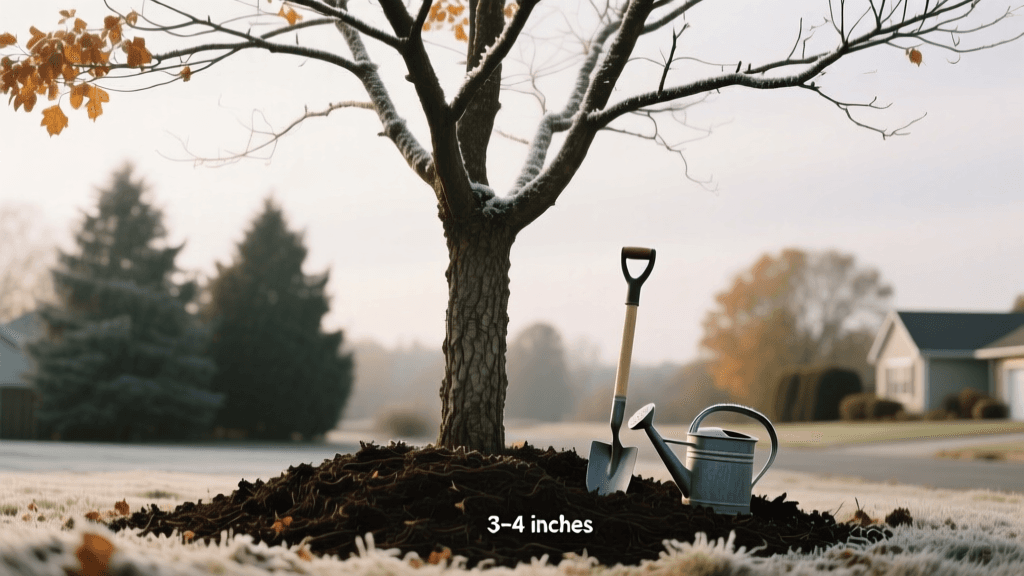
- 3 Inches of Mulch: Apply a 3-inch layer of organic mulch, such as pine bark nuggets or shredded hardwood, in a 3-foot radius around the tree.
'Always keep mulch at least 3 inches away from the actual trunk of the tree. Volcano mulching (piling mulch against the bark) traps moisture, invites fungal diseases, and encourages girdling roots that will eventually strangle the tree.' — Clemson Cooperative Extension
Fertilizing and Pruning Basics
Fertilizing: Japanese maples are light feeders. Over-fertilizing, especially with high-nitrogen synthetic lawn fertilizers, will cause weak, leggy growth that is highly susceptible to wind damage and pests. In early spring, just as the buds begin to swell, apply a slow-release, acid-loving organic fertilizer like Espoma Holly-tone (4-3-4). Use about 1 cup per inch of trunk diameter, scattering it evenly from the trunk to the drip line (the outer edge of the canopy).
Pruning: Beginners should adopt a 'less is more' approach. Prune only to remove dead, diseased, or crossing branches. The best time to prune is in late summer or mid-winter when the tree is dormant. Pruning in late winter or early spring can cause heavy sap bleeding, which, while not fatal, is unsightly and stresses the tree. Always use sharp, sterilized bypass pruners to make clean cuts just outside the branch collar.
Seasonal Care Schedule (First Year)
| Season | Watering Needs | Fertilizer / Pruning | Mulch & Maintenance |
|---|---|---|---|
| Spring | 1-2 times a week (10-15 gallons) | Apply Holly-tone as buds swell | Refresh mulch layer to 3 inches |
| Summer | 2-3 times a week (deep watering) | No fertilizer; monitor for scorch | Check for pest infestations |
| Fall | 1 time a week until ground freezes | Light structural pruning if needed | Clear fallen leaves to prevent fungus |
| Winter | None (dormant) | Major pruning in mid-winter | Protect trunk from rodents with guards |
Troubleshooting Common Beginner Mistakes
Even with the best intentions, beginner gardeners may encounter a few hurdles. Here is how to identify and fix the most common issues:
- Leaf Scorch: Characterized by brown, crispy leaf margins. Solution: Ensure the tree is receiving afternoon shade, increase watering frequency during heatwaves, and verify your mulch ring is intact.
- Aphids and Scale Insects: These sap-sucking pests cluster on the undersides of leaves or along young stems, often leaving behind a sticky residue called honeydew. Solution: Spray the affected areas with an organic horticultural oil or Bonide Neem Oil in the early evening to avoid harming beneficial pollinators.
- Verticillium Wilt: A soil-borne fungal disease that causes sudden wilting and dieback of entire branches on one side of the tree. Solution: There is no chemical cure. Prune out infected branches well below the discolored wood, sterilize your tools with 70% isopropyl alcohol between every cut, and ensure the tree is not water-stressed.
Conclusion
Growing a Japanese maple does not require a degree in horticulture. By respecting the tree's need for well-draining soil, dappled sunlight, and careful watering during its critical first year, you will be rewarded with a stunning landscape specimen. For further reading on regional planting times and cultivar recommendations, consult the Morton Arboretum's comprehensive tree care guides. With patience and the actionable steps outlined in this guide, your Japanese maple will become a beloved, multi-generational focal point in your garden.