Tree Care
Best Deciduous Trees For Fall Color Display
Selecting Trees That Deliver Reliable Autumn Color
Few landscape choices show up as clearly in autumn as a well-chosen deciduous tree. The right species can turn a yard into a neighborhood highlight for four to six weeks each fall, then offer shade, shelter for birds and insects, and structure the rest of the year. But not all trees color reliably everywhere — soil type, hardiness zone, and available space all matter. Pick the wrong tree for your site, and you might end up with faded or patchy color, stunted growth, or even removal later on. Knowing how fall color works, what each species needs to thrive, and how to plant and prune it properly helps those trees last.
Fall color starts when days shorten and temperatures cool, slowing chlorophyll production. As green fades, other pigments become visible: anthocyanins (reds and purples), carotenoids (yellows and oranges), and tannins (browns, especially in oaks). Best color usually comes after warm, sunny days and cool nights — above freezing — in September and October. If the tree was stressed by drought earlier in summer, leaves may drop before full color develops. That’s why consistent watering and healthy soil help, even if you’re mainly thinking about autumn.
Top Species for Intense Fall Color
The following species are widely recommended by arborists and landscape professionals across North America. Each grows differently, handles site conditions in its own way, and needs specific care.
Sugar Maple (Acer saccharum)
Sugar maple is known for rich fall color — yellow, orange, and scarlet often on the same tree. It’s native to the northeastern U.S. and southeastern Canada and does best in USDA Hardiness Zones 3 through 8. At maturity, it reaches 60 to 75 feet tall with a spread of 40 to 50 feet, so it needs room. Growth is steady, around 12 to 18 inches per year under decent conditions.
Its roots typically extend 1.5 to 2 times the radius of the canopy — meaning a mature sugar maple’s roots can reach 30 to 50 feet from the trunk. That matters near sidewalks, driveways, and foundations. The International Society of Arboriculture (ISA) suggests keeping large-maturing trees at least 8 feet from hardscapes, though 15 feet or more is safer for sugar maple given how its roots spread.
Sugar maple doesn’t handle road salt, compacted soil, or urban heat well. The Morton Arboretum in Lisle, Illinois, has seen many sugar maples decline in cities where heavy foot or vehicle traffic squeezes the soil and cuts off oxygen to roots. In suburban or urban yards, structural soil cells or permeable paving can help protect the root zone.
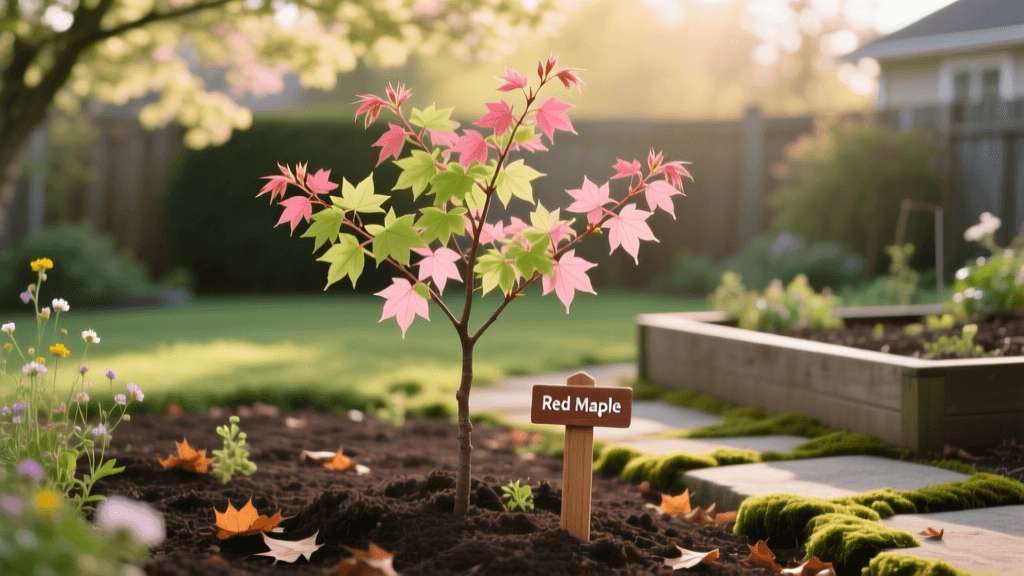
Red Maple (Acer rubrum)
Red maple adapts to more conditions than sugar maple — it tolerates wet soils, clay, and many urban settings. It grows faster, usually 18 to 25 inches per year, and reaches 40 to 60 feet tall with a 30 to 50 foot spread. Fall color runs from yellow to bright red, but intensity varies by cultivar and genetics.
For dependable color, choose named cultivars instead of seed-grown trees. ‘October Glory’ and ‘Red Sunset’ are common and usually give deep red to orange-red foliage. ‘Autumn Blaze’ (a red-silver maple hybrid, Acer × freemanii) offers strong orange-red color and quicker growth, reaching 50 to 60 feet tall with a 40-foot spread.
Sweetgum (Liquidambar styraciflua)
Sweetgum puts on one of the most varied fall displays among native trees — individual leaves often show purple, red, orange, yellow, and green at once. It grows 60 to 75 feet tall with a 40 to 50 foot spread and handles wet soils well. Its main downside is the spiky seed balls that drop in autumn and stick around through winter. Fruitless cultivars like ‘Rotundiloba’ skip the mess while keeping the good fall color.
Oaks for Long-Lasting Autumn Display
Oaks don’t always get top billing for fall color because their tones — russet, bronze, deep red — aren’t as bold as maples’. But their display lasts longer, often stretching into November or December in warmer zones. And oaks support more wildlife than almost any other North American tree — the Arbor Day Foundation notes they host over 500 species of caterpillars alone.
Scarlet oak (Quercus coccinea) stands out for vivid color — bright scarlet that holds up next to any maple. It grows 70 to 75 feet tall with a 40 to 50 foot spread and prefers well-drained, acidic soils. Growth is moderate to fast, about 18 to 24 inches per year. Pin oak (Quercus palustris) handles wetter soils and urban settings better, growing 60 to 70 feet tall, but its lower branches tend to droop with age and need pruning for clearance over walkways and driveways.
When pruning oaks, timing matters. ANSI A300 Part 1 (Pruning) says cuts should be made just outside the branch collar — no stubs, no flush cuts. More importantly, avoid pruning oaks from April through July in areas where oak wilt (Ceratocystis fagacearum) occurs. Beetles that spread the disease are most active then. The University of Minnesota Extension advises pruning only during dormancy — late fall through early spring — in those regions.
Birches, Ginkgo, and Other Notable Performers
Beyond maples and oaks, several other species work well depending on your site and goals.
Ginkgo (Ginkgo biloba) gives a clean, bright golden-yellow display that usually lasts one to two weeks before all the leaves drop at once — a quick, striking change. It handles city conditions well, including pollution and compacted soils. Stick with male cultivars like ‘Autumn Gold’ or ‘Princeton Sentry’ to avoid the smelly fruit female trees produce. Ginkgo grows 50 to 80 feet tall with a 30 to 40 foot spread and adds 12 to 18 inches per year.
River birch (Betula nigra) shows golden-yellow fall color and has attractive peeling bark that adds interest year-round. It thrives in wet soils and resists the bronze birch borer — a pest that kills many white-barked birches. The cultivar ‘Heritage’ is widely used and grows 40 to 70 feet tall with a 40 to 60 foot spread.
Blackgum or black tupelo (Nyssa sylvatica) is a native tree that often colors early and intensely — scarlet, orange, and purple can appear as soon as late August in northern areas. It grows 30 to 50 feet tall with a 20 to 30 foot spread and tolerates wet soils. Because it forms a deep taproot, it’s hard to move from the wild. Always buy container-grown or balled-and-burlapped nursery stock.
Planting Standards and Site Preparation
How you plant a tree makes a big difference in how well it does long-term. The ISA Best Management Practices for Tree Planting (2019) say the hole should be two to three times as wide as the root ball, but no deeper. Planting too deep is a leading cause of slow decline — it limits oxygen to roots and encourages circling roots that girdle the trunk.
The root flare — where the trunk widens into roots — must sit at or just above ground level after planting. University of Florida research found that burying the flare just 3 inches below grade can lead to noticeable decline within 5 to 10 years. Before backfilling, remove burlap, wire baskets, and twine, and check for circling roots — cut or straighten them if needed.
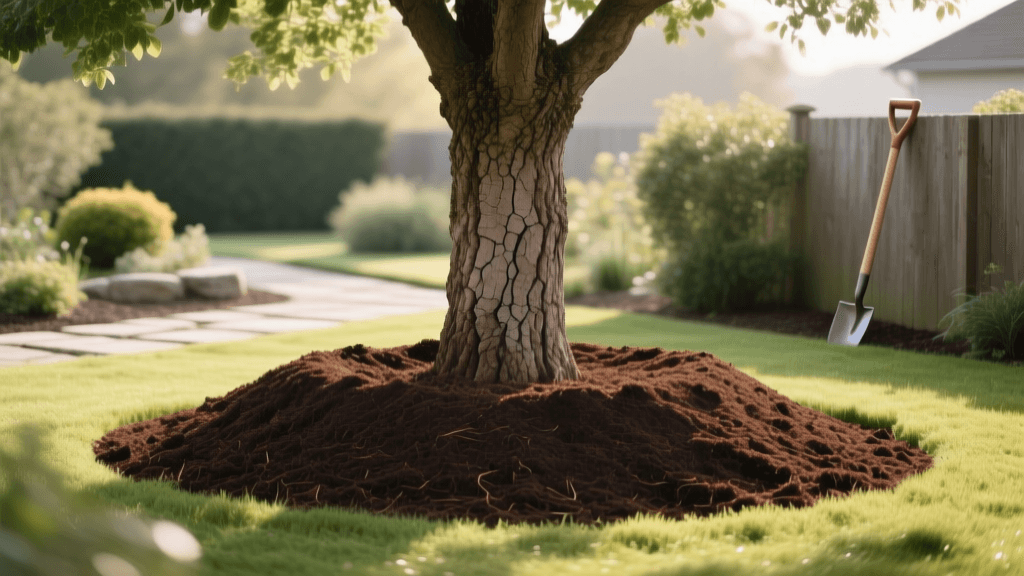
Don’t mix compost or other amendments into the backfill unless you’re improving the entire planting area — not just the hole. Filling just the hole with better soil creates a “container effect,” where roots stay inside the improved zone instead of spreading outward. Instead, focus on drainage if needed, and apply 3 to 4 inches of organic mulch over the root zone — keeping it 3 to 6 inches away from the trunk to prevent rot and pests.
Staking and Early Care
Most nursery-grown trees don’t need staking unless they’re in a windy spot or the root ball is too small to hold the tree upright. If you do stake, ANSI A300 standards suggest flexible ties that let the trunk sway — this helps build taper and strength. Remove stakes within one growing season, no later than 12 months after planting. Leaving them in longer is a common error that can girdle the trunk or weaken the tree.
Watering in the first two years is key. A rough rule is 10 gallons per inch of trunk diameter each week, adjusted for rain. So a 2-inch caliper tree needs about 20 gallons weekly. Slow, deep watering works better than frequent light sprinkles — it pushes roots down and builds drought tolerance.
Pruning for Structure and Long-Term Health
Structural pruning in the first 10 to 15 years is one of the best things you can do for a young tree. The aim is to encourage a single central leader (for species that grow that way), remove co-dominant stems with weak bark unions, and take out crossing or rubbing branches before they get large.
ANSI A300 Part 1 lists five pruning types: cleaning (removing dead, dying, diseased, or weakly attached branches), thinning (selective removal to let in light and air), raising (removing lower branches for clearance), reduction (shortening height or spread), and restoration (fixing damaged structure). For young deciduous trees grown for fall color, cleaning and light structural thinning are usually enough. Don’t remove more than 25 percent of the live crown in one session — it stresses the tree and can trigger messy, weak sprouts.
Species Comparison at a Glance
| Species | Mature Height | Spread | Growth Rate (in/yr) | Fall Color | Notable Tolerance |
|---|---|---|---|---|---|
| Sugar Maple | 60–75 ft | 40–50 ft | 12–18 | Yellow, orange, scarlet | Cold hardiness |
| Red Maple 'Red Sunset' | 45–55 ft | 35–45 ft | 18–25 | Deep red to orange-red | Wet soils, urban conditions |
| Scarlet Oak | 70–75 ft | 40–50 ft | 18–24 | Brilliant scarlet | Dry, acidic soils |
| Sweetgum 'Rotundiloba' | 60–75 ft | 40–50 ft | 18–24 | Purple, red, orange, yellow | Wet soils |
| Ginkgo 'Autumn Gold' | 50–80 ft | 30–40 ft | 12–18 | Uniform golden yellow | Pollution, compaction |
| Blackgum | 30–50 ft | 20–30 ft | 12–18 | Scarlet, orange, purple | Wet soils, early color |
Managing Tree Health Over Time
Even a great tree will struggle without regular attention. A yearly look-over — ideally by a Certified Arborist (a credential from the ISA) — can catch problems early. Watch for smaller or discolored leaves, thinning canopy, cracks or holes in the trunk, mushrooms at the base, or dieback in the upper branches. Those often point to root or vascular issues.
Soil health is often the bottleneck for trees in lawns and gardens. Compaction from foot traffic, mowers, or construction squeezes out pore space and cuts off root oxygen. Vertical mulching — drilling holes in the root zone and filling them with compost or coarse organic material — can open things up. Air spading uses compressed air to loosen soil without harming roots, and arborists use it both to relieve compaction and inspect root systems.
"Trees in urban and suburban environments face stresses that their wild counterparts never encounter — compacted soils, reflected heat, restricted root zones, and physical damage from equipment. Addressing these stressors proactively is far more effective than reactive treatment after decline has set in." — ISA Best Management Practices: Tree Planting, 2019
Fertilize only if a soil test shows a need — routine feeding isn’t helpful and can backfire. Too much nitrogen pushes fast, weak growth and may delay chlorophyll breakdown, dulling fall color. If tests show deficiencies, slow-release organic fertilizers applied in late fall or early spring are usually better than high-nitrogen synthetics. The Bartlett Tree Research Laboratories, with facilities in Charlotte, North Carolina, and Reading, England, shares plenty of free research on soil nutrition and tree health for homeowners and pros alike.
- Test soil pH before planting — most deciduous trees prefer 6.0 to 7.0, while oaks and birches do better at 5.5 to 6.5
- Keep 3 to 4 inches of organic mulch over the whole root zone, extending to the drip line when possible
- Avoid “volcano mulching” — piling mulch against the trunk — which traps moisture and invites rot and pests
- Plan structural pruning every 3 to 5 years during the tree’s first two decades
- Call a Certified Arborist after big storms, nearby construction, or if the tree’s appearance changes noticeably
When a tree becomes unsafe or reaches the end of its life, hire a qualified arborist who follows ANSI Z133 Safety Requirements for Arboricultural Operations. That standard covers safe rigging, equipment use, and work practices during removal — it’s what most professional tree companies in the U.S. follow. Cutting down large trees without proper training and gear is risky and leads to serious injuries in home landscapes.
- Scarlet oak and sugar maple deliver the strongest color in Zones 4 through 7
- Red maple cultivars and sweetgum handle wet soils and warmer zones better
- Ginkgo and blackgum give reliable color with less fuss in city yards
- Getting planting depth right, protecting the root zone, and doing early structural pruning matter more than species choice alone
- Talk to an ISA Certified Arborist for advice tailored to your yard — especially if you’re dealing with tight spaces, poor soil, or city conditions
The trees you plant this fall will likely outlive most other garden choices. A sugar maple planted now could still be shading your grandchildren’s yard and lighting up each autumn for decades.