Lawn Care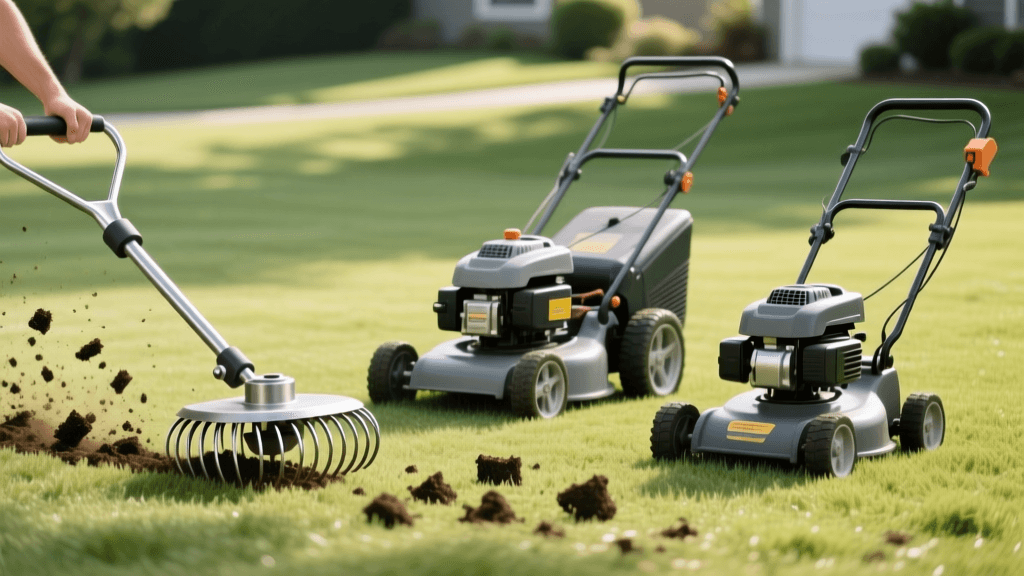
Best Lawn Aerators Reviewed: Manual, Tow-Behind, and Walk-Behind
The Hidden Enemy: Soil Compaction and Why Aeration Matters
Every time you walk across your lawn, mow with a heavy tractor, or experience heavy seasonal rainfall, the soil beneath your grass is being compressed. Over time, this leads to soil compaction, a condition where soil particles are pressed tightly together, reducing the pore space necessary for air, water, and nutrients to reach grassroots. When roots are starved of these essential elements, your lawn becomes thin, vulnerable to weeds, and highly susceptible to drought stress.
Core aeration is the most effective solution. Unlike spike aerators that simply poke holes and can worsen compaction by pressing soil outward, core aerators physically remove plugs of soil and thatch. This relieves pressure, encourages deep root growth, and stimulates microbial activity that breaks down organic matter. But with dozens of tools on the market, which one is right for your specific yard? In this comprehensive review, we compare the three main categories of lawn aerators—manual, tow-behind, and walk-behind motorized—to help you make an informed, cost-effective decision.
Manual Core Aerators: The Budget-Friendly Option
Top Pick Review: Yard Butler Lawn Coring Aerator
Manual core aerators are simple, human-powered tools consisting of a long handle, a foot bar, and a hollow coring head. The Yard Butler Lawn Coring Aerator is widely considered the gold standard in this category. Priced typically between $35 and $50, it is an incredibly affordable entry point into lawn aeration.
Performance and Usability
To use the Yard Butler, you step on the crossbar to drive the hollow tines into the soil, then pull up and push out the soil cores. It extracts cores up to 3.5 inches deep and 0.5 inches wide. The tool is constructed from heavy-duty steel and features a comfortable grip. However, the physical toll is significant. Aerating a 1,000-square-foot lawn with a manual tool can take over two hours and leave you with a sore back and aching legs.
Pros and Cons
- Pros: Extremely affordable; zero fuel or maintenance required; highly maneuverable in tight spaces and garden beds; lightweight and easy to store.
- Cons: Physically exhausting; incredibly slow for large lawns; struggles to penetrate hard, dry clay soils without extensive pre-watering.
Best For: Small urban lawns under 1,500 square feet, spot-treating high-traffic areas (like pathways or play areas), and gardeners on a strict budget.
Tow-Behind Core Aerators: The Large-Lawn Workhorse
Top Pick Review: Agri-Fab 48-Inch Tow-Behind Plug Aerator
If you own a riding mower or a utility ATV and have a sprawling suburban or rural lawn, a tow-behind aerator is a logical upgrade. The Agri-Fab 48-Inch Plug Aerator is a top seller in this space, usually retailing between $150 and $250. It features a wide swath that allows you to cover massive amounts of turf in a fraction of the time it would take manually.
Performance and Usability
The Agri-Fab unit features 32 galvanized steel coring spoons that penetrate up to 3 inches deep. The key to its performance lies in the weight tray. Because hollow tines need downward force to pierce the earth, you must load the tray with concrete blocks or sandbags (up to 175 lbs). The universal hitch fits most riding mowers. However, users must be cautious when turning; dragging a heavy, spiked aerator around a tight corner will severely tear and shear your turf. You must lift the aerator (using the included lever) before making turns.
Pros and Cons
- Pros: Excellent coverage width; utilizes your existing riding mower; relatively inexpensive for the acreage it can handle; minimal physical exertion.
- Cons: Requires a towing vehicle; turning can damage grass if not lifted; requires heavy weights to be effective; large footprint makes storage difficult.
Best For: Flat, open lawns ranging from 0.5 to 2 acres where a riding mower is already in use.
Walk-Behind Motorized Aerators: The Professional Standard
Top Pick Review: Classen CP-20H Walk-Behind Aerator (Rental Market)
For those who demand commercial-grade results without the back-breaking labor of manual tools or the turning limitations of tow-behinds, walk-behind motorized aerators are the ultimate solution. The Classen CP-20H, powered by a reliable Honda engine, is a staple at equipment rental yards across the country. While purchasing one can cost upwards of $3,000, renting one typically costs between $70 and $100 for a half-day.
Performance and Usability
The Classen CP-20H features a heavy, compact chassis that naturally provides the downward force needed to pull 3-to-4-inch cores, even in dense clay. Unlike tow-behinds, walk-behinds offer pinpoint maneuverability around trees, landscaping, and tight fences. The self-propelled drive system pulls the machine forward, though the operator must still manage the significant weight (often over 250 lbs) when loading it into a truck or turning it around. The core depth is easily adjustable, ensuring you can adapt to varying thatch layers and soil profiles.
Pros and Cons
- Pros: Unmatched core depth and consistency; highly maneuverable; fast coverage for mid-sized lawns; breaks up severe compaction effortlessly.
- Cons: Heavy and difficult to transport; requires a truck or trailer; rental logistics can be time-consuming; high purchase price.
Best For: Lawns between 2,000 and 10,000 square feet with severe compaction, heavy clay soils, or those preparing for a major overseeding renovation.
Head-to-Head Aerator Comparison Chart
| Feature | Manual (Yard Butler) | Tow-Behind (Agri-Fab 48') | Walk-Behind (Classen CP-20H) |
|---|---|---|---|
| Average Cost | $35 - $50 | $150 - $250 | ~$85/day (Rental) |
| Power Source | Human | Riding Mower / ATV | Gas Engine (Honda) |
| Core Depth | Up to 3.5 inches | Up to 3 inches | Up to 4 inches |
| Best Lawn Size | Under 1,500 sq ft | 0.5 to 2+ Acres | 2,000 to 10,000 sq ft |
| Physical Effort | Very High | Low | Moderate to High |
| Maneuverability | Excellent | Poor (Wide turns needed) | Good |
Expert Insights: What the Science Says
When deciding how to aerate, it is crucial to understand the biological impact on your soil profile. According to turfgrass specialists at the Penn State Extension, the physical removal of soil cores is vital for long-term soil health and thatch management.
'Core cultivation... physically removes soil cores from the turfgrass profile, which helps to alleviate soil compaction, improve water infiltration, and increase gas exchange. For best results, cores should be 2 to 3 inches deep and spaced 2 to 4 inches apart. The soil cores deposited on the surface should be left in place to break down naturally, as they contain beneficial microorganisms that help decompose the thatch layer.' - Penn State Extension, Turfgrass Management
This expert guidance underscores why spike aerators (which do not remove cores) are generally not recommended by university agronomists, and why tools like the Classen or Yard Butler, which extract genuine cores, are preferred.
Step-by-Step Aeration Best Practices
Regardless of whether you choose a manual, tow-behind, or walk-behind aerator, following a proper preparation and aftercare routine is essential for maximizing your results.
1. Mark Your Utilities and Sprinklers
Before making a single hole, use bright utility flags to mark all shallow sprinkler heads, valve boxes, and invisible dog fence wires. Aerator tines can easily crush plastic sprinkler heads, leading to costly repairs.
2. Hydrate the Soil
Aeration tines cannot penetrate bone-dry earth. Water your lawn deeply 24 to 48 hours before you plan to aerate. The soil should be moist but not muddy. If it is too wet, the aerator will pull out muddy, clumped cores that will smear across the lawn and block the hollow tines.
3. Make Multiple Passes
For severe compaction, one pass is rarely enough. Make one pass in a horizontal direction and a second pass in a vertical or diagonal direction. This ensures you achieve the 2-to-4-inch spacing recommended by turf scientists.
4. Leave the Plugs Alone
Do not rake up the soil plugs left on your lawn. They contain vital microbes that will help break down thatch. Within two to three weeks, and a few mowing sessions, they will naturally disintegrate and filter back into the turf canopy.
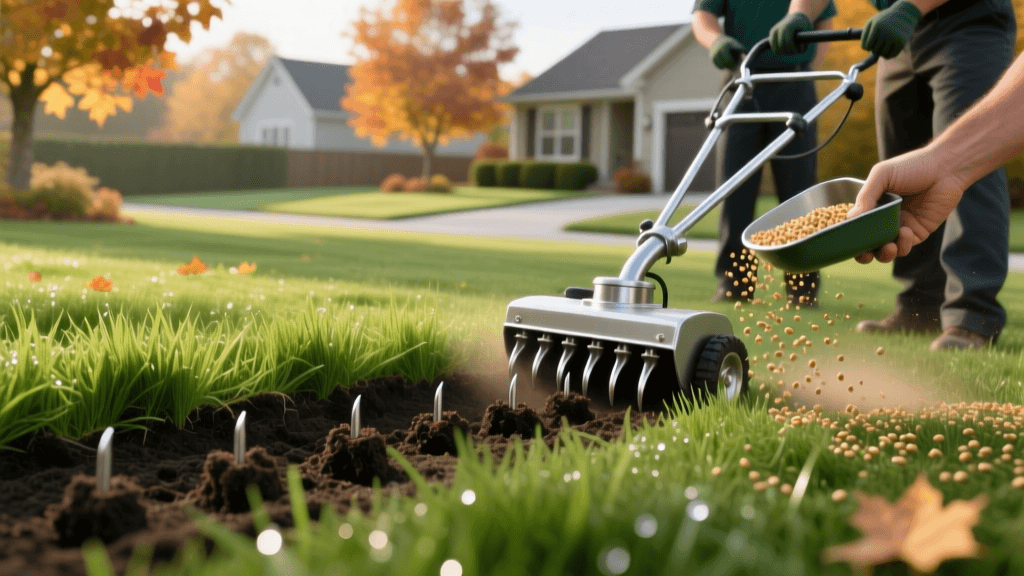
5. Overseed and Fertilize Immediately
Aeration creates the perfect seed-to-soil contact environment. Immediately after aerating, apply a high-quality starter fertilizer and broadcast your grass seed. The seeds will fall into the aeration holes, protected from birds and drying winds, resulting in a dramatically thicker lawn by the next season.