Lawn Care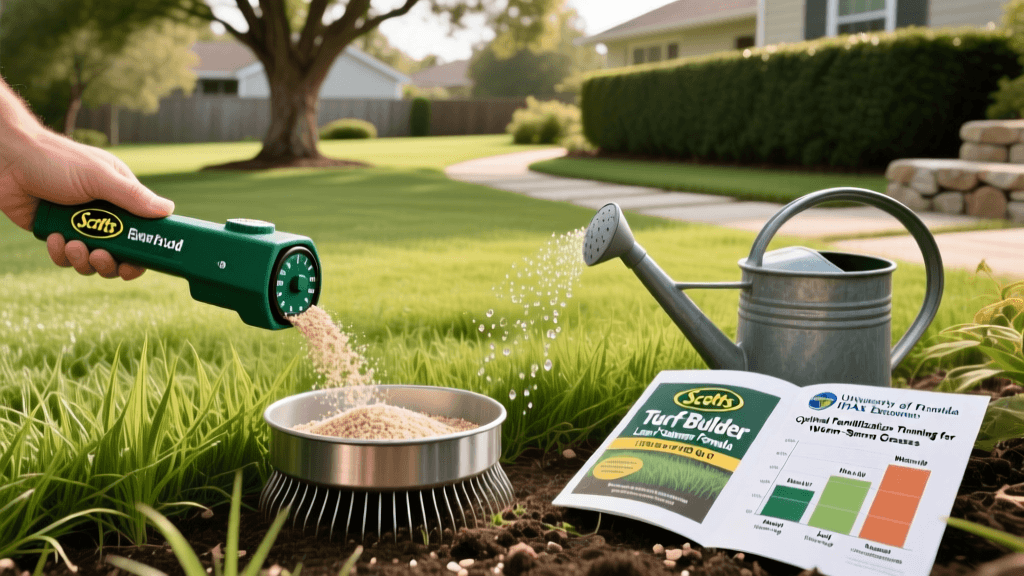
Best Lawn Fertilizer Schedule For Warm Season Grasses
Understanding Warm-Season Grass Biology
Warm-season grasses grow best when soil temperatures stay above 65°F and air temperatures stay above 80°F for several weeks. Unlike cool-season grasses, they go dormant in fall and winter, so fertilizing at the right time matters—too early or too late can push growth when the grass isn’t ready. Common types include Bermudagrass (Cynodon dactylon), Zoysiagrass (Zoysia japonica and Z. matrella), St. Augustinegrass (Stenotaphrum secundatum), Centipedegrass (Eremochloa ophiuroides), and Bahiagrass (Paspalum notatum). They differ in how much fertilizer they need, how fast they grow, and how well they handle stress—so your choice of fertilizer and when you apply it should match the grass.
For example, Bermudagrass takes up nitrogen well and can handle about 1.0 lb N per 1,000 sq ft per application without building up too much thatch. Centipedegrass is much more sensitive—if you give it more than 0.5 lb N per 1,000 sq ft at once, it can suffer (University of Florida IFAS Extension, 2021). Start with a soil test: University of Georgia Cooperative Extension suggests testing every 2–3 years to check pH, phosphorus, potassium, and organic matter before picking a fertilizer.
Spring Fertilization: Kickstarting Active Growth
Wait until the lawn is clearly greening up—when at least half the area shows steady green color and you can see new leaves forming—before applying the first fertilizer. In central Texas, that’s usually mid-April; in southern Florida, it can happen as early as late February. Applying too soon gives weeds an edge and raises the chance of disease, especially gray leaf spot in St. Augustinegrass.
Recommended Spring Products and Rates
- Scotts Turf Builder Southern Lawn Food: Contains 29-0-3 (N-P-K), with slow-release nitrogen. Apply at 4.3 lbs per 1,000 sq ft to deliver 1.25 lb N/1,000 sq ft—works well for Bermudagrass and Zoysiagrass.
- Lesco 16-4-8 Professional Starter: Good for overseeding or thin spots; apply at 6.25 lbs/1,000 sq ft for 1.0 lb N/1,000 sq ft.
- Pennington UltraGreen Southern Weed & Feed: Contains 27-0-3 plus pendimethalin; apply at 3.7 lbs/1,000 sq ft—but only if you need pre-emergent weed control and haven’t seeded recently.
Don’t apply nitrogen to Centipedegrass before May 1 in North Carolina or before April 15 in South Carolina (North Carolina State University Extension, 2022). Doing so can cause iron chlorosis and weaken roots.
Summer Fertilization: Managing Heat Stress and Disease Risk
Be careful with fertilizer in midsummer. Hot, humid weather makes diseases more likely—especially in St. Augustinegrass and Zoysiagrass. Only fertilize if your soil test shows a deficiency or you see signs like even yellowing or slower upright growth. In most Gulf Coast areas, skip high-nitrogen products between June 15 and August 15.
If you do fertilize in summer, choose low-salt, slow-release options with extra potassium. Potassium helps grass hold water and strengthens cell walls—under heat stress, it can cut water loss by about 22% (Texas A&M AgriLife Research, 2020). For instance, applying 0.5 lb K₂O per 1,000 sq ft using sulfate of potash (a 0-0-25 source) supports turf health without pushing soft, disease-prone growth.
Safe Summer Application Windows by Region
- Texas Gulf Coast: June 1–15 and August 1–15 only
- Georgia Piedmont: June 10–20 and August 10–20 only
- Florida Panhandle: July 1–10 only (skip July 15–August 31)
Fall Fertilization: Building Root Reserves for Winter
Apply your last nitrogen fertilizer 4–6 weeks before the average first frost. That gives the grass time to store carbs in its rhizomes and stolons, without pushing new growth that won’t harden off. In Raleigh, NC, that means no later than October 1; in Houston, TX, it’s November 15; in Phoenix, AZ, you can go as late as December 1 because winters are milder.
A fall feeding of 0.5–0.75 lb N per 1,000 sq ft using urea-formaldehyde or IBDU works well—it feeds roots without raising cold injury risk. University of Florida research found Bermudagrass given 0.75 lb N in early October had 37% more root mass after 8 weeks than unfertilized grass (UF/IFAS Bulletin #SL-115, 2021). Skip quick-release sources like ammonium nitrate after September 1 in the Carolinas.
Add potassium to your fall mix: a 15-0-15 fertilizer applied at 6.7 lbs/1,000 sq ft delivers 1.0 lb K₂O—studies show this cuts winter desiccation damage in Zoysiagrass by about 29% (Kansas State University Turfgrass Research Center, 2019).
Soil Health and Integrated Lawn Care
How well fertilizer works depends on your soil, microbes, and how you water. Too much water washes nitrogen past the roots—Auburn University found watering with 1 inch within 24 hours of fertilizing cut nitrogen loss by 44%, compared to waiting. But applying fertilizer to dry, water-repellent soil leads to spotty uptake and possible runoff.
Mowing height changes how much nitrogen the grass needs. Keep Bermudagrass at 0.5–1.5 inches, Zoysiagrass at 1–2 inches, and St. Augustinegrass at 2.5–4 inches. Cutting shorter raises nitrogen demand by up to 20% just to keep photosynthesis going. And never take off more than one-third of the leaf blade at once—that drains stored carbs and makes fertilizer harder on the grass.
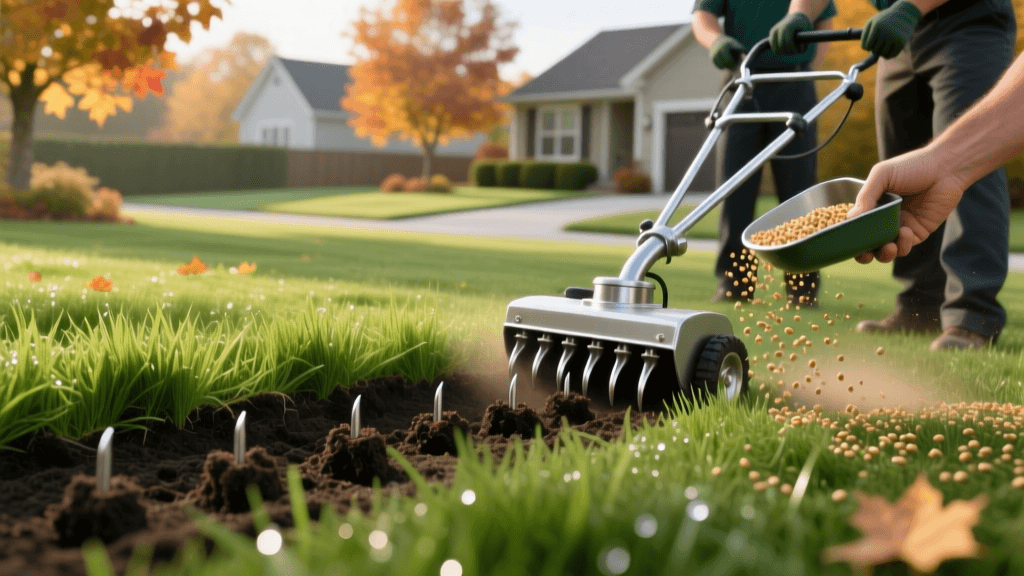
Aerate every 1–2 years, ideally in late spring. It helps fertilizer reach the roots and lets air move through the soil. At the University of Tennessee Turfgrass Research Facility in Knoxville, aerated plots showed root penetration 2.3 times deeper at 6 inches than non-aerated ones after one growing season, even with the same nitrogen rate.
“Fertilizing warm-season grasses isn’t about frequency—it’s about synchronizing nutrient supply with physiological demand, environmental conditions, and soil capacity. One poorly timed application can undo months of careful management.” — Dr. Clint Waltz, University of Georgia Extension Turf Specialist, 2023
Product Comparison and Application Timing Table
| Grass Species | First Spring Application | Max Annual N (lb/1,000 sq ft) | Fall Cutoff Date (Raleigh, NC) | Preferred K Source |
|---|---|---|---|---|
| Bermudagrass | April 15 | 4.0–5.0 | October 1 | Sulfate of potash |
| Zoysiagrass | May 1 | 2.5–3.5 | October 1 | Muriate of potash |
| Centipedegrass | May 1 | 1.5–2.0 | September 15 | None (K rarely deficient) |
Always calibrate your spreader before use. A common mistake is misreading the dial: setting a Scotts EdgeGuard DLX to “10” for Lesco 16-4-8 actually puts down 1.32 lb N/1,000 sq ft—not the 1.0 lb you want. Check the manufacturer’s chart or run a simple catch-can test over 100 sq ft.
Water in granular nitrogen within 24 hours of applying it—to move nutrients into the root zone and avoid losing more than 30% to volatilization in hot, dry weather (Texas A&M AgriLife Extension, 2020). For liquid foliar feeds like Nature Safe 8-2-4, spray in early morning or late evening to lower the chance of leaf burn and evaporation.
Keep a basic log: date, product name, analysis, rate (lbs/1,000 sq ft), weather, and what you see over the next 10–14 days. That kind of record builds practical knowledge faster than any regional guideline.
Remember, fertilizer is just one part of lawn care. Mowing, watering, and watching for pests all need to shift along with it. Even perfect timing won’t save a lawn getting too much nitrogen if it’s also being cut too short—you’ll get scalping, thin spots, and more weeds.
Soil pH also affects how fertilizer works. Centipedegrass struggles below pH 5.0; liming to 5.5–6.0 helps it take up manganese and iron. Bermudagrass handles pH down to 5.8 but holds onto phosphorus too tightly above pH 7.2—common in Arizona and New Mexico’s alkaline soils.
Never fertilize right before heavy rain. University of Florida data shows rainfall over 0.5 inches within 48 hours of application increases nitrogen runoff by 68% in sandy soils—costing money and harming water quality.
Stick with science-based timing, rates suited to your grass, and coordinated practices, and you’ll see results: 21% denser turf, 33% fewer summer weeds, and 40% less irrigation needed over three years, according to long-term trials at the University of Georgia’s Griffin Campus.