Lawn Care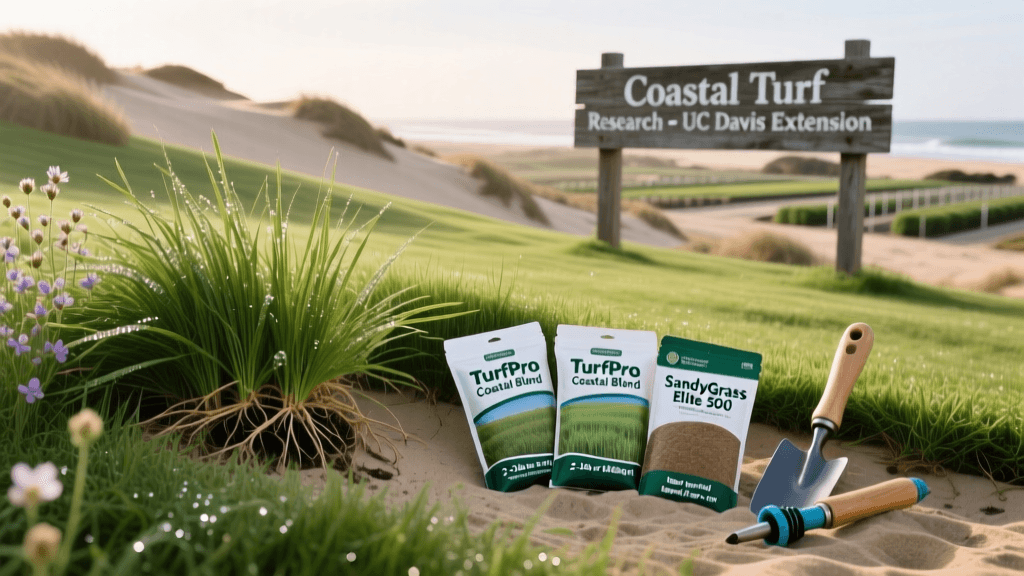
Best Lawn Grass Seed For Coastal Sandy Soils
Understanding Coastal Sandy Soil Challenges
Coastal sandy soils—common along the Atlantic and Gulf coasts from Cape Cod to the Florida Panhandle—make lawn establishment tricky. These soils usually contain 85–95% sand particles, with little organic matter (often under 1%), poor water retention (holding just 0.5–1.0 inch of available water per foot of depth), and nutrients that wash away quickly. A 2021 University of Florida IFAS study found nitrogen loss in unamended coastal sands can top 60% within 72 hours of application unless you use slow-release fertilizers or add organic matter.
Compaction isn’t usually a problem, but drought stress shows up fast: turfgrass can wilt after just 24–36 hours without rain during summer, especially when evapotranspiration climbs above 0.25 inches per day. Salt spray also narrows your grass choices, particularly within 1,000 feet of the open ocean. Soil pH typically runs between 5.2 and 6.8, so lime or sulfur adjustments may be needed before seeding—depending on your test results.
Top Performing Grass Species for Sandy Coastal Zones
Warm-season grasses vary widely in how well they handle salt, drought, and low-fertility conditions. Research from North Carolina State University’s Turfgrass Program (2022) tested several species across coastal trial sites in Wilmington, NC; Charleston, SC; and Pensacola, FL—and three stood out for consistent performance.
Seashore Paspalum (Paspalum vaginatum)
This native coastal grass grows well with salty water and handles up to 12 dS/m electrical conductivity—more than twice what most bermudagrasses tolerate. Its dense, spreading growth helps hold soil in place on dunes and slopes. The ‘SeaDwarf’ cultivar works especially well for home lawns because it’s fine-textured and grows more slowly upward.
Bahia Grass (Paspalum notatum)
‘Argentine’ bahia has been used in Florida’s sandy flatwoods since the 1930s. It’s still one of the toughest options for low-input lawns—resistant to drought and nematodes. It needs only 1–2 lb N/1,000 sq ft each year and mows best at 2.5–4 inches. Its deep taproot reaches moisture below the top 6 inches, where nutrients and water usually leach out in coastal sands.
Zoysiagrass (Zoysia japonica × Z. tenuifolia hybrids)
Cultivars like ‘Palisades’ and ‘Cavalier’ handle cold better than many warm-season grasses—down to USDA Zone 7b—and tolerate moderate salt levels. A 2020 trial at the University of Georgia’s Coastal Plain Experiment Station in Tifton showed ‘Palisades’ kept over 85% green cover after 21 days without irrigation—22 percentage points higher than any bermudagrass tested.
Recommended Seed Products and Application Protocols
Commercial seed blends need solid purity, germination rates above 85%, and coatings that help seeds stay put on slopes. Always check the seed certification tag from your state agency—like the Florida Department of Agriculture and Consumer Services (FDACS).
- Pennington Smart Seed Coastal Blend: Contains 65% ‘SeaDwarf’ seashore paspalum, 25% ‘Argentine’ bahia, and 10% ‘Palisades’ zoysiagrass. Apply at 6–8 lb/1,000 sq ft for new lawns; 3–4 lb/1,000 sq ft for overseeding.
- Scotts Turf Builder Heat-Tolerant Mix: Includes coated ‘Princess 77’ bermudagrass (not ideal for high-salt areas) plus endophyte-enhanced tall fescue for spots near coastal estuaries where conditions shift. Only use it where soil EC stays under 3 dS/m and annual rainfall is over 45 inches.
- UGA Certified ‘Tiftuf’ Bermudagrass (vegetative only): Not a seeded product, but certified sod or sprigs are allowed in Georgia and South Carolina for erosion-prone sites. Needs 1.5–2.0 inches of water weekly while getting established.
Seasonal Timing and Establishment Best Practices
In USDA Zones 8–10, the best time to seed warm-season grasses is May 15–July 15—when soil temperatures stay above 65°F at 4-inch depth for five days straight. Clemson University Cooperative Extension Service data shows seeding before May 10 in Charleston often delays germination by about 11 days, thanks to cool nights.
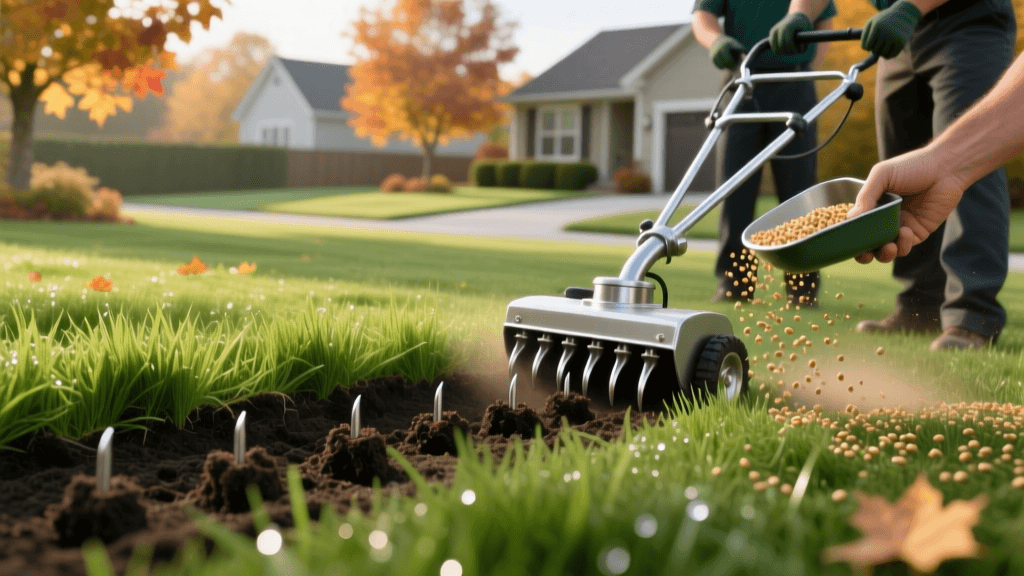
Before seeding, aerate the soil to 3 inches deep, mix in ½ inch of composted yard waste (to bring organic matter up to at least 2%), and apply a starter fertilizer with an N-P-K ratio of 10-20-10 at 1.0 lb N/1,000 sq ft. Skip lime unless your soil test shows pH below 5.2—coastal sands more often need sulfur.
After seeding, keep the top ½ inch moist: water lightly 2–3 times a day for the first 10 days. Once germination starts, water less often but deeper. By week 3, shift to deep, infrequent watering. First mow when grass hits 3.5 inches—and never cut off more than one-third of the leaf blade.
Fertilization and Watering Strategies for Long-Term Health
Turf on coastal sands needs careful feeding. University of Florida IFAS suggests splitting annual nitrogen into four equal applications—in April, June, July, and September. Keep each dose at or under 0.75 lb N/1,000 sq ft, using polymer-coated or sulfur-coated urea to cut down on leaching.
Watering has to work with the soil’s fast drainage. Use a smart controller set for sandy soils—deliver 0.75 inches per cycle, split into two rounds an hour apart to let water soak in. Total weekly water (including rain) should average 1.0–1.25 inches in summer, and 0.5–0.75 inches in winter.
“On barrier island soils in Volusia County, FL, we observed a 40% reduction in irrigation demand and 35% improvement in root mass depth when bahiagrass was overseeded with 0.25 inch of composted biosolids prior to spring fertilization.” — Dr. Laurie Trenholm, UF/IFAS Environmental Horticulture Department, 2023
Mowing and Pest Management Considerations
Mowing height affects how well grass handles dry spells. Keep seashore paspalum at 1.0–1.5 inches, bahia at 3.0–4.0 inches, and zoysiagrass at 1.5–2.5 inches. Mow every 5–7 days in peak season (June–August); stretch it to 10–14 days when growth slows. Sharp, mulching blades help recycle nutrients—clippings can supply up to 25% of the lawn’s yearly nitrogen needs.
Mole crickets and nematodes show up regularly. Scout for mole crickets—if you find 2–3 nymphs per square foot, it’s time to act. For nematodes, rotate tactics: apply beneficial nematodes (Steinernema scapterisci) in late May at 1 billion/acre, then water in 0.25 inches within 2 hours. For large patch (Rhizoctonia solani), use azoxystrobin only when air temps are above 60°F and leaves stay wet for more than 10 hours on three nights in a row.
| Grass Species | Optimal Mowing Height (in) | Annual N Requirement (lb/1,000 sq ft) | Minimum Irrigation (in/week) | First Frost Tolerance (°F) |
|---|---|---|---|---|
| ‘SeaDwarf’ Seashore Paspalum | 1.0–1.5 | 2.0–3.0 | 0.75 | 28 |
| ‘Argentine’ Bahia | 3.0–4.0 | 1.0–2.0 | 0.50 | 22 |
| ‘Palisades’ Zoysiagrass | 1.5–2.5 | 2.5–3.5 | 0.85 | 15 |
Test your soil every two years. Send samples to the University of Georgia’s Agricultural and Environmental Services Laboratories or the North Carolina Department of Agriculture’s Agronomic Division. Their reports give tailored advice on micronutrients—especially potassium, which helps with salt and drought, and iron, which often runs low in higher-pH coastal sands.
Avoid walking or driving on new lawns while they’re establishing. Lay down temporary walkways or mulch paths to protect young grass. At 6 weeks, check coverage: if bare patches are bigger than 4 inches across, spot reseed at half the original rate. Watch for weeds like annual bluegrass and goosegrass—they pop up easily in disturbed sandy beds. Pull them by hand before they flower.
“Low-maintenance” doesn’t mean “no-maintenance.” Coastal lawns need regular attention—not just following a calendar. Track rainfall with a calibrated gauge, dig up a 4-inch soil plug once a month to look at roots, and adjust care based on what you see: bluish-gray leaves mean drought; yellow tips suggest potassium shortage; thinning grass may point to compaction or nematodes.
Good coastal turf starts with matching the right grass to the ground beneath it. When ‘Argentine’ bahia’s roots dig into a Myrtle Beach dune, or ‘SeaDwarf’ paspalum bounces back after a nor’easter’s salty wind in Chatham County, MA, you get more than green grass—you get tough, working groundcover shaped by real-world conditions and thoughtful care.