Pest Control
Best Grub Control Products: Chemical vs Organic Reviewed
The Hidden Threat Beneath Your Turf
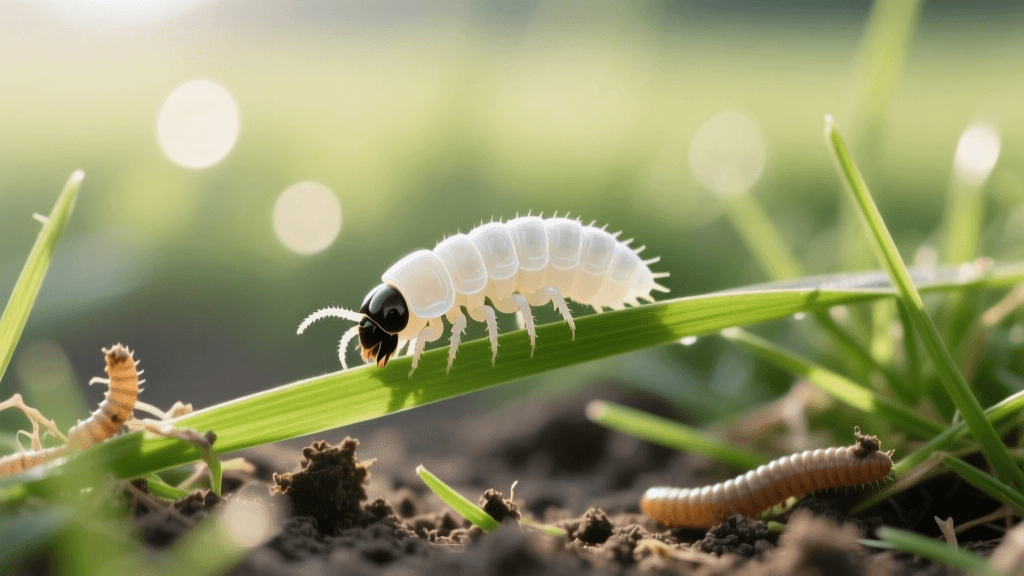
If your lawn is developing irregular brown patches, feeling spongy underfoot, or rolling back like a loose carpet, you likely have a white grub infestation. White grubs are the larval stage of various scarab beetles, including Japanese beetles, June bugs, and European chafers. These C-shaped, creamy-white larvae feed aggressively on grass roots, severing the turf from its nutrient and water supply. Left untreated, a severe grub infestation can destroy an entire lawn in a single season, while also attracting secondary pests like skunks, raccoons, and crows that tear up the soil to feed on the larvae.
Choosing the right grub control product is critical, but the market is flooded with confusing options. Homeowners must decide between fast-acting synthetic chemicals and slow-release organic biological controls. In this comprehensive review, we compare the top chemical and organic grub control products on the market, breaking down their active ingredients, application timings, costs, and overall efficacy to help you make an informed decision for your lawn care regimen.
Chemical vs. Organic Grub Control: What is the Difference?
Before diving into specific product reviews, it is essential to understand the fundamental differences between chemical and organic grub treatments. Chemical controls generally rely on synthetic active ingredients that either prevent grub eggs from hatching or kill existing larvae on contact. They are prized for their speed, reliability, and broad-spectrum efficacy across multiple beetle species.
Organic and biological controls, on the other hand, utilize naturally occurring bacteria, fungi, or microscopic worms to target grubs. While organic options are highly favored in Integrated Pest Management (IPM) strategies due to their minimal environmental impact and safety for pollinators, they often require specific soil conditions to thrive and may take longer to establish complete control. Furthermore, some biological controls are highly species-specific, meaning they will only work if you have correctly identified the type of beetle larvae in your soil.
Top Chemical Grub Control Products Reviewed
1. Scotts GrubEx1 Season Long Grub Control (Preventative)
Scotts GrubEx1 is widely considered the gold standard for preventative grub control in residential lawns. Its active ingredient, Chlorantraniliprole (1.65%), is a modern anthranilic diamide that targets the larvae's muscle function, causing them to stop feeding and eventually die. Unlike older neonicotinoids, Chlorantraniliprole has an excellent environmental profile and is highly targeted, posing minimal risk to bees and other beneficial pollinators when applied correctly.
- Best For: Preventative maintenance and stopping eggs from developing into root-eating larvae.
- Application Timing: Spring to early summer (May through July), before eggs hatch.
- Cost: Approximately $25 to $30 for a 14 lb bag covering 5,000 square feet.
- Pros: Long-lasting residual control (up to 4 months); safe for pollinators; easy granular application.
- Cons: Not effective as a curative treatment for large, mature grubs in late summer or fall.
2. BioAdvanced 24-Hour Grub Killer Plus (Curative)
If you missed the preventative window and discover active grub damage in late summer or early fall, you need a curative solution. BioAdvanced 24-Hour Grub Killer Plus utilizes Dylox (Trichlorfon), a fast-acting organophosphate that disrupts the nervous system of the grubs. When watered into the soil, it reaches the root zone rapidly, killing active grubs within 24 hours.
- Best For: Emergency curative treatment when active turf damage is already visible.
- Application Timing: Late summer to early fall (August through October).
- Cost: Approximately $20 for a 10 lb bag covering 5,000 square feet.
- Pros: Extremely fast knockdown; kills mature grubs quickly; also controls surface pests like ants and ticks.
- Cons: Short residual life (breaks down in a few days); highly toxic to earthworms and aquatic life if runoff occurs; requires immediate and deep watering.
Top Organic and Biological Grub Control Products
3. St. Gabriel Organics Milky Spore Powder
Milky Spore is a naturally occurring bacterium (Bacillus popilliae) that specifically targets and kills Japanese beetle grubs. When grubs ingest the spores while feeding on roots, the bacteria multiply inside them, causing a milky disease that kills the larvae and releases billions of new spores back into the soil. Over time, this creates a self-sustaining biological barrier.
- Best For: Long-term, organic management of Japanese beetle populations.
- Application Timing: Anytime the ground is not frozen, though late summer is ideal when grubs are feeding.
- Cost: Approximately $40 to $50 for a 20 oz dispenser tube covering 2,500 square feet (or 10 lbs for $80 covering larger acreage).
- Pros: Lasts 10 to 15 years once established; 100% safe for humans, pets, and beneficial insects; no chemical runoff.
- Cons: Only works on Japanese beetle grubs (ineffective against June bugs or European chafers); takes 1 to 3 years to build up in the soil to effective levels.
4. Arbico Organics Beneficial Nematodes (Hb Strain)
Beneficial nematodes are microscopic, unsegmented worms that actively hunt down soil-dwelling pests. The Heterorhabditis bacteriophora (Hb) strain is highly effective against a broad spectrum of white grubs. Once applied to moist soil, the nematodes enter the grub's body and release a symbiotic bacteria that kills the host within 48 hours. The nematodes then reproduce inside the carcass and emerge to hunt for more prey.
- Best For: Organic curative and preventative control across multiple grub species.
- Application Timing: Late summer to early fall when soil temperatures are between 60°F and 85°F.
- Cost: Approximately $35 to $45 for a package treating 10,000 square feet.
- Pros: Broad-spectrum control; completely organic; safe for earthworms and plants; fast-acting for a biological control.
- Cons: Requires strict soil moisture management; must be applied at dusk or on cloudy days to avoid UV degradation; short shelf life (must be refrigerated).
Comprehensive Product Comparison Chart
| Product Name | Active Ingredient | Control Type | Target Species | Cost per 5k sq ft | Best Time to Apply |
|---|---|---|---|---|---|
| Scotts GrubEx1 | Chlorantraniliprole | Preventative | All common white grubs | $25 - $30 | May - July |
| BioAdvanced 24-Hour | Dylox (Trichlorfon) | Curative | All common white grubs | $20 | August - October |
| Milky Spore Powder | Bacillus popilliae | Biological / Long-term | Japanese beetle grubs only | $80 - $160 | Spring or Fall |
| Arbico Hb Nematodes | H. bacteriophora | Biological / Curative | Most scarab beetle grubs | $18 - $23 | August - September |
Application Timing and Best Practices
The single most common reason grub control products fail is improper application timing. Grubs have a distinct life cycle, and your treatment must align with their developmental stage.
Preventative Applications (Spring to Mid-Summer): Products like Scotts GrubEx1 must be applied before the eggs hatch. Adult beetles typically lay eggs in July. Applying a preventative in May or June ensures the chemical is in the root zone when the tiny, vulnerable first-instar larvae emerge. Applying GrubEx in September is useless, as the grubs are already large and the product is not designed to kill mature larvae.
Curative Applications (Late Summer to Fall): If you see brown patches and peeling turf in August or September, you have an active infestation of second or third-instar grubs. This is when you deploy Dylox or Beneficial Nematodes. These products kill on contact but break down quickly, meaning they will not protect your lawn the following spring.
The Golden Rule of Watering: Whether you choose chemical granules or liquid nematodes, the product must reach the root zone where the grubs feed. You must water your lawn immediately after application with at least 1/4 to 1/2 inch of water. Without this crucial step, the active ingredients will remain on the thatch layer, degrading in the sun without ever reaching the target pests.
Expert Insights and University Citations
When developing an Integrated Pest Management (IPM) strategy, relying on university research is paramount. According to the Rutgers University Cooperative Extension, the shift toward Chlorantraniliprole has revolutionized residential grub control due to its targeted nature and low toxicity profile.
'Chlorantraniliprole (GrubEx) is highly effective against all species of white grubs and has a much lower toxicity to non-target organisms, including pollinators, compared to older neonicotinoid chemistries. However, because it acts slowly, it must be applied preventatively in spring or early summer to allow the active ingredient to bind to soil organic matter before egg hatch occurs.' - Rutgers University, Department of Entomology, White Grub Management Guidelines.
Rutgers experts also emphasize the importance of monitoring. Before applying any curative treatment, dig up a one-square-foot section of turf. If you count more than 5 to 10 grubs per square foot, treatment is economically justified. If you find fewer than 5, your lawn can likely outgrow the minor root damage without chemical intervention.
Final Verdict: Which Should You Choose?
The best grub control product depends entirely on your current situation and lawn care philosophy. If you want a set-it-and-forget-it approach that guarantees a grub-free lawn for the current season with minimal environmental impact, Scotts GrubEx1 is the undisputed champion for preventative care. Apply it in early June, water it in, and rest easy.
If you are currently staring at a dying lawn in September and need an immediate rescue, reach for BioAdvanced 24-Hour Grub Killer Plus for a rapid chemical knockdown, or use Arbico Beneficial Nematodes if you are committed to strict organic lawn care practices. Finally, if you are battling a chronic, multi-year Japanese beetle problem and want to establish a permanent, natural defense system, investing in Milky Spore is a brilliant long-term strategy that will pay dividends for over a decade.