Lawn Care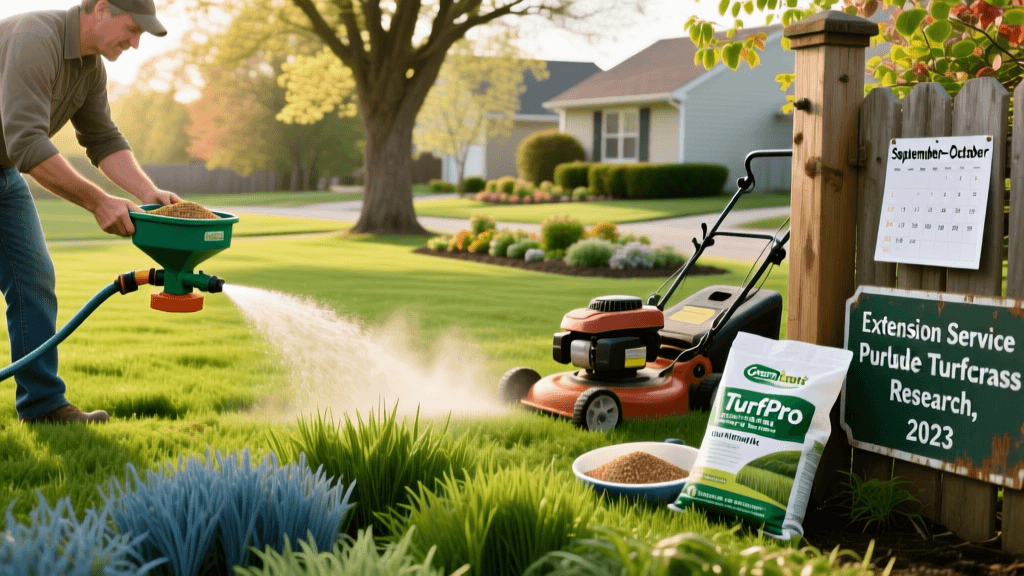
Best Lawn Seed Mix For Heavy Foot Traffic Areas
Understanding Soil Compaction and Turf Resilience
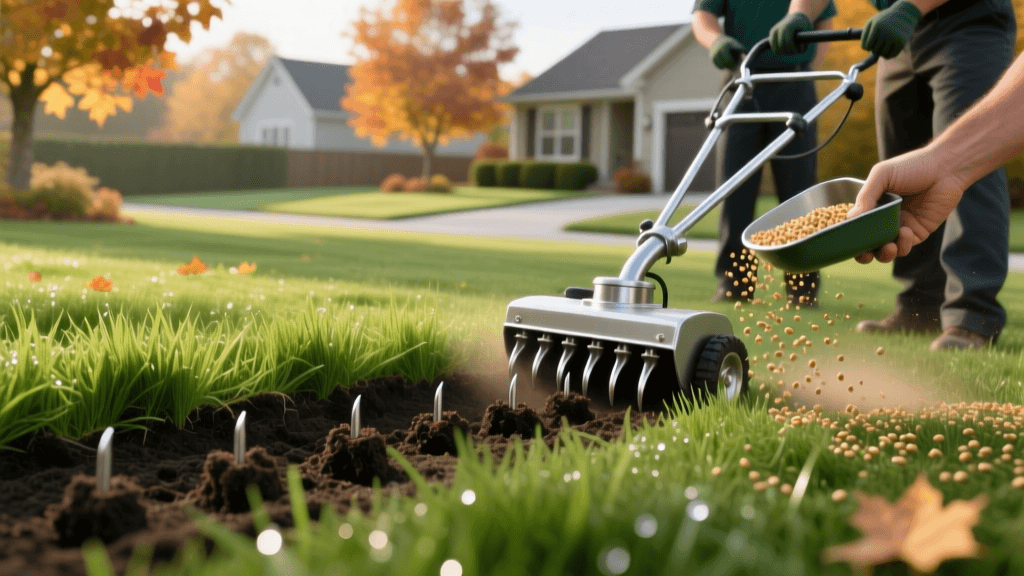
Heavy foot traffic—whether from children playing, pets running, or frequent backyard entertaining—compacts soil, cuts down on oxygen exchange, and wears down grass crowns. These stresses make it harder for roots to grow and leave the lawn more open to disease and weeds. Research from the University of Minnesota Turfgrass Science Program shows that soils under high-traffic lawns can see bulk density rise by up to 35% after just one season without intervention (University of Minnesota Extension, 2021). That compaction slows water infiltration by as much as 40%, leading to runoff and weaker nutrient uptake. Before seeding, check the soil: a simple penetrometer test reading above 300 psi means it’s time for core aeration.
Top Grass Species for High-Traffic Durability
No single grass works everywhere—but several hold up well under foot traffic, recover quickly, and develop deep roots when managed right. Perennial ryegrass (Lolium perenne) gets going fast and handles wear well thanks to its dense growth and upright habit. Kentucky bluegrass (Poa pratensis) builds strong, connected sod over time using underground stems and fills in bare spots on its own. Fine fescues (Festuca spp.), especially chewings and hard fescue, bring drought and shade tolerance without giving up toughness.
Perennial Ryegrass: The First Line of Defense
Perennial ryegrass sprouts in 5–7 days and forms usable turf in about three weeks. Its leaf sheaths contain more lignin, which helps it resist crushing. In field trials at Rutgers University’s Snyder Research and Extension Farm, cultivars like ‘Inspire II’ and ‘Dash’ kept over 85% of their canopy cover after 12 weeks of simulated pedestrian traffic (Rutgers Cooperative Extension, 2022). These varieties also carry beneficial endophytes, which help keep insects in check without needing extra sprays.
Kentucky Bluegrass: The Long-Term Foundation
Kentucky bluegrass takes longer to get started—14–21 days to sprout, and 6–8 weeks to fill in—but it spreads sideways through rhizomes to build thick, interlocked sod. Cultivars like ‘Midnight’ and ‘Bella’ bounce back well from wear; in Ohio State University trials, plots seeded with ‘Midnight’ regained 92% of their green cover within 28 days after being compacted (Ohio State Extension, 2020). This grass does best in full sun and loamy soils with a pH between 6.0 and 7.0.
Recommended Seed Mixes and Application Protocols
Blends work better than single-species stands because they combine quick coverage with lasting strength. The mixes below come from university extension trials and real-world landscape use.
- Penn State Athletic Field Blend: 60% perennial ryegrass (‘Dash’, ‘Intense’), 30% Kentucky bluegrass (‘Midnight’, ‘Julia’), 10% hard fescue. Used on college campuses and municipal parks.
- UC Davis Home Lawn Traffic Mix: 50% perennial ryegrass (‘Spartan’, ‘SR 5100’), 40% Kentucky bluegrass (‘Baron’, ‘Unique’), 10% chewings fescue. Built for California’s Mediterranean climate and clay-loam areas.
Seeding rates matter. For overseeding thin spots, use 6–8 lb per 1,000 ft². For full renovation—after core aeration and a light topdressing—use 10–12 lb per 1,000 ft². Don’t bury seed deeper than ¼ inch; a slit-seeder set to that depth works well, or broadcast and follow with cultipacking. Skip seeding during summer heatwaves: if soil temps go above 85°F, perennial ryegrass emergence drops by more than 60%.
Seasonal Timing and Establishment Windows
Timing makes a big difference. In cool-season regions (USDA Zones 3–7), late summer to early fall is best: soil stays between 60–75°F, air cools down, and fewer weeds compete. At Cornell University’s Long Island Horticultural Research & Extension Center, fall-seeded plots reached 98% ground cover by November, while spring-seeded ones only hit 67% (Cornell Cooperative Extension, 2021). Spring seeding can work—if it’s done before May 15. Later planting runs into crabgrass and summer heat stress.
In transitional zones (Zones 7–9), you’ve got two windows: mid-September to mid-October, and mid-February to mid-March. Avoid July–August seeding unless you’re using heat-tolerant ryegrass and can water regularly. In warm-season areas (Zones 9–11), tall fescue or hybrid Bermuda may fit—but only where irrigation is reliable and winter dormancy won’t be an issue.
Maintenance Practices That Extend Turf Longevity
Choosing the right seed is just the start. How you care for the lawn after that decides whether it lasts or breaks down within two growing seasons.
Mowing Discipline
Mow every 5–7 days when the grass is growing fast, and never take off more than one-third of the blade height at once. Keep ryegrass/bluegrass blends at 2.5–3.5 inches. Cutting too short leads to scalping, weakens the crown, and speeds up thatch buildup. Keep blades sharp: dull ones tear the grass instead of cutting cleanly, and that opens the door to disease (University of Minnesota Extension, 2021).
Fertilization Strategy
Split nitrogen applications: apply 0.75 lb N per 1,000 ft² at seeding, then 0.5 lb at 3 weeks, and another 0.5 lb at 6 weeks. Skip quick-release urea while the grass is getting established—go for polymer-coated or sulfur-coated urea instead, which feed the grass steadily over 8–10 weeks. Total nitrogen for the year shouldn’t go over 3.0 lb per 1,000 ft² on high-traffic lawns, or you’ll get too much top growth and not enough root development.
Watering Protocol
During germination, water lightly 2–3 times a day to keep the top ½ inch moist—not soggy. Once seedlings appear (around day 7–10), water less often but deeper to push roots down. Aim for 1.0 inch per week, split across two sessions—say, 0.5 inch each on Tuesday and Friday. Use a rain gauge or tuna can to check how much your sprinklers actually put down: many deliver only 0.25 inch in 30 minutes.
| Practice | Optimal Metric | Consequence of Deviation |
|---|---|---|
| Core Aeration Frequency | Annually in fall (cool-season) | Soil bulk density increases 22% without annual aeration |
| Mowing Height | 2.5–3.5 inches | Below 2 inches: 37% reduction in root mass after 8 weeks |
| Irrigation Depth per Session | 0.5 inch | Less than 0.3 inch: shallow rooting, increased wilt stress |
“Traffic-tolerant lawns aren’t built by seed alone—they’re grown through consistent, science-based management. The most resilient turf emerges where soil health, genetic selection, and human stewardship align.” — Dr. Eric Watkins, Professor of Turfgrass Science, University of Minnesota
Thatch matters. If it builds up past ½ inch, it blocks water and shelters disease-causing organisms. Dethatch cool-season lawns in early fall with a power rake set to ¼-inch depth—then overseed and add a light topdressing right after. Test soil pH every year: aim for 6.2–6.8. Use elemental sulfur if the pH is too high, or lime if it’s too low—apply 30–50 lb per 1,000 ft² based on your soil test.
Be careful with pre-emergent herbicides. They stop crabgrass, but many also stop grass seed from sprouting. If you’ve used one, wait 12–16 weeks before seeding—or use siduron (Tupersan), the only pre-emergent labeled safe to apply at the same time as cool-season grass seed. Always read and follow the label: wrong timing or dosage cuts effectiveness and can harm the grass.
Think about where people walk. Low-profile pavers or mulched paths can shift foot traffic away from fragile turf. At the University of Illinois Urbana-Champaign’s South Farms research plots, lawns with marked walking routes showed 58% less visible wear after 18 months than areas with no defined paths.
Good high-traffic lawns come from thoughtful choices—not just in seed, but in soil prep, timing, and everyday care. When perennial ryegrass gives quick cover, Kentucky bluegrass knits the sod together, and fine fescues handle dry spells and shade, you get turf that holds up. These methods draw on decades of work from Rutgers, Ohio State, UC Davis, and others—and they build durable, green lawns without sacrificing long-term health or environmental balance.