Lawn Care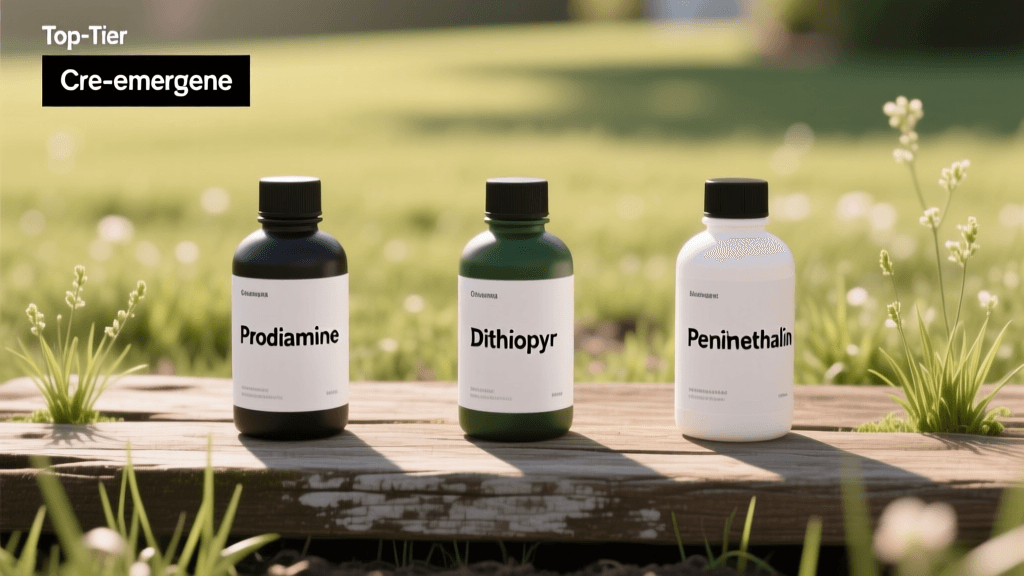
Best Pre-Emergent Herbicides for Crabgrass: 2024 Review
The Ultimate Guide to Pre-Emergent Herbicides for Crabgrass Control
Crabgrass (Digitaria) is the undisputed nemesis of pristine cool-season and warm-season lawns. As an opportunistic annual weed, it thrives in compacted soil, thin turf, and areas subjected to heat stress. Once crabgrass establishes a root system and begins producing seeds—up to 150,000 per plant—eradicating it becomes a costly and frustrating endeavor. The most effective defense is a proactive offense: applying a high-quality pre-emergent herbicide before the seeds germinate.
In this comprehensive product review and comparison, we evaluate the top pre-emergent herbicides on the market. We break down professional-grade liquids, water-dispersible granules, and consumer-friendly broadcast products to help you choose the right solution for your lawn care routine. Our analysis factors in active ingredients, application windows, cost per 1,000 square feet, and overall effectiveness based on turfgrass science.
How We Evaluated and Selected the Best Products
To provide actionable, science-backed recommendations, we evaluated herbicides based on four critical metrics:
- Spectrum of Control: Effectiveness against crabgrass and other annual grassy weeds like goosegrass and foxtail.
- Longevity: How long the chemical barrier remains active in the soil before breaking down from microbial activity and UV exposure.
- Application Flexibility: Whether the product offers early post-emergent 'rescue' capabilities for late applications.
- Cost-Efficiency: The true cost per 1,000 square feet, comparing bulk professional concentrates to ready-to-use consumer bags.
Top Pre-Emergent Herbicides Reviewed
1. Prodiamine 65 WDG (Generic Barricade) - Best Overall for Longevity
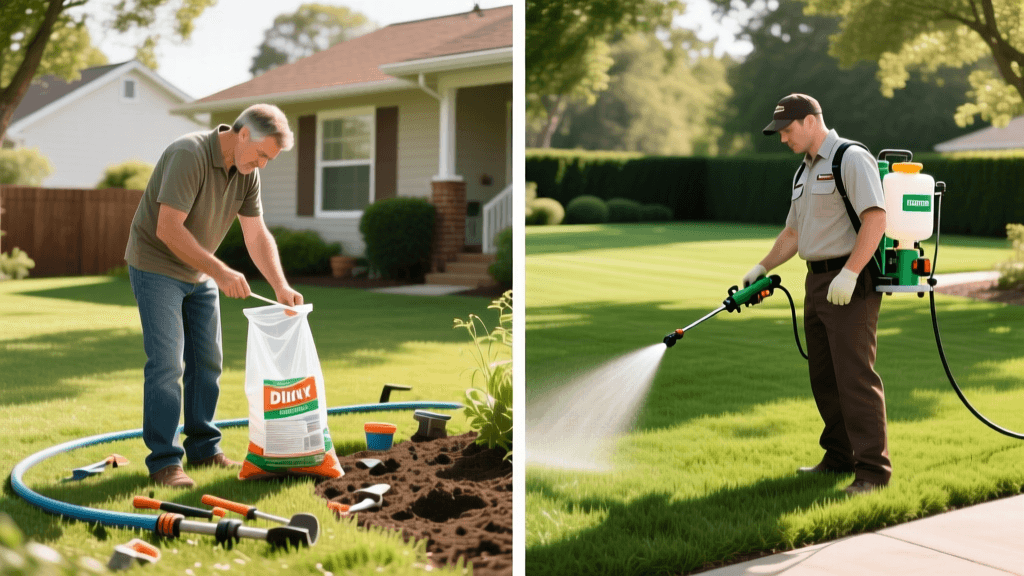
Prodiamine 65 WDG is the gold standard for professional turf managers and serious lawn care enthusiasts. As a water-dispersible granule (WDG), it mixes easily with water and is applied via a backpack or tank sprayer. Prodiamine works by inhibiting cell division in the root tips of germinating seeds, effectively stopping crabgrass before it breaches the soil surface.
Application Rate & Cost: At a standard rate of 1.15 lbs per 1,000 square feet, a single 5-pound bottle (costing approximately $85) treats up to 4,300 square feet for a full 6-month barrier. If you have a smaller lawn or opt for a split-application strategy, the cost drops to roughly $0.12 per 1,000 square feet at lower preventive rates.
Pros: Unmatched soil residual (up to 6 months), highly cost-effective for large properties, odorless when dry.
Cons: Requires a pump sprayer and constant agitation to prevent the WDG from settling at the bottom of the tank; stains concrete and shoes yellow.
2. Dimension 2EW (Dithiopyr) - Best for Late Applications
Dimension 2EW is a liquid emulsifiable concentrate that offers a unique advantage over Prodiamine: early post-emergent control. While traditional pre-emergents only stop seeds from germinating, Dithiopyr can actually kill crabgrass in its early post-emergent stage (up to the 1-tiller phase). This makes it the ultimate 'rescue' treatment if you miss your early spring application window.
Application Rate & Cost: The standard application rate is 0.5 ounces per 1,000 square feet. A 2.5-gallon jug retails for around $120, bringing the cost to approximately $0.18 per 1,000 square feet.
Pros: Provides a 3 to 4-month barrier, eliminates young crabgrass sprouts, mixes effortlessly without heavy agitation.
Cons: Shorter residual than Prodiamine, slightly higher cost per application, requires careful calibration to avoid turf phytotoxicity in newly seeded lawns.
3. Scotts Halts Crabgrass Preventer (Pendimethalin) - Best Consumer-Grade Option
For homeowners who prefer the simplicity of a rotary spreader over mixing liquid concentrates, Scotts Halts is the most accessible and reliable consumer-grade pre-emergent. Its active ingredient, Pendimethalin, creates a strong chemical barrier that halts root development in germinating seeds. It is widely available at big-box hardware stores and garden centers.
Application Rate & Cost: A standard 10,000 square foot coverage bag costs roughly $25, equating to $0.25 per 1,000 square feet. While more expensive than professional liquids, the convenience of granular application and zero mixing makes it a top choice for suburban lawns.
Pros: Extremely easy to apply with a standard broadcast spreader, no sprayer cleanup required, widely available.
Cons: Shorter residual (requires a second application in late May for season-long control), bulkier to store and transport.
Product Comparison Chart
| Product | Active Ingredient | Formulation | Cost per 1k Sq Ft | Best Use Case |
|---|---|---|---|---|
| Prodiamine 65 WDG | Prodiamine | WDG (Liquid Mix) | $0.12 | Season-long professional control |
| Dimension 2EW | Dithiopyr | Liquid Concentrate | $0.18 | Late spring / Rescue applications |
| Scotts Halts | Pendimethalin | Granular | $0.25 | Homeowner ease of use |
Application Timing and Soil Temperature Science
The most expensive herbicide in the world is useless if applied at the wrong time. A common myth in lawn care is that you should apply pre-emergents when the forsythia bushes bloom. While this phenological indicator was useful decades ago, modern turfgrass science demands more precision.
According to turfgrass specialists at Purdue University Extension, relying on ornamental blooms is an unreliable metric. Crabgrass begins to germinate when soil temperatures at a 1-inch depth reach 50 to 55 degrees Fahrenheit for three to five consecutive days. (Purdue Extension Publication PPP-31: Crabgrass Control).
To track this, invest in a digital soil thermometer or monitor local agricultural weather stations online. In the transitional zone and northern cool-season regions, this typically falls between mid-March and mid-April. In the deep south, applications may be necessary as early as late February. Split applications—applying half the annual rate in early spring and the other half 60 days later—are highly recommended to maintain a continuous barrier through the peak summer heat.
Crucial Application Best Practices
Regardless of whether you choose Prodiamine, Dimension, or Pendimethalin, the mechanical execution of the application dictates your success.
1. Calibrate Your Equipment
Over-applying pre-emergents can stunt the root growth of your desirable turfgrass, while under-applying leaves gaps in the chemical barrier for crabgrass to exploit. For spreaders, lay down a tarp, measure out the product for a 10x10 foot test area, and adjust your spreader dial until the hopper empties exactly at the end of the tarp. For sprayers, use the '1/128th acre' calibration method to ensure your nozzle output matches the label requirements.
2. Watering In the Product
Pre-emergent herbicides must be moved from the surface into the top 1 to 2 inches of the soil profile where weed seeds reside. Within 48 hours of application, your lawn must receive exactly 0.25 to 0.5 inches of irrigation or rainfall. If natural rain is not in the forecast, run your sprinkler system. Leaving the product on the surface exposes it to UV degradation, rendering it ineffective.
3. Avoid Core Aeration and Seeding
Pre-emergents do not discriminate between weed seeds and grass seeds. If you plan to overseed your lawn with tall fescue or Kentucky bluegrass, you must avoid using Prodiamine or Pendimethalin. Dimension is slightly more forgiving, but it is universally recommended to wait at least 12 to 16 weeks after a pre-emergent application before putting down new grass seed. Conversely, do not aerate your lawn after applying a pre-emergent, as pulling soil cores breaks the continuous chemical barrier.
Final Verdict and Environmental Considerations
For the ultimate, season-long defense against crabgrass, Prodiamine 65 WDG is our top pick due to its unparalleled longevity and low cost per square foot. However, if you frequently miss the early spring window and need a product that can eliminate young crabgrass sprouts while preventing future growth, Dimension 2EW is an invaluable tool for your arsenal. Homeowners seeking simplicity without the hassle of liquid mixing will find Scotts Halts to be a highly effective, albeit slightly more expensive, granular alternative.
Finally, always practice environmental stewardship. Sweep any granular product off driveways and sidewalks back onto the lawn to prevent runoff into storm drains and local waterways. By combining the right chemical barrier with proper mowing heights (3 to 4 inches for cool-season grasses) and deep, infrequent irrigation, you can cultivate a turf so thick and healthy that crabgrass seeds never even see the light of day.