Lawn Care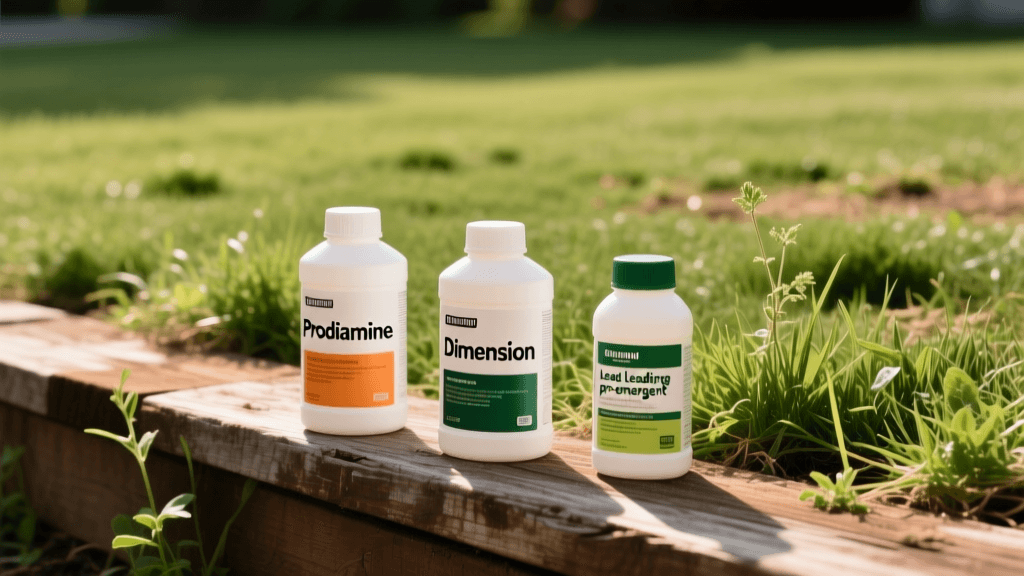
Best Pre-Emergent Herbicides for Lawns: Top 5 Compared
The Ultimate Pre-Emergent Herbicide Showdown
Stopping weeds before they breach the soil surface is the cornerstone of any professional lawn care program. Whether you are maintaining a pristine cool-season fescue lawn or a sprawling warm-season Bermuda turf, applying a pre-emergent herbicide is the most effective way to prevent crabgrass, goosegrass, and poa annua from invading. But with dozens of active ingredients and formulations on the market, choosing the right product can be overwhelming. In this comprehensive review, we compare the top pre-emergent herbicides available to homeowners and lawn care professionals, evaluating their efficacy, cost, and application ease.
How We Evaluate Pre-Emergent Herbicides
Our reviews are based on active ingredient longevity, spectrum of weed control, ease of application, and cost per 1,000 square feet. We also consider the flexibility of the application window. Some products require strict soil temperature adherence, while others offer early post-emergent control, giving you a wider margin for error during unpredictable spring weather.
Top 5 Pre-Emergent Herbicides Reviewed
1. Prodiamine 65 WDG (Generic Barricade) - Best Overall Value
Prodiamine 65 WDG is the professional standard for long-lasting pre-emergent control. As a water-dispersible granule (WDG), it mixes easily with water and is applied via a backpack or tow-behind sprayer. Its active ingredient creates a chemical barrier in the top inch of soil that halts weed seed germination for up to 6 months. At a rate of roughly 1.5 pounds per acre, it is incredibly cost-effective, costing pennies per 1,000 square feet. The primary drawback is that it stains concrete and stonework, requiring careful edging and immediate cleanup.
2. Dimension 2EW (Dithiopyr) - Best Liquid & Late-Season Flexibility
Dimension 2EW is a liquid pre-emergent that offers a unique advantage over Prodiamine: early post-emergent control. If you miss the strict early-spring application window and crabgrass has already germinated and reached the 1-leaf to 3-leaf stage, Dimension will still kill it. This makes it the ultimate insurance policy for homeowners who struggle with exact timing. It is highly effective against crabgrass, spurge, and oxalis. However, it is generally more expensive per application than Prodiamine and may require a split application for season-long control.
3. The Andersons 0.48% Barricade - Best Premium Granular
For those who prefer the simplicity of a broadcast spreader over mixing liquid sprays, The Andersons 0.48% Barricade is the top-tier granular option. It features extremely small, uniform granules that provide excellent coverage and distribute the active ingredient evenly across the soil surface. Because the granules are so fine, they fall easily through the turf canopy to reach the soil, which is crucial for pre-emergent activation. It is more expensive than big-box store alternatives but offers professional-grade results without the need for spraying equipment.
4. Scotts Halts Crabgrass Preventer - Best Big-Box Store Option
Scotts Halts is the most accessible pre-emergent for the average homeowner, available at nearly every garden center. It uses the active ingredient Pendimethalin. While it provides decent baseline protection against crabgrass, its longevity is shorter than Prodiamine or Dimension, often requiring a second application in late spring. Furthermore, the granules are quite large, which can lead to uneven distribution if your spreader is not calibrated correctly. It is a solid entry-level product but lacks the broad-spectrum weed control of professional alternatives.
5. Yard Mastery Pre-Emergent Blend - Best Ready-to-Spray
Yard Mastery offers a proprietary liquid blend that combines multiple active ingredients to target a wider spectrum of both grassy and broadleaf weeds. Packaged in a convenient hose-end sprayer or concentrated bottle, it removes the guesswork from mixing rates. It is an excellent choice for smaller lawns (under 5,000 square feet) where investing in a backpack sprayer or high-end granular product doesn't make financial sense.
Product Comparison Chart
| Product Name | Active Ingredient | Formulation | Longevity | Est. Cost per 1k Sq. Ft. |
|---|---|---|---|---|
| Prodiamine 65 WDG | Prodiamine | Liquid (WDG) | 4 - 6 Months | $0.05 - $0.10 |
| Dimension 2EW | Dithiopyr | Liquid | 3 - 4 Months | $0.15 - $0.25 |
| The Andersons Barricade | Prodiamine | Granular | 4 - 6 Months | $0.20 - $0.30 |
| Scotts Halts | Pendimethalin | Granular | 2 - 3 Months | $0.35 - $0.50 |
| Yard Mastery Blend | Proprietary Mix | Liquid | 2 - 3 Months | $0.40 - $0.60 |
Liquid vs. Granular: Which Application Method is Best?
The debate between liquid and granular pre-emergents is a common one in lawn care circles. Liquid applications (like Prodiamine WDG and Dimension 2EW) are generally preferred by professionals because they offer superior coverage, faster soil penetration, and a significantly lower cost per square foot. However, they require calibration of a sprayer and proper personal protective equipment (PPE).
Granular applications (like The Andersons Barricade) are much easier for beginners. You simply load the product into a broadcast spreader and walk your lawn. The primary requirement for granular pre-emergents is that they must be watered into the soil with at least 0.5 inches of irrigation or rainfall within 48 hours to activate the chemical barrier. If you lack spraying equipment or are intimidated by liquid mixing math, premium granular products are your best bet.
Application Timing and Soil Temperature Guidelines
Timing is the single most critical factor in pre-emergent success. Applying too early can cause the chemical barrier to break down before the main weed flush, while applying too late allows seeds to germinate. According to turfgrass researchers at the Purdue University Extension, crabgrass germination is triggered when the average daily soil temperature at a 2-inch depth reaches 50°F to 55°F for several consecutive days.
"Monitoring soil temperatures rather than calendar dates is the most reliable method for timing pre-emergent herbicide applications. Local microclimates can cause soil temperatures to vary significantly from regional air temperatures." - Purdue University Turfgrass Science Program
To track this, use a reliable soil thermometer or consult local university extension soil temperature maps. In most transition zones, this falls between late February and mid-March. For warm-season grasses like Bermuda and Zoysia, it is vital to ensure your lawn is fully green and actively growing before applying certain pre-emergents, as some active ingredients can stunt spring root development if applied during the green-up phase.
Cost Breakdown and ROI
When evaluating lawn care products, looking at the upfront price tag is misleading. A 5-pound bottle of Prodiamine 65 WDG might cost around $80, which seems steep. However, that single bottle can treat up to 4 acres (roughly 174,000 square feet). This brings the cost down to roughly $0.05 per 1,000 square feet. In contrast, a $40 bag of a big-box store granular preventer might only cover 5,000 square feet, equating to $8.00 per 1,000 square feet. Investing in professional-grade liquid herbicides yields a massive return on investment, freeing up budget for high-quality fertilizers and aeration services.
Frequently Asked Questions
Will pre-emergent kill my existing weeds?
No. Pre-emergents only prevent seeds from germinating. Existing weeds must be treated with a post-emergent herbicide or manually pulled. The only exception is Dimension (Dithiopyr), which has early post-emergent activity on very young crabgrass.
Does pre-emergent stop grass seed from growing?
Yes. Pre-emergent herbicides do not discriminate between weed seeds and desirable turfgrass seeds. If you plan to overseed your lawn in the spring, you cannot apply a standard pre-emergent. You must either wait until the new grass has been mowed three times or use a specialized, safe-for-seeding product like Tenacity (Mesotrione).
How much rain is needed to activate pre-emergent?
You need approximately 0.25 to 0.5 inches of rainfall or irrigation to wash the active ingredient off the grass blades and into the top inch of soil where weed seeds germinate. If no rain is in the forecast, you must water the lawn manually within 48 hours of application.