Home & Garden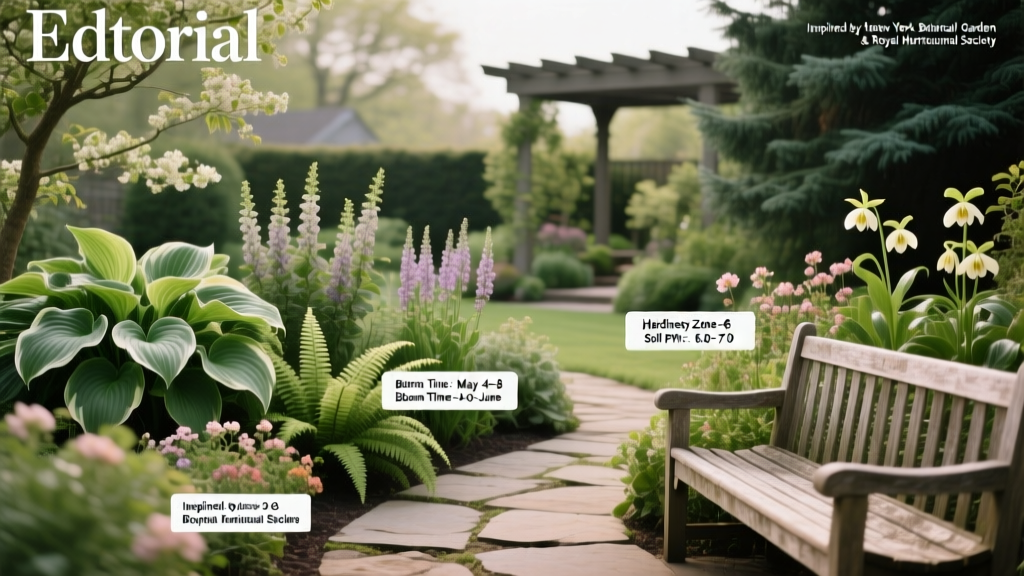
Best Shade Plants For North Facing Gardens
Making the Most of a North-Facing Garden
A north-facing garden gets less direct sun, which some gardeners see as a drawback. But it’s also a chance to grow plants that like cooler, shadier conditions — many of which would struggle or fade in full sun. With the right plants and a bit of attention to your soil and local weather, a north-facing plot can end up looking lush, layered, and quietly vibrant.
“Shade” means different things for different plants. The Royal Horticultural Society (RHS, 2023) breaks it down into deep shade, partial shade, and dappled shade — and most north-facing gardens fall somewhere between partial and dappled, catching indirect light for several hours each day. That’s useful to know when picking what to plant.
Understanding Light and Soil Conditions
Before choosing plants, take a look at how much light your garden actually gets. A north-facing space hemmed in by tall walls or thick hedges will be darker than one with an open view to the sky. Watch how light moves across the area through the year — winter sun sits lower, so even less light may reach the ground.
Soil in shady spots tends to stay damp longer. That suits moisture-loving plants but can drown roots of species that need well-drained soil. If you’ve got heavy clay, mix in horticultural grit and compost to help water move through. Most shade-tolerant plants do best in slightly acidic to neutral soil, around pH 5.5 to 7.0. Some woodland types — like rhododendrons and camellias — prefer more acid soil, closer to pH 4.5–6.0.
The Chicago Botanic Garden suggests testing your soil pH before planting. You can adjust it with sulfur to lower pH or garden lime to raise it. Even small shifts — half a point to a full point — can help plants absorb nutrients more easily.
Top Flowering Plants for Shaded Borders
You can still get plenty of flowers in shade. Several ornamentals bloom reliably without direct sun, and many actually prefer the cooler, damper air a north-facing garden offers.
Astilbe
Astilbe is a steady performer in shade. It’s hardy in USDA Zones 3 through 9 and sends up feathery plumes in white, pink, red, or purple from June to August, depending on the variety. It likes soil that stays evenly moist and rich in organic matter, with a pH between 6.0 and 8.0. Try Astilbe x arendsii 'Fanal' (deep red, blooms in June) alongside 'Bridal Veil' (white, July) for colour that carries through the summer.
Plant astilbe in groups of three or five. Space them 45–60 cm apart, and divide the clumps every three or four years to keep them strong. The dried flower heads hold up well through winter, so wait until early spring before cutting them back.
Hellebores
Hellebores — often called Lenten roses — are a real plus in a north-facing garden. Helleborus x hybridus varieties bloom from February to April, when not much else is flowering. They’re hardy in Zones 4 through 9 and handle deep shade without fuss. They like neutral to slightly alkaline soil, pH 7.0–8.0, so they’re a good fit for chalky or limestone-based ground.
The Royal Botanic Gardens, Kew, lists over 200 named hellebore cultivars — from simple white flowers to double blooms in near-black shades. Once settled in, hellebores need little attention and often spread gently on their own.
Foxgloves
The common foxglove (Digitalis purpurea) is a biennial that does well in partial shade. It throws up tall spikes of tubular flowers in June and July, and it’s hardy in Zones 4 through 9. It prefers acidic, well-drained soil, pH 5.5–6.5. For something longer-lived, try Digitalis grandiflora (yellow foxglove), which is hardy to Zone 3 and blooms steadily in dappled shade.
Foliage Plants That Anchor the Design
In shade, foliage does much of the work — carrying the garden through stretches when there aren’t many flowers. Mixing leaf shapes, textures, and tones keeps things interesting all year.
Hostas are a go-to for shade. There are hundreds of cultivars, from tiny types with 5 cm leaves to big ones like Hosta 'Sum and Substance', which can hit 90 cm tall with leaves nearly 60 cm wide. They’re hardy in Zones 3 through 9 and like slightly acidic soil, pH 6.0–7.5. The American Hosta Society (2022) points out that hostas with thicker, blue-green leaves tend to hold up better against slugs than thin-leaved yellow or gold kinds — handy in the damp conditions of a north-facing spot.
Ferns are just as useful. The soft shield fern (Polystichum setiferum) stays green year-round, is hardy to Zone 5, and once established, handles dry shade better than most ferns. The Japanese painted fern (Athyrium niponicum var. pictum) adds silver and burgundy tones to darker corners and grows in Zones 3 through 8.
For ground cover, epimediums are low-growing perennials that cope with dry shade under trees. Hardy in Zones 4 through 9, they send up small spring flowers and often show bronze or red tints in their leaves come autumn.
Shrubs for Structure and Year-Round Interest
Shrubs give shape and presence to any garden, and several thrive in north-facing spots. They help define areas, screen boundaries, and support climbers.
Hydrangeas fit right in. Hydrangea macrophylla varieties bloom from July to September and are hardy in Zones 6 through 9. With mophead and lacecap types, flower colour changes with soil pH: blue in acidic soil (below pH 6.0), pink in alkaline soil (above pH 7.0). So they’re a handy way to get a rough idea of your soil’s acidity.
Camellias work well against sheltered north-facing walls. Camellia japonica and Camellia x williamsii bloom from February to May, adding colour when it’s most welcome. They need acidic soil, pH 4.5–6.0, and benefit from a mulch of pine bark or composted bracken to keep acidity steady. Hardy in Zones 7 through 9, they’re best placed where a wall shields them from late frosts that could damage early flowers.
Mahonia is a bold evergreen shrub that tolerates deep shade and puts out fragrant yellow flowers in winter — November to February, depending on the species. Mahonia x media 'Charity' can reach 3 metres and is hardy in Zones 7 through 9. Its stiff, architectural leaves make it a strong anchor in larger shaded borders.
Climbing Plants for Walls and Fences
North-facing walls and fences are often bare, but they’re great places for climbers that like cooler, shadier conditions. A few well-chosen vines can turn a plain surface into something alive and layered.
- Climbing hydrangea (Hydrangea anomala subsp. petiolaris): Clings on its own, hardy in Zones 4 through 8, with white lacecap flowers in June and July. It takes time to settle in, but lasts for decades with little care once it does.
- Ivy (Hedera helix): Evergreen, hardy in Zones 4 through 9, and happy in deep shade. It gives cover year-round and supports insects and birds. Cultivars like 'Glacier' or 'Goldheart' add visual interest with variegated leaves.
- Virginia creeper (Parthenocissus quinquefolia): Hardy in Zones 3 through 9, clings without support, and turns bright scarlet in autumn. It copes well with partial shade.
- Schizophragma integrifolium: A climbing hydrangea cousin, hardy in Zones 5 through 8, with bigger flower bracts and a bolder look. It blooms in July and August.
Seasonal Planting Combinations
Shaded gardens benefit from planning across the seasons — relying on just a few tough plants can leave gaps. A thoughtfully planted north-facing border can offer something worth looking at in every month.
"The best shade gardens are designed in layers — a canopy of shrubs, a mid-layer of perennials, and a ground layer of low-growing plants — each contributing at a different time of year. The goal is never to have a moment when the garden looks empty." — Beth Chatto Gardens, Essex, planting philosophy statement
For spring, try hellebores with snowdrops (Galanthus nivalis, Zones 3–7) and wood anemones (Anemone nemorosa, Zones 3–8). These come up early, before deciduous shrubs leaf out, making the most of the extra light that filters through in late winter and early spring.
In summer, astilbe pairs well with hostas and ferns for a soft, woodland feel. Or mix foxgloves with Geranium phaeum (dusky cranesbill, Zones 4–8) for a looser, more relaxed look. Come autumn, look to the changing colours of Japanese painted ferns, the red berries of Aucuba japonica, and the late-blooming flowers of Tricyrtis (toad lily, Zones 4–9).
A Suggested Planting Scheme for a 3m x 2m Border
| Plant | Height | Season of Interest | Hardiness Zone | Soil pH |
|---|---|---|---|---|
| Camellia x williamsii 'Donation' | 2.5 m | Feb–Apr (flowers) | 7–9 | 4.5–6.0 |
| Hydrangea macrophylla 'Endless Summer' | 1.2 m | Jul–Sep (flowers) | 4–9 | 5.5–7.0 |
| Astilbe x arendsii 'Fanal' | 60 cm | Jun–Jul (flowers) | 3–9 | 6.0–8.0 |
| Hosta 'Halcyon' | 45 cm | Apr–Oct (foliage) | 3–9 | 6.0–7.5 |
| Helleborus x hybridus | 45 cm | Feb–Apr (flowers) | 4–9 | 7.0–8.0 |
| Polystichum setiferum | 60 cm | Year-round (foliage) | 5–9 | 5.5–7.0 |
| Epimedium x rubrum | 30 cm | Apr–May (flowers), autumn (foliage) | 4–9 | 5.5–7.0 |
Soil Preparation and Ongoing Maintenance
Getting the soil right before planting makes a real difference in a shaded border. Work in a 10 cm layer of well-rotted leaf mould or garden compost to a depth of about 30 cm. Leaf mould is especially helpful — it mimics the natural leaf litter of woodland floors, helping soil hold moisture while still draining well.
Mulch each spring with 5–7 cm of composted bark or leaf mould. This cuts down on weeds, holds moisture, and slowly improves soil texture. Just keep mulch away from plant stems to avoid rot. Feed lightly in early spring with a balanced slow-release fertiliser. Avoid high-nitrogen feeds — they encourage soft growth that slugs love.
Slugs and snails are a regular issue in cool, damp shade. The RHS (2023) suggests combining methods: copper tape as a barrier, nematodes applied in spring and autumn, and habitat for natural predators like hedgehogs, frogs, and ground beetles — think log piles or shallow dishes of water.
Garden Structures That Complement Shade Planting
Hard landscaping and structures matter in north-facing gardens. Light-coloured walls and paving — cream limestone, pale sandstone, or white-painted render — bounce available light back into the space and make it feel airier.
Mirrors on north-facing walls are a classic trick — used for years by designers at Chelsea Flower Show to suggest depth and lift the light. Frame them like a window or gate so they blend in, and check they won’t confuse birds.
Water features suit shaded gardens well. The sound of moving water adds another layer of interest where visuals are softer, and a still pool reflects light, making the space feel brighter. Place a small raised pool or rill where it catches the most open sky — usually the part of the garden farthest from walls and fences.
- Use pale-coloured hard landscaping materials to reflect more light.
- Add wall-mounted planters at different heights to build vertical interest on bare fences.
- A pergola or arch draped with climbing hydrangea or ivy frames a view and adds structure.
- A simple bench works well — north-facing gardens stay pleasantly cool in summer, making them comfortable places to sit.
With thoughtful plant choices, decent soil prep, and a few well-placed structures, a north-facing garden can be just as rewarding as one that bakes in the sun. The plants here are tried and recommended by the Royal Horticultural Society, the Chicago Botanic Garden, and the Royal Botanic Gardens, Kew — all of which maintain shade gardens you can visit for ideas and to see what works in real conditions.
