Tree Care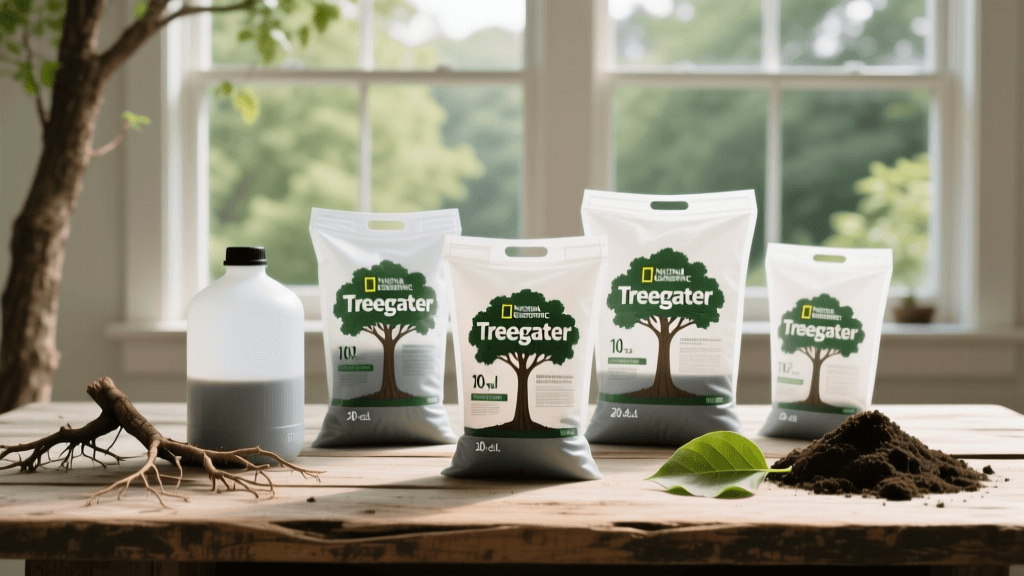
Best Tree Watering Bags Reviewed: Treegator vs Alternatives
The Challenge of Tree Establishment
Planting a new tree in your landscape is a long-term investment in your property’s shade, beauty, and ecological value. However, the first two years after planting are the most critical. During this period, the tree must overcome transplant shock and establish a robust root system in its new native soil. The single most important factor in this process is consistent, deep hydration. While many homeowners rely on garden hoses or automated sprinkler systems, these methods often fail to deliver water directly to the root ball where it is needed most. Enter the slow-release tree watering bag: a simple, gravity-fed irrigation tool designed to solve this exact problem.
In this comprehensive review, we compare the industry-leading tree watering bags and alternative slow-release systems. We will break down their capacity, durability, cost, and overall effectiveness to help you choose the best product for your landscape needs.
The Science of Deep Root Hydration
Before diving into product reviews, it is essential to understand why slow-release watering is superior to surface sprinkling. When a tree is planted, its root system is largely confined to the nursery soil. If you water with a standard sprinkler, the water often runs off the hydrophobic nursery root ball or evaporates before penetrating deeply. This encourages shallow, surface-level roots that are highly susceptible to drought and heat stress.
According to research from the University of Florida IFAS Extension, deep, infrequent watering is the gold standard for tree establishment. Slow-release watering bags hold 15 to 20 gallons of water and release it gradually over 5 to 12 hours. This slow drip allows water to percolate deeply into the root ball and the surrounding backfill soil, pulling the roots downward and outward. Furthermore, these bags prevent soil erosion and eliminate water waste from runoff.
"Deep, slow irrigation ensures that the entire root ball reaches field capacity without drowning the surrounding soil. Slow-release bags mimic natural, prolonged rainfall, which is vital for preventing root ball desiccation in newly transplanted trees." — Dr. Edward Gilman, Urban Trees Expert, University of Florida IFAS.
Top Tree Watering Products Reviewed
1. Treegator Original (The Industry Standard)
The Treegator Original is the pioneer of the slow-release watering bag and remains the benchmark against which all competitors are measured. Constructed from heavy-duty, UV-treated polyethylene, this bag wraps around the tree trunk and zips securely in place.
- Capacity: 20 Gallons
- Trunk Compatibility: 1 to 8 inches in diameter
- Drip Time: 5 to 9 hours
- Approximate Cost: $24.00 - $28.00
Pros: The heavy-duty zipper rarely fails, and the UV treatment prevents the plastic from becoming brittle and cracking after a season in the sun. The emitters are clog-resistant and easily cleaned. It fits snugly against the trunk, minimizing evaporation.
Cons: It requires a single, straight trunk. It cannot be used on multi-trunk trees or trees with branches that start very close to the ground.
2. Treegator Jr. (For Multi-Trunk and Low-Branching Trees)
Not all trees grow with a single, tall central leader. For multi-trunk trees, low-branching ornamentals, or trees planted on steep slopes where a standing bag would tip over, the Treegator Jr. offers a brilliant ring-style design.
- Capacity: 15 Gallons
- Trunk Compatibility: Up to 5 inches in diameter (or multi-trunk bases)
- Drip Time: 5 to 9 hours
- Approximate Cost: $22.00 - $25.00
Pros: The flat, donut-like ring sits directly on the soil over the root ball. It is incredibly stable on uneven terrain and works perfectly for shrubs and multi-stemmed trees like Crape Myrtles or River Birches.
Cons: Slightly lower capacity than the Original. Because it lays flat on the mulch, it can be more susceptible to damage from string trimmers or lawnmowers if the operator is not careful.
3. Generic / Off-Brand Watering Bags (The Budget Option)
Search any online marketplace, and you will find dozens of generic, unbranded tree watering bags selling in multi-packs for a fraction of the cost of a Treegator. While they look identical in product photos, the material quality varies wildly.
- Capacity: 20 Gallons (Claimed)
- Trunk Compatibility: 1 to 8 inches
- Drip Time: Varies widely (often faster due to larger emitter holes)
- Approximate Cost: $10.00 - $15.00 per bag (usually sold in 2-packs)
Pros: Highly affordable. If you are planting a large orchard or a massive windbreak on a tight budget, the upfront savings are significant.
Cons: The zippers are notoriously weak and frequently split when the bag is full of water. The plastic is thinner, lacking adequate UV inhibitors, meaning they often degrade, tear, and end up in the landfill after a single season. The emitters clog easily with hard water minerals.
4. The Ooze Tube (The Alternative Drip System)
For those who dislike the aesthetic of a plastic bag wrapped around a tree, the Ooze Tube offers a different approach. It is a rigid, cylindrical PVC-like tube with a specialized slow-release emitter at the base.
- Capacity: 20 Gallons
- Trunk Compatibility: Any size (placed 12 inches away from the trunk)
- Drip Time: 10 to 15 hours
- Approximate Cost: $30.00 - $35.00
Pros: Extremely durable and virtually indestructible. It does not touch the tree bark, eliminating any risk of trapping moisture against the trunk (which can invite fungal pathogens). The slow drip time is excellent for heavy clay soils that absorb water slowly.
Cons: More expensive. It takes up physical space in the garden bed and must be staked securely so it does not blow over in high winds when full.
Feature Comparison Chart
| Product | Capacity | Best Use Case | Est. Drip Time | Durability | Cost |
|---|---|---|---|---|---|
| Treegator Original | 20 Gal | Standard single-trunk trees | 5 - 9 Hours | High | $$ |
| Treegator Jr. | 15 Gal | Multi-trunk, slopes, shrubs | 5 - 9 Hours | High | $$ |
| Generic Brands | 20 Gal | Mass plantings on a budget | 3 - 8 Hours | Low | $ |
| The Ooze Tube | 20 Gal | Clay soils, bark protection | 10 - 15 Hours | Very High | $$$ |
How to Use Tree Watering Bags Correctly
Even the best product will fail if used improperly. Follow these actionable steps to ensure your tree gets the hydration it needs without risking trunk rot or mosquito breeding.
- Position and Zip: Wrap the bag around the tree trunk. Ensure the emitters (the small black caps at the bottom inside) are resting flat against the ground or mulch. Zip the bag securely from bottom to top.
- Prop and Fill: Gently pull the top collar of the bag upward to open the internal emitters. Insert your garden hose and fill the bag. For a 20-gallon bag, this usually takes 3 to 5 minutes depending on your water pressure.
- Adjust and Release: Once full, let go of the collar so it drops down, covering the fill hole to prevent debris and mosquitoes from entering. The bag will slowly deflate over the next several hours.
- Remove Between Waterings: This is the most common mistake homeowners make. Do not leave empty bags on the tree 24/7. Once the bag is empty, unzip it, remove it, and store it in a shed or garage. Leaving a damp, empty plastic bag wrapped tightly against the bark creates a dark, humid environment that invites fungal cankers, bark rot, and pest infestations like borers.
Maintenance and Winter Storage
Mineral deposits from hard water and algae from standing water will eventually clog the micro-emitters. At the end of every month, or at least at the end of the growing season, clean your bags. Fill the bag with a solution of 9 parts water to 1 part household bleach. Let it sit for 30 minutes, then empty it and rinse thoroughly with a hose. Allow the bags to dry completely in the sun before folding and storing them in a frost-free location for the winter. UV degradation and freezing temperatures will destroy the plastic if left outside year-round.
Seasonal Watering Schedules for New Trees
A watering bag is a tool, but you must provide the schedule. The frequency of filling your bag depends on the season, soil type, and local rainfall.
- Spring and Fall: Fill the bag once every 5 to 7 days. Cooler temperatures and occasional rainfall reduce the tree’s transpiration rate.
- Summer (Peak Heat): Fill the bag twice a week (every 3 to 4 days). High heat and wind strip moisture from the leaves rapidly, demanding constant root ball replenishment.
- Winter (Dormancy): In most climates, watering bags are not needed once the tree drops its leaves and enters dormancy. However, in arid, frost-free winter climates (like parts of the Southwest US), a deep soaking once a month is recommended to prevent winter root desiccation.
Always check the soil moisture before filling the bag. Dig down 4 to 6 inches near the root ball with a trowel. If the soil feels cool and holds together in a ball, it has sufficient moisture. If it crumbles and feels dry, it is time to deploy the watering bag.
Final Verdict: Which Product Should You Buy?
For the vast majority of homeowners planting standard shade or ornamental trees, the Treegator Original is the undisputed champion. Its balance of durability, emitter reliability, and UV resistance justifies the $25 price tag, as it will easily last for the 2 to 3 years required for full tree establishment. If you are planting multi-stemmed trees or working on a sloped berm, the Treegator Jr. is the necessary alternative. Budget-conscious gardeners planting dozens of trees at once may opt for generic bags, but they should be prepared to replace zippers and deal with clogged emitters. Finally, for those dealing with heavy, slow-draining clay soils, The Ooze Tube provides a superior, ultra-slow drip that prevents waterlogging while ensuring deep penetration.
By investing in the right slow-release watering system and adhering to a proper removal and maintenance schedule, you will drastically reduce transplant shock and ensure your new trees thrive for decades to come.