Tree Care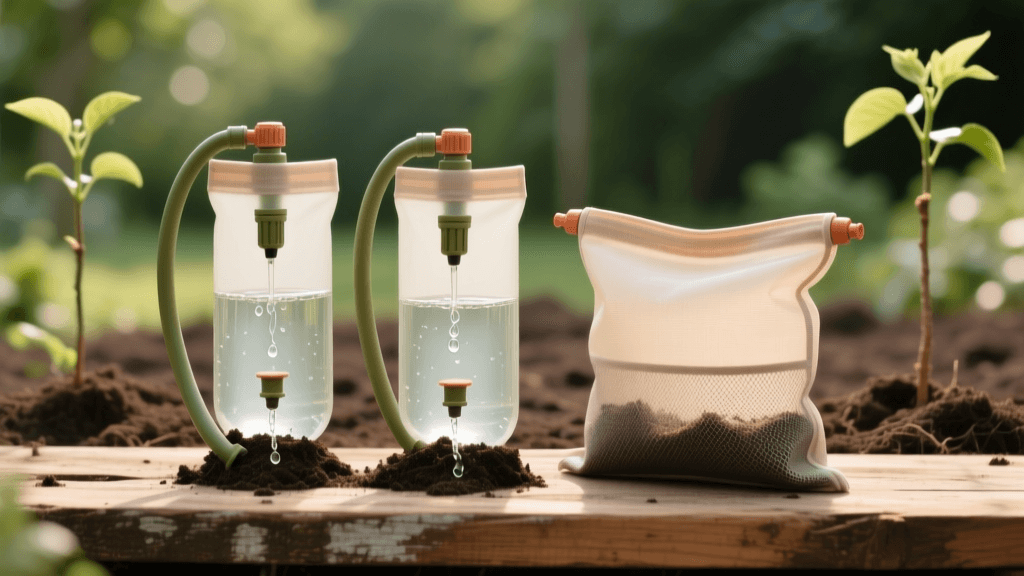
Best Tree Watering Bags: Reviews and Comparison Guide
The Science of Slow-Release Tree Hydration
Establishing a robust root system is the single most critical factor in the survival and long-term health of a newly planted tree. While manual watering with a hose is common, it often leads to surface runoff, soil compaction, and uneven moisture distribution. Slow-release tree watering bags and drip rings have revolutionized arboriculture by providing a consistent, deep-soaking hydration method that encourages roots to grow downward rather than outward.
According to the University of Minnesota Extension, deep and infrequent watering is vastly superior to shallow, daily sprinkling. Slow-release bags deliver water directly to the root ball over a period of 5 to 9 hours, eliminating runoff and ensuring that the critical root zone remains uniformly moist. In this comprehensive guide, we review and compare the top tree watering products on the market to help you choose the right system for your landscape.
Top Tree Watering Systems Reviewed
1. Treegater Original (20-Gallon Capacity)
The Treegater Original is widely considered the industry standard for professional arborists and serious home gardeners. Designed to fit trees with a trunk caliper of 1 to 4 inches, this heavy-duty, UV-resistant polyethylene bag wraps around the trunk and zips securely into place. It holds 20 gallons of water and features dual emitters at the base that slowly release moisture over 5 to 8 hours.
- Pros: Extremely durable, easy to install, fits most standard nursery trees, and features a wide fill opening that accommodates standard garden hoses.
- Cons: The zipper can occasionally snag on bark if not aligned properly, and the 20-gallon capacity may require frequent refilling during peak summer heat for larger caliper trees.
- Best For: Standard single-trunk trees planted in flat or gently sloped terrain.
- Average Cost: $35 - $40 per unit.
2. ArborRain Tower (28-Gallon Capacity)
The ArborRain Tower takes a slightly different approach by utilizing a tapered, tower-like design that keeps the bulk of the water and the bag material away from the tree trunk. This design significantly reduces the risk of trunk rot and fungal issues, which can occur if moist fabric rests against the bark for extended periods. With a massive 28-gallon capacity, it is ideal for larger, more mature transplants.
- Pros: Superior trunk protection, highest water capacity in its class, and an integrated drip ring that prevents soil erosion around the base.
- Cons: Bulky to store during the off-season and slightly more expensive than standard wrap-around bags.
- Best For: Large-caliper trees (up to 6 inches) and species highly susceptible to bark rot or collar rot.
- Average Cost: $45 - $55 per unit.
3. Treegator Jr. Pro (15-Gallon Donut Design)
Not all trees are planted in perfect conditions. For trees situated on slopes, berms, or those with multiple trunks (multi-stemmed species like River Birch or Crape Myrtle), a wrap-around bag simply will not work. The Treegator Jr. Pro solves this with a flat, donut-shaped ring that lays directly on the mulch bed. It holds 15 gallons and features adjustable emitters to control the drip rate.
- Pros: Perfect for slopes, multi-trunk trees, and low-branching species where a vertical bag cannot be zipped.
- Cons: Takes up more horizontal space in the mulch bed and can be easily punctured by aggressive weed whackers.
- Best For: Sloped landscapes, multi-stemmed trees, and shrubs requiring deep root soaking.
- Average Cost: $30 - $35 per unit.
4. The Ooze Tube (5-Gallon Vertical Drip)
While not a traditional 'bag', the Ooze Tube is a highly effective slow-release watering system. It consists of a 5-gallon PVC-like tube with a specialized cap and emitter base. You simply fill the tube and place it near the tree's drip line. Because it is a rigid tube, it is virtually indestructible and can be moved from tree to tree as needed.
- Pros: Indestructible, highly portable, easy to fill without bending over, and prevents trunk contact entirely.
- Cons: Lower capacity means you will need multiple tubes for larger trees or daily refilling during droughts.
- Best For: Urban tree pits, narrow landscape beds, and gardeners who want to move their watering system between multiple plants.
- Average Cost: $20 - $25 per unit.
Comprehensive Product Comparison Chart
| Product | Capacity | Design Type | Max Trunk Caliper | Ideal Use Case | Avg. Price |
|---|---|---|---|---|---|
| Treegater Original | 20 Gallons | Wrap-Around Zipper | 4 Inches | Standard flat-bed plantings | $38 |
| ArborRain Tower | 28 Gallons | Tapered Tower | 6 Inches | Large transplants, rot-prone bark | $50 |
| Treegator Jr. Pro | 15 Gallons | Flat Donut Ring | N/A (Multi-trunk) | Slopes, berms, multi-stem trees | $33 |
| The Ooze Tube | 5 Gallons | Vertical Rigid Tube | N/A (Drip Line) | Urban pits, narrow beds, portability | $22 |
Calculating Your Tree's Water Needs
Before purchasing a watering system, it is vital to understand how much water your tree actually requires. The International Society of Arboriculture (ISA) recommends providing roughly 10 gallons of water per week for every inch of trunk caliper (measured at knee height). For example, a newly planted maple with a 2-inch caliper requires approximately 20 gallons of water per week during the growing season.
If you are using a 20-gallon Treegater, you would need to fill it exactly once a week under normal summer conditions. During extreme heat waves or droughts, this frequency may need to increase to twice a week. Conversely, during cool spring or autumn weeks, you may only need to fill the bag every 10 to 14 days. Always check the soil moisture at a depth of 4 to 6 inches before refilling; if the soil is still muddy, delay watering to prevent root asphyxiation.
Tree Watering Bags vs. Drip Irrigation Rings
Many homeowners wonder if they should use a temporary watering bag or install a permanent drip irrigation ring. Watering bags are ideal for the first 1 to 3 years after planting, which is the critical establishment period. Once the tree's root system has expanded beyond the original root ball and into the surrounding native soil, the bags should be removed. Permanent drip rings are better suited for long-term maintenance in arid climates, but they require winterization, pressure regulators, and complex plumbing that may not be feasible for a single street tree or front yard focal point.
Installation, Maintenance, and Winter Storage
To get the most out of your investment, proper maintenance is required. The Morton Arboretum emphasizes that tree care tools must be kept clean to prevent the spread of soil-borne pathogens. At the end of the growing season, empty your watering bags and flush them with a solution of 10% white vinegar and 90% water. This clears out algae, mineral deposits, and debris that can clog the micro-emitters.
Crucial Warning: Never leave a tree watering bag on a tree during the winter months or late autumn. Empty bags left wrapped around a trunk can trap moisture against the bark, leading to severe fungal cankers, rodent habitation, and winter sunscald. Always unzip, clean, dry, and store your bags in a shed or garage once the tree enters dormancy.
Common Mistakes to Avoid
- Leaving the bag on the tree constantly: Tree bark needs to breathe and dry out. It is recommended to remove the bag between fillings if possible, or at least ensure the trunk is dry before re-wrapping.
- Using liquid fertilizer in the bag: Unless the manufacturer explicitly states the emitters are designed for fertigation, adding liquid fertilizer will clog the micro-drip holes and ruin the bag. Stick to clean water.
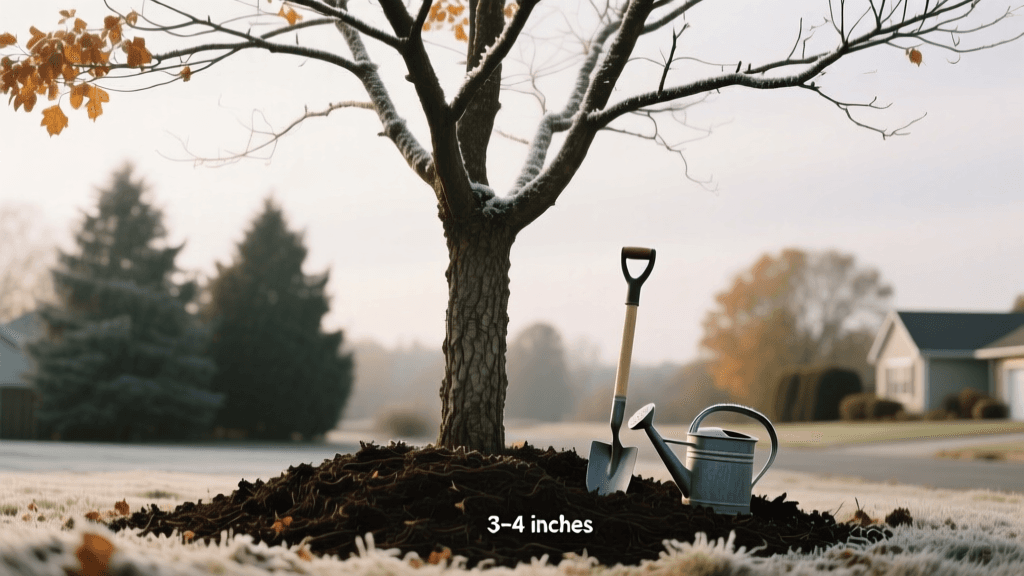
- Ignoring the mulch ring: A watering bag is not a substitute for proper mulching. Ensure you have a 2 to 3-inch layer of organic mulch spread in a wide ring around the tree (keeping it away from the trunk flare) to retain the moisture being released by the bag.
Final Verdict
For the vast majority of homeowners and landscaping professionals, the Treegater Original remains the most reliable and cost-effective choice for standard tree planting projects. However, if you are dealing with sloped terrain or multi-trunked specimens, the Treegator Jr. Pro is an absolute necessity. By utilizing slow-release hydration technology, you eliminate the guesswork from tree watering, reduce water waste, and give your newly planted trees the absolute best chance at thriving for decades to come.