Tree Care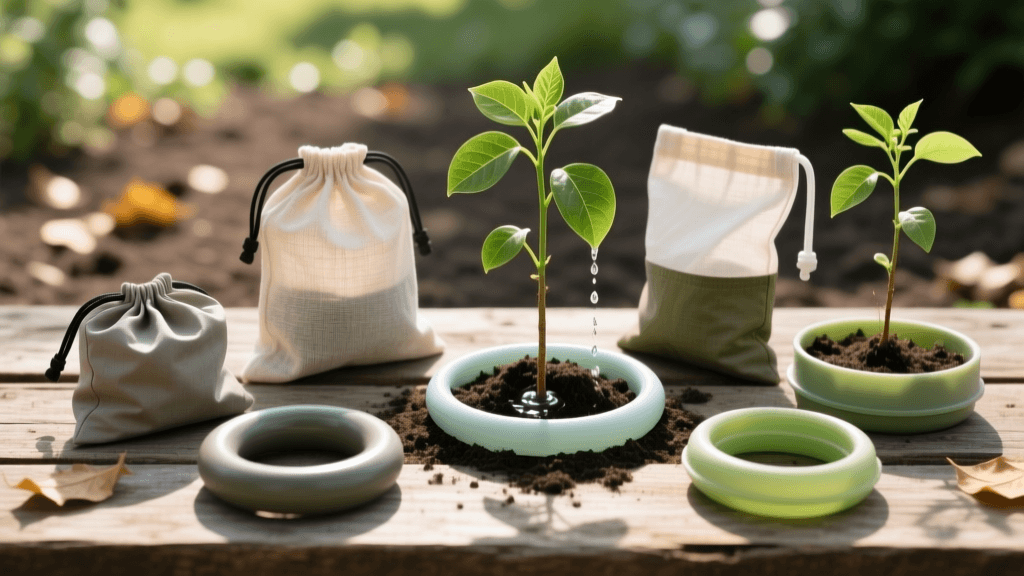
Best Tree Watering Bags and Rings Compared & Reviewed
The Challenge of Establishing New Trees
Planting a new tree is an investment in your property's future, but the first two years of establishment are critical. The most common cause of transplant shock and early tree mortality is improper watering. Hand-watering with a hose often leads to surface runoff, while sprinkler systems rarely deliver the deep, slow percolation required to encourage deep root growth. This is where slow-release tree watering bags and rings become essential tools for homeowners and arborists alike.
In this comprehensive guide, we review and compare the top tree watering systems on the market, breaking down their capacity, durability, and ideal use cases. Whether you are planting a single shade tree in your front yard or managing a large-scale reforestation project, choosing the right hydration delivery system will save you time, conserve water, and ensure your trees thrive.
The Science of Slow-Release Deep Watering
Why use a watering bag instead of a hose? According to the Morton Arboretum, newly planted trees require consistent moisture in the root ball to establish fine feeder roots. Fast applications of water simply run off the compacted soil surface or evaporate in the summer heat. Slow-release bags deliver water directly to the root zone over a period of 5 to 12 hours, eliminating runoff and ensuring deep soil penetration. This mimics a slow, steady rainstorm, which is the ideal hydration method for woody plants.
Comparison Chart: Top Tree Watering Systems
Below is a side-by-side comparison of the industry's most trusted tree watering bags and rings. Use this chart to identify which system best matches your tree's caliper (trunk diameter) and your landscape's topography.
| Product | Capacity | Max Tree Caliper | Drip Rate | Est. Cost | Best For |
|---|---|---|---|---|---|
| Treegator Original | 20 Gallons | 8 inches | 5-9 Hours | $24.99 | Standard newly planted trees |
| Arbor Rain Tree Ring | 32 Gallons | 6 inches | 8-10 Hours | $34.99 | Slopes, mounds, and balled-and-burlapped trees |
| DeWitt Tree Watering Bag | 20 Gallons | 8 inches | 5-8 Hours | $17.99 | Budget-conscious bulk planting |
| Treegator Junior | 15 Gallons | 3 inches | 5-9 Hours | $21.99 | Multi-trunk trees and tight spaces |
Detailed Product Reviews
1. Treegator Original (Best Overall Bag)
The Treegator Original is the pioneer of the industry and remains the gold standard for arborists. Designed to wrap around the trunk and zip together, it forms a 20-gallon reservoir that slowly empties through micro-perforations at the base.
- Pros: Extremely durable UV-treated polyethylene; heavy-duty zippers; fits tree calipers from 1 to 8 inches; zippers allow multiple bags to be connected for larger trees.
- Cons: Can be prone to tipping if not properly filled on uneven ground; emitters can clog if filled with hard water or liquid fertilizer.
- Verdict: If you are planting standard container-grown or balled-and-burlapped trees on relatively flat ground, the Treegator Original is the most reliable choice.
2. Arbor Rain Tree Ring (Best for Slopes & Mounds)
Traditional wrap-around bags struggle on sloped terrain or when trees are planted on elevated mounds for drainage. The Arbor Rain Tree Ring solves this by laying flat on the ground, encircling the tree like a donut. It holds an impressive 32 gallons of water.
- Pros: Unaffected by gravity on slopes; massive 32-gallon capacity reduces refill frequency; easy to fill via a standard hose connection; doubles as a weed barrier.
- Cons: Takes up more horizontal space (approx. 24-inch radius); not suitable for trees with low-hanging branches that sweep the ground.
- Verdict: The absolute best option for sloped landscapes, rain garden berms, or areas where municipal watering restrictions limit you to once-a-week watering schedules.
3. DeWitt Tree Watering Bag (Best Budget Option)
DeWitt, a brand famous for landscape fabrics, offers a highly competitive 20-gallon watering bag at a lower price point than the Treegator. It features similar UV inhibitors and a wrap-around zipper design.
- Pros: Highly affordable for bulk purchases; excellent UV resistance; lightweight and easy to store during the off-season.
- Cons: The zipper quality is slightly inferior to the Treegator and may snag if dirt gets into the teeth; base seams can occasionally weep if over-pressurized.
- Verdict: Ideal for community planting events, municipal projects, or homeowners planting multiple trees on a strict budget.
4. Treegator Junior (Best for Multi-Trunk Trees)
Not all trees are single-trunk standards. For crape myrtles, birches, or Japanese maples with multiple low-branching trunks, a standard wrap-around bag simply will not fit. The Treegator Junior is a 15-gallon, low-profile ring that sits at the base of the tree.
- Pros: Accommodates multi-trunk trees; low profile hides easily under a layer of mulch; excellent for smaller caliper trees (under 3 inches).
- Cons: Lower capacity means more frequent refilling during peak summer heat.
- Verdict: A niche but necessary product for ornamental, multi-stemmed, or shrub-form trees.
Sizing Guidelines: How Much Water Do Trees Need?
Choosing the right bag is only half the battle; knowing how often to fill it is the other. According to the Texas A&M AgriLife Extension, a general rule of thumb for newly planted trees is to provide 10 gallons of water per week for every inch of trunk caliper (measured at knee height).
For example, a newly planted oak tree with a 2-inch caliper requires roughly 20 gallons of water per week. During the heat of summer, this may need to be split into two applications. A 20-gallon Treegator bag filled twice a week perfectly meets this requirement. Always adjust your schedule based on natural rainfall; if your area receives an inch of rain, you can skip a refill cycle.
Installation, Maintenance, and Winter Care
To maximize the lifespan of your watering bags and the health of your trees, follow these maintenance protocols:
- Proper Placement: Never let the bag rest directly against the bark of the tree. Pull the bag slightly away from the trunk to allow air circulation. Trapped moisture against the bark can lead to fungal cankers and invite boring insects.
- Preventing Algae and Clogs: Over time, algae and mineral deposits will clog the micro-emitters. At the end of every season, flush the bags with a 10% bleach solution, rinse thoroughly, and let them dry completely before storing.
- Winter Storage: Do not leave watering bags on trees year-round. The University of Minnesota Extension warns that leaving plastic against tree trunks during winter provides a warm, sheltered habitat for rodents, which will chew through the bark and girdle the tree. Remove, clean, and store bags indoors before the first hard freeze.
- Fertilizer Warning: While some manufacturers claim you can add liquid fertilizer to the bags, we advise against it. Liquid synthetics and organic emulsions will rapidly clog the microscopic drip holes, ruining the bag. Apply fertilizers to the soil surface and let the clear water from the bag wash it into the root zone.
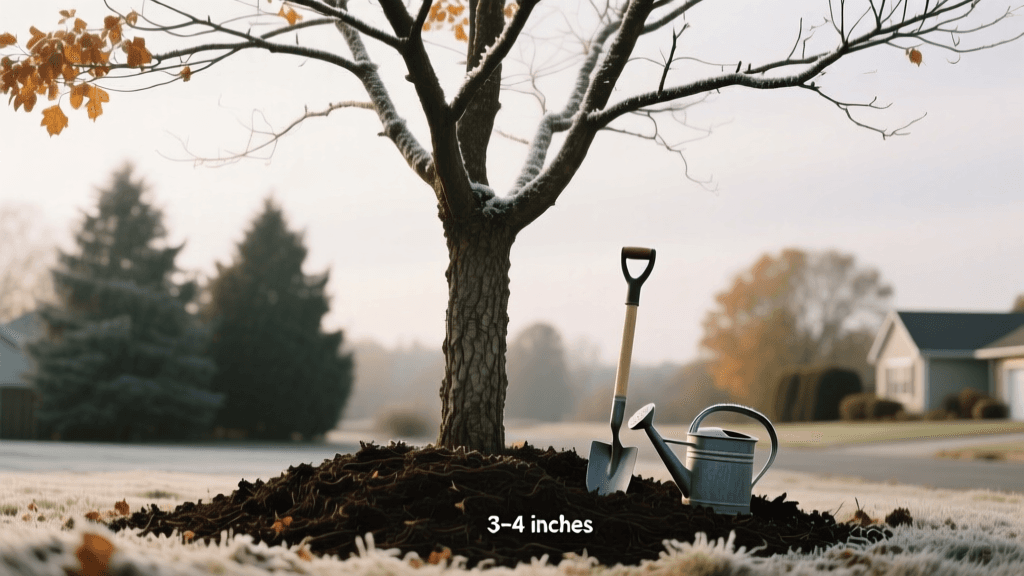
Expert Arborist Tip: Always apply a 2-to-3-inch layer of organic wood chip mulch beneath the tree's drip line before placing your watering ring or bag. The mulch will retain the slow-release moisture, moderate soil temperature, and prevent the soil beneath the bag from becoming compacted or anaerobic.
Frequently Asked Questions
Can I use tree watering bags on established trees?
Tree watering bags are primarily designed for newly planted trees (1 to 3 years old) whose root balls are still confined. Established trees have root systems that extend far beyond the drip line. While a bag won't harm an established tree, it will not deliver water to the extensive outer feeder roots where it is needed most. For established trees, deep-root soil probes or slow-drip soaker hoses laid in concentric circles are much more effective.
How long do tree watering bags last?
With proper end-of-season cleaning and indoor winter storage, a high-quality bag like the Treegator or Arbor Rain will last between 3 to 5 years. Budget bags left out in the sun year-round will typically degrade and tear from UV exposure within a single season.
Final Thoughts
Investing in a slow-release tree watering system is one of the highest-ROI practices you can adopt for your landscape. The Treegator Original remains our top pick for standard plantings due to its rugged durability and versatile sizing, while the Arbor Rain Tree Ring is an absolute must-have for challenging slopes and mounds. By pairing these tools with proper mulching and seasonal timing, you will drastically reduce transplant shock and ensure your trees grow into towering, healthy fixtures of your property for decades to come.