
Landscaping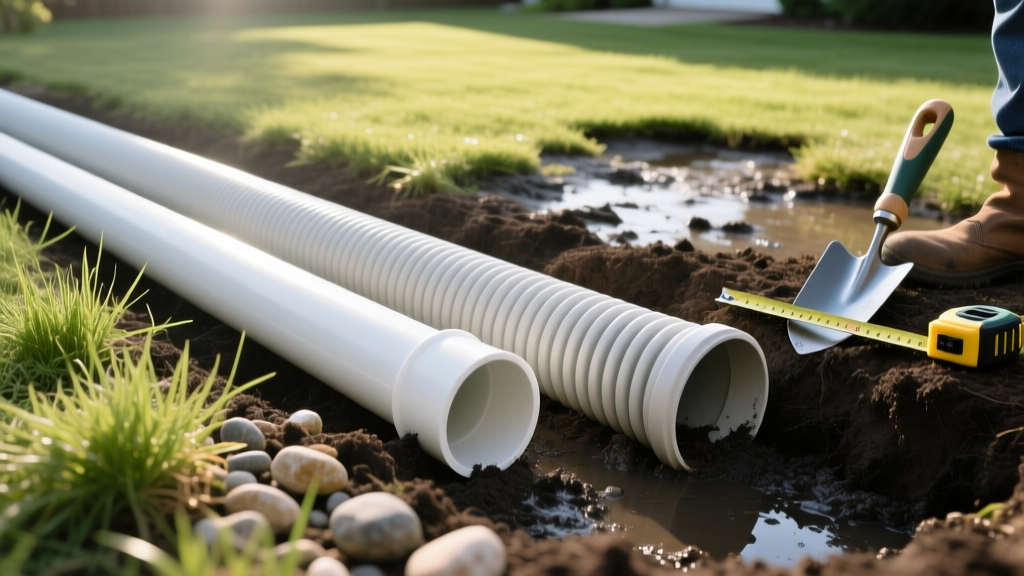
Best Yard Drainage Pipes: PVC vs Corrugated Compared
Mike RodriguezPublished
The Hidden Danger of Poor Landscape Drainage
Water pooling in your yard after a heavy rainstorm is more than just a nuisance; it is a direct threat to your home foundation, your landscape investments, and your lawn health. Standing water breeds mosquitoes, suffocates turfgrass roots, and causes soil erosion that can undermine hardscaping features like patios and retaining walls. When surface grading and French drain gravel trenches are not enough to move water away from your property, installing a subsurface drainage pipe system becomes mandatory. However, homeowners and landscaping professionals alike face a critical decision at the hardware store: should you use rigid PVC or flexible corrugated HDPE pipes? Both materials have distinct advantages, cost profiles, and ideal use cases. In this comprehensive product review and comparison, we will break down the best landscape drainage pipes on the market, providing actionable advice, specific product recommendations, and expert installation guidelines to help you permanently fix your soggy yard.
Head-to-Head Comparison: PVC vs. Corrugated HDPE
Before diving into specific product reviews, it is essential to understand how the two primary drainage pipe materials stack up against each other in real-world landscaping scenarios. Below is a structured comparison chart detailing the core differences between Schedule 40 PVC and Corrugated High-Density Polyethylene (HDPE) pipes.
| Feature | Rigid PVC (Schedule 40) | Corrugated HDPE (Solid/Perforated) |
|---|---|---|
| Material | Polyvinyl Chloride (Rigid) | High-Density Polyethylene (Flexible) |
| Average Cost (per 10ft) | $15.00 - $30.00 | $8.00 - $15.00 |
| Crush Resistance | Extremely High (Ideal under driveways) | Moderate (Can deform under heavy loads) |
| Interior Flow Rate | Smooth walls provide maximum flow velocity | Corrugated ridges create friction, slowing water |
| Installation Ease | Difficult (Requires primer, cement, and precise cuts) | Very Easy (Bends around curves, snap-on fittings) |
| Lifespan | 50 to 100+ Years | 20 to 50 Years |
| Root Intrusion | Highly resistant when glued properly | Vulnerable at couplings and perforation slits |
Deep Dive: Rigid PVC (Schedule 40) Drainage Pipes
Rigid PVC, specifically Schedule 40, is the gold standard for permanent, high-volume, and heavy-duty landscape drainage systems. Brands like Charlotte Pipe and J-M Manufacturing dominate this space, offering pipes and fittings that are tested to withstand immense subterranean pressure.
Pros of Rigid PVC
- Unmatched Durability: Schedule 40 PVC will not collapse under the weight of soil, heavy landscaping boulders, or even vehicular traffic when buried at the proper depth (minimum 12 inches of cover).
- Superior Hydraulics: The interior of a PVC pipe is perfectly smooth. Water flows through it with minimal friction, meaning a 4-inch PVC pipe can move significantly more gallons per minute (GPM) than a 4-inch corrugated pipe of the same diameter.
- Root and Debris Resistance: When joints are properly primed and cemented, the system becomes a watertight, monolithic structure. Tree roots and soil debris cannot penetrate the sealed joints, preventing the clogs that plague older drainage systems.
Cons of Rigid PVC
- Labor-Intensive Installation: PVC requires trenching in relatively straight lines. To make turns, you must purchase specialized sweep fittings (like 45-degree or 90-degree elbows) and use PVC primer and cement, which adds time, chemical exposure, and cost to the project.
- Higher Material Costs: The pipe itself is more expensive, and the requisite fittings, glue, and heavy-duty cutting tools (like a miter saw or specialized PVC ratchets) increase the overall project budget.
Best Use Case: Use Schedule 40 PVC for main trunk lines, downspout tie-ins, and any drainage pipe that must run beneath a driveway, heavy foot-traffic pathway, or shallow soil profile where crush resistance is paramount.
Deep Dive: Corrugated Flexible Drainage Pipes
Corrugated HDPE pipes are the most common choice for DIY homeowners and rapid landscape installations. Leading brands like NDS (National Drainage Systems) and ADS (Advanced Drainage Systems) offer both single-wall (standard corrugated) and double-wall (smooth interior, corrugated exterior) options. For this review, we focus on the widely available single-wall and EZ-Drain alternatives.
Pros of Corrugated HDPE
- Ultimate Flexibility: Corrugated pipe can bend around existing tree roots, curve along the perimeter of a garden bed, and navigate uneven terrain without the need for expensive elbow fittings.
- Budget-Friendly: A 10-foot stick of 4-inch corrugated pipe costs roughly half the price of its PVC counterpart. It is also lightweight, making it easy for a single person to transport and lay into a trench.
- Pre-Attached Filter Options: Many modern corrugated pipes, such as the NDS EZ-Drain system, come pre-wrapped in a polystyrene aggregate and filter fabric, eliminating the need to manually wrap the pipe in landscape fabric and purchase tons of drainage gravel.
Cons of Corrugated HDPE
- Debris Trapping: The interior ridges of single-wall corrugated pipes create pockets where silt, sand, and organic matter can accumulate. Over time, this reduces the pipe diameter and restricts water flow.
- Crush Vulnerability: If buried too shallow or placed under a heavy load (like a retaining wall base or driveway), single-wall corrugated pipes can deform or collapse entirely.
- Leaky Joints: Snap-together couplings are not watertight. While this is fine for French drains where water is meant to leach out, it is problematic for solid-line downspout extensions where you want to move water completely away from the foundation.
Best Use Case: Use corrugated HDPE for French drains in garden beds, long perimeter yard drains, and budget-friendly downspout extensions where the pipe is buried deep enough to avoid surface crushing.
Sizing Your Drainage System: Expert Guidelines
Choosing the right material is only half the battle; selecting the correct pipe diameter is critical to preventing overflow. According to landscape engineering principles and guidelines published by the University of Minnesota Extension, proper drainage requires calculating the watershed area and the expected rainfall intensity to determine the necessary pipe capacity.
According to the University of Minnesota Extension and USDA NRCS guidelines, a standard residential roof downspout can discharge up to 12 gallons of water per minute during a heavy rain event. A 4-inch drainage pipe is generally the minimum recommended size for residential yard drainage, as 3-inch pipes are highly susceptible to clogging from debris and lack the volume capacity for severe storms.
For large open lawns or areas collecting runoff from steep slopes, upgrading to a 6-inch PVC or corrugated mainline is highly recommended. Always calculate the total square footage of the impermeable surfaces (roofs, driveways, patios) draining into your system to ensure your pipe diameter can handle the peak flow rate.
Essential Landscape Drainage Accessories
A pipe is only as good as the system supporting it. To build a professional-grade landscape drainage network, you must pair your chosen pipe with the following components:
- Catch Basins: The NDS 9x9 or 12x12 Square Catch Basins are excellent for capturing surface water in low-lying lawn areas. They feature a sump bottom that catches sediment before it enters your pipe network.
- Landscape Fabric: If using standard corrugated pipe or bare PVC in a gravel French drain, wrapping the trench in a high-quality woven geotextile fabric (like Dewitt Pro 5) is non-negotiable. This prevents fine soil particles from migrating into the gravel and clogging the system.
- Washed Drainage Gravel: Use 3/4-inch washed angular gravel. Avoid pea gravel or river rock, as the smooth, round stones shift and settle, whereas angular gravel locks together to maintain void spaces for water flow.
- Pop-Up Emitters: To discharge water at the end of your line without leaving an open, dangerous hole in your yard, use an NDS Pop-Up Drainage Emitter. It remains flush with the turf and only opens when water pressure forces it upward.
Step-by-Step Installation Best Practices
Whether you choose PVC or corrugated pipe, poor installation will render the best materials useless. Follow these strict landscaping protocols for a lasting drainage solution:
1. Trenching and Sloping
Dig a trench that is at least 14 to 18 inches deep and 12 inches wide. The most critical factor in drainage is gravity. You must maintain a minimum slope of 1/8 inch per linear foot (a 1% grade). For a 40-foot run, the trench must drop at least 5 inches from start to finish. Use a string line and a line level to verify your grade before laying any pipe.
2. Base Preparation
Lay down your landscape fabric, allowing excess to drape over the sides of the trench. Add a 2-inch base layer of 3/4-inch washed gravel. This base prevents the pipe from resting directly on native clay or soil, which can shift and cause the pipe to belly or sag, creating a trap for standing water.
3. Pipe Placement and Connection
Lay your pipe on the gravel bed. If using PVC, ensure the pipe is sloped correctly before gluing. If using perforated corrugated pipe for a French drain, ensure the perforations (holes) are facing DOWN. This counter-intuitive placement forces water to pool in the gravel bed and enter the pipe from the bottom, preventing top-down soil intrusion and extending the life of the drain.
4. Backfilling and Capping
Cover the pipe with at least 4 to 6 inches of washed gravel. Fold the excess landscape fabric over the top of the gravel to create a complete burrito-like wrap. Finally, backfill the remaining trench with native topsoil and sod. Never place heavy compaction equipment directly over a shallow drainage trench.
Final Verdict: Which Pipe is Right for Your Yard?
The choice between PVC and corrugated HDPE ultimately depends on your budget, the physical demands of your landscape, and your willingness to perform labor-intensive trenching. If you are running a mainline under a driveway, connecting multiple heavy-flow downspouts, or want a lifetime, maintenance-free system, invest the time and money into Schedule 40 PVC. The smooth interior and crush-proof exterior provide unparalleled peace of mind.
Conversely, if you are installing a perimeter French drain to dry out a soggy garden bed, navigating around established tree roots, or working on a strict DIY budget, Corrugated HDPE (specifically double-wall or pre-wrapped systems like NDS EZ-Drain) is an excellent, highly effective choice. By pairing your chosen pipe with proper slope calculations, high-quality landscape fabric, and washed gravel, you can reclaim your yard from standing water and protect your home foundation for decades to come.

