Tree Care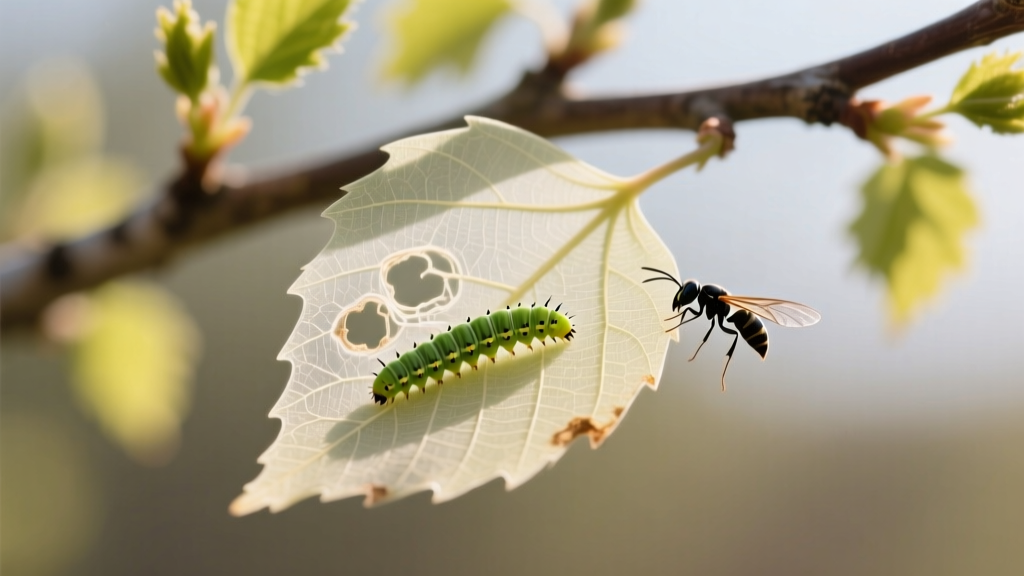
2026 Birch Leaf Miner Control: Acephate vs Bio-Agents
James MillerPublished
The 2026 Paradigm Shift in Birch Tree Care
Birch trees are iconic staples of the North American landscape, prized for their striking peeling bark and delicate, dappled shade. However, their beauty is frequently threatened by the birch leaf miner (Fenusa pusilla), a small sawfly whose larvae feed inside the leaves, causing unsightly brown blotches and premature leaf drop. For decades, the knee-jerk reaction to this pest was chemical eradication, primarily using acephate. As we navigate the 2026 growing season, the arboriculture industry has fundamentally shifted away from broad-spectrum organophosphates. Today, modern tree care emphasizes Integrated Pest Management (IPM) and the preservation of beneficial insects. Understanding the identification of birch leaf miners, the severe ecological drawbacks of acephate, and the power of biological control agents is essential for maintaining a healthy, resilient landscape in 2026.
Identifying the Birch Leaf Miner
Before implementing any treatment, accurate identification is critical. The birch leaf miner primarily targets European white birch, gray birch, and Asian white birch. The damage is caused by the larval stage of the sawfly, which hatches from eggs laid on the undersides of young, expanding leaves in early spring.
Key Symptoms to Monitor
- Early Stage (May to Early June): Look for small, greenish-brown blister-like swellings on the upper surface of the leaves. If you hold the leaf up to the sun, you can often see the tiny, pale larva feeding inside.
- Mid Stage (Mid-June): The mines expand into large, irregular brown blotches. The affected leaf tissue dies, giving the tree a scorched or drought-stressed appearance.
- Late Stage (Late June to July): Leaves may drop prematurely. While a single year of defoliation rarely kills a healthy birch, consecutive years of heavy infestation severely weaken the tree, making it highly susceptible to the lethal bronze birch borer.
| Life Stage | Time of Year | Visual Indicators | Action Threshold |
|---|---|---|---|
| Adult Sawfly | Early May | Tiny, black, flying insects (often ignored) | Monitor for egg-laying on new foliage |
| Egg | May | Microscopic slits on leaf undersides | None (too small for targeted treatment) |
| Larva (Mining) | Late May - June | Green/brown blotch mines, visible frass | Intervention window for targeted bio-controls |
| Pupa | July - April | Cocoons buried in top 2 inches of soil | None (dormant phase) |
The Acephate Dilemma: Why Broad-Spectrum is Out
Acephate, widely recognized under the historical brand name Orthene, is a systemic organophosphate insecticide. It works by inhibiting acetylcholinesterase, an enzyme essential for proper nervous system function in insects. Historically, arborists applied acephate via trunk injection or foliar sprays because it effectively killed the larvae hiding inside the leaf tissue.
The Devastating Impact on Beneficial Insects
While acephate is lethal to leaf miners, it is entirely non-selective. In 2026, environmental regulations and advanced ecological understanding have highlighted the severe collateral damage caused by organophosphates. When you treat a birch tree with acephate, you are not just killing the pest; you are carpet-bombing the tree's micro-ecosystem.
Most critically, acephate eradicates Tetrastichus bicolor, a tiny, non-stinging parasitic wasp that serves as the primary natural enemy of the birch leaf miner. Furthermore, foliar applications of acephate are highly toxic to essential pollinators, including native bees and honeybees, which may be foraging on nearby flowering plants or the honeydew produced by aphids on the same tree. According to the EPA's guidelines on Integrated Pest Management, the use of broad-spectrum chemicals that destroy natural enemy populations is counterproductive to long-term landscape health, often leading to secondary pest outbreaks (such as aphids or spider mites) because their natural predators have been wiped out.
Bio-Control: The Power of Parasitic Wasps
The cornerstone of modern birch leaf miner management is biological control. Decades ago, parasitic wasps like Tetrastichus bicolor and Heterarthrus nemoratus were introduced to North America to combat the invasive leaf miner. Today, these beneficial insects are firmly established and provide exceptional, free pest control.
How Parasitic Wasps Work
The female Tetrastichus wasp locates the leaf miner larva feeding inside the birch leaf. She uses her ovipositor to pierce the leaf tissue and lay her own eggs inside or on the miner larva. When the wasp eggs hatch, the wasp larvae consume the leaf miner from the inside out, ultimately killing it. A single wasp can parasitize dozens of leaf miners, and the new generation of wasps emerges to continue the cycle.
Research highlighted by the University of Minnesota Extension indicates that in areas where these parasitic wasps are established, they can naturally parasitize up to 90% of the birch leaf miner population by mid-summer. By utilizing acephate, homeowners inadvertently kill these microscopic allies, resetting the biological clock and guaranteeing worse infestations in subsequent years.
Steps to Encourage Beneficial Wasps in Your Yard
- Avoid All Broad-Spectrum Insecticides: Eliminate the use of acephate, carbaryl, and malathion on your property to protect adult wasps.
- Provide Nectar Sources: Adult parasitic wasps require nectar and pollen for energy. Planting a diverse array of small-flowered plants (like alyssum, dill, yarrow, and fennel) near your birch trees provides essential fuel for these bio-control agents.
- Maintain Soil Health: Since leaf miners drop to the soil to pupate in the fall, maintaining a healthy, undisturbed layer of organic mulch supports the soil-dwelling stages of various beneficial predators.
2026 Integrated Pest Management (IPM) Strategies
If your birch tree is young, heavily stressed, or suffering from consecutive years of severe defoliation, doing nothing may not be an option. However, the 2026 IPM approach prioritizes tree health and targeted, soft interventions over systemic nerve agents.
Cultural Controls: The First Line of Defense
A stressed tree is a magnet for pests. Birch trees naturally grow in cool, moist, forest-edge environments. Replicating this in a residential lawn is crucial.
- Proper Mulching: Apply a 2-to-3-inch layer of organic wood chip mulch out to the drip line. This keeps the shallow birch roots cool and retains moisture. Ensure the mulch does not touch the trunk (avoid 'mulch volcanoes').
- Deep Watering: During dry spells in May and June, provide deep, slow watering. A mature birch may require 15 to 20 gallons of water per week during drought conditions to push through leaf miner damage and produce a second flush of leaves.
- Resistant Species: If you are replacing a dead birch, plant resistant species. The River Birch (Betula nigra) and Heritage Birch cultivars are highly resistant to leaf miners and the deadly bronze birch borer.
Targeted and Softer Alternatives
If chemical intervention is absolutely necessary to save a declining tree, opt for products that spare beneficial insects. According to the Penn State Extension, horticultural oils or insecticidal soaps can be somewhat effective if applied precisely when the adult sawflies are laying eggs, though timing is difficult. For systemic control that is less harmful to the broader ecosystem, arborists in 2026 sometimes utilize targeted trunk injections of emamectin benzoate or dinotefuran, applied strictly after the tree has finished flowering to completely eliminate the risk to foraging pollinators. Even then, these should be used sparingly to minimize any residual impact on the leaf-mining parasitic wasps.
Conclusion: Embracing Ecological Tree Care
The presence of brown, blotched leaves on your birch tree in early summer is undoubtedly frustrating. However, reaching for acephate is an outdated practice that trades a minor cosmetic issue for a major ecological collapse within your landscape. By accurately identifying the birch leaf miner, understanding its life cycle, and fostering populations of Tetrastichus parasitic wasps, you can achieve sustainable, long-term control. In 2026, the best defense for your birch trees is a combination of vigilant cultural care, deep watering, and a profound respect for the beneficial insects working tirelessly in the canopy.
