Tree Care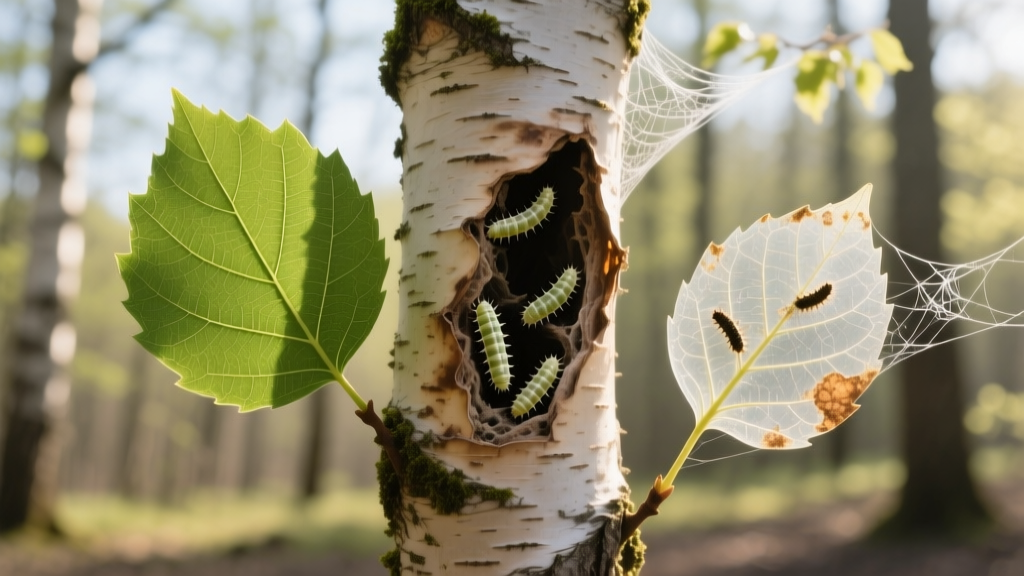
Birch Leaf Miner ID & Acephate Treatment Guide 2026
James MillerPublished
The Canopy Threat: Webworms vs. Birch Leaf Miners
Homeowners and arborists alike often panic at the first sign of defoliation in their prized birch trees. From the perspective of broad-spectrum canopy pest management—often grouped under general tree web worm control protocols by commercial sprayers—it is crucial to accurately diagnose the culprit before reaching for the sprayer. While the fall webworm (Hyphantria cunea) creates highly visible, unsightly silk tents in the late summer, the birch leaf miner (Fenusa pusilla) is a far more insidious springtime threat that silently hollows out leaves from the inside. Misidentifying these pests can lead to ineffective treatments, wasted chemicals, and severe long-term health decline for your birch trees. In 2026, precise identification and targeted systemic treatments like acephate remain the gold standard for preserving birch vitality against mining insects.
Identifying the Birch Leaf Miner
The birch leaf miner is a small, black, sawfly-like insect that specifically targets European white birch, gray birch, and river birch, though river birch exhibits some natural resistance. The damage is unmistakable once you know what to look for. In late spring, shortly after the leaves have fully expanded, you will notice small, dark green or brownish, kidney-shaped blotches on the upper surface of the leaves. These are "mines"—hollowed-out areas where the tiny larvae are feeding on the internal leaf tissue. If you hold an affected leaf up to the sunlight, you can often see the small, whitish larva or its dark excrement (frass) inside the blistered area.
As the 2026 season progresses into early summer, these mines coalesce, turning the entire leaf brown, papery, and curled. According to the University of Minnesota Extension, severe infestations can defoliate a tree by mid-July, severely stressing the tree and making it highly susceptible to the lethal bronze birch borer. Unlike webworms, which merely skeletonize the exterior of the leaf, leaf miners destroy the vascular and photosynthetic layers from within.
Comparison Chart: Leaf Miner vs. Fall Webworm
| Feature | Birch Leaf Miner | Fall Webworm |
|---|---|---|
| Active Season | Spring to Early Summer | Late Summer to Fall |
| Visual Signs | Brown, kidney-shaped blotches inside leaves | Large, silken webbed nests at branch tips |
| Pest Type | Sawfly larvae (Fenusa pusilla) | Caterpillars (Hyphantria cunea) |
| Primary Damage | Internal leaf tissue mining; weakens tree | External leaf skeletonizing; mostly cosmetic |
| Best Chemical Control | Systemic insecticides (Acephate) | Contact sprays (Spinosad, Bt) |
The Life Cycle: Why Timing is Everything
Understanding the life cycle is critical for timing your acephate application. Adult sawflies emerge from the soil in spring, coinciding with the blooming of lilacs and the initial leaf-out of birch trees. Females lay eggs in slits cut into the edges of new leaves. The larvae hatch and immediately tunnel into the leaf, where they are protected from contact insecticides and predatory insects. After feeding for a few weeks, they drop to the soil to pupate. In most northern climates, there are two to three generations per year, meaning the window for effective chemical intervention is narrow and must target the early larval stages before the mines become too large.
Why Acephate? Understanding Systemic Control
Contact insecticides, which are often effective against external chewers like the fall webworm (as noted by University of Kentucky Entomology), are virtually useless against leaf miners because the larvae are safely hidden inside the leaf tissue. Acephate (historically sold under the brand name Orthene) is a systemic organophosphate insecticide that solves this problem. When applied as a foliar spray or trunk injection, acephate exhibits translaminar movement—meaning it penetrates the leaf cuticle and moves into the internal tissues where the larvae are feeding. It also has true systemic properties, moving through the tree's vascular system when applied to the soil or trunk.
In 2026, professional arborists heavily favor trunk-injected acephate formulations for large, mature birch trees. This method eliminates spray drift, prevents runoff into local waterways, and drastically reduces the risk of exposure to non-target pollinators like bees and butterflies.
2026 Acephate Application Guidelines for Birch Trees
Timing is the single most important factor in your treatment plan. You must apply acephate when the first generation of mines is just forming and the larvae are still small (typically late May to early June, depending on your USDA hardiness zone). Penn State Extension emphasizes that treating after the mines have expanded and the leaves have turned brown is entirely ineffective, as the larvae have already dropped to the soil to pupate.
Step-by-Step Foliar Application Protocol
- Monitor Closely: Begin inspecting your birch trees in early May. Look for the very first signs of stippling or tiny green blisters on the newest leaves at the tips of the branches.
- Mix the Solution: Follow the 2026 manufacturer label instructions precisely. For most liquid acephate concentrates intended for ornamental trees, the standard dilution is 1.5 ounces per gallon of water, but always verify the specific product label.
- Apply Thoroughly: Using a calibrated pump sprayer, apply the solution to the upper and lower leaf surfaces until the point of runoff. Early morning application is best to allow the leaves to dry quickly and minimize evaporation.
- Re-evaluate: Check the tree 7 to 10 days after application. If you see new mines forming from a secondary hatch, a second application may be necessary, though many 2026 systemic formulations provide up to 30 days of residual control.
Trunk Injection Alternatives
For trees over 30 feet tall where foliar spray is impractical, hire a certified arborist to perform trunk injections. Systems like the Arborjet QUIK-jet utilize pressurized acephate formulations that are delivered directly into the xylem. This method is highly effective and entirely bypasses the canopy, ensuring zero environmental drift.
Environmental and Regulatory Considerations in 2026
As of 2026, organophosphate regulations have become stricter in several states and municipalities due to environmental and health concerns. Before purchasing or applying acephate, always check with your local department of agriculture or county extension office to ensure it is legal for ornamental use in your specific zip code. Furthermore, never apply foliar acephate while the birch tree or nearby weeds are in bloom. While birch trees are primarily wind-pollinated, the surrounding understory plants may attract foraging bees, and acephate is highly toxic to aquatic invertebrates and pollinators upon direct contact.
Integrated Pest Management (IPM) Beyond Chemicals
Chemical control is only one pillar of a successful tree care strategy. A tree weakened by leaf miners is a prime target for the bronze birch borer, a fatal secondary pest. To support your acephate treatment, implement the following cultural controls:
- Deep Watering: Provide 1 to 1.5 inches of water per week during the summer drought periods. Use a soaker hose placed at the drip line to encourage deep root growth.
- Proper Mulching: Apply a 3-inch layer of organic wood chip mulch around the base of the tree, keeping it pulled back 4 inches from the trunk flare to prevent rot and rodent damage.
- Fertilization: Avoid high-nitrogen fertilizers in the spring, as this promotes the rapid, succulent leaf growth that female sawflies prefer for egg-laying. Opt for slow-release, balanced fertilizers applied in the late fall instead.
Conclusion
While the fall webworm may steal the show with its dramatic late-summer webs, the birch leaf miner poses a much more significant threat to the long-term health and structural integrity of your birch trees. By learning to accurately identify the early signs of mining damage and utilizing targeted systemic treatments like acephate at the precise moment in late spring, you can protect your canopy from the inside out. Always pair your chemical interventions with robust cultural care to ensure your birch trees remain vibrant, healthy, and borer-free throughout the 2026 season and beyond.