Tree Care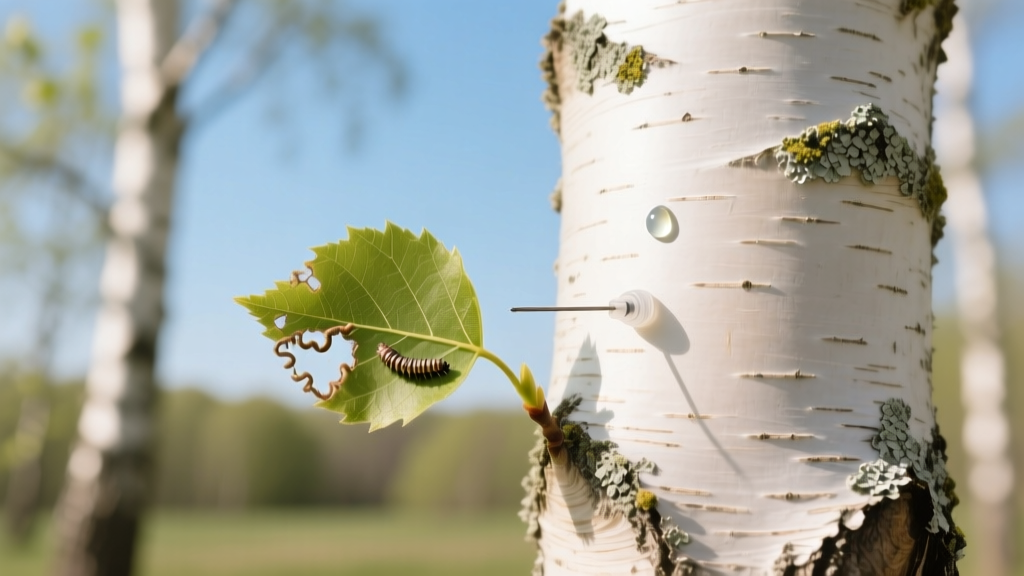
2026 Birch Leaf Miner Acephate Treatment & Lawn Art
James MillerPublished
The Canvas and the Focal Point: Trees in Striped Landscapes
When masterfully executed, lawn striping transforms a simple yard into a breathtaking geometric canvas. Using a high-quality zero-turn mower equipped with a heavy roller striping kit, homeowners and landscape professionals bend the grass blades to reflect light differently, creating striking horizontal lines, checkerboards, and diamond patterns. However, a flawless horizontal plane requires vertical anchors to frame the landscape and provide visual contrast. For many premium properties, the striking white bark of Birch trees—such as the River Birch (Betula nigra) or European White Birch (Betula pendula)—serves as the ultimate focal point against the alternating dark and light green bands of Kentucky Bluegrass or Tall Fescue.
But what happens when those vertical sentinels begin to fail? The Birch Leaf Miner (Fenusa pusilla) is a pervasive pest that can rapidly defoliate and brown the canopy of your prized birch trees. A dying, scorched-looking canopy not only ruins the tree's health but completely destroys the dappled light effects and aesthetic framing required for a cohesive, striped landscape design. In 2026, maintaining the pristine geometry of your outdoor space requires a proactive, scientifically backed approach to tree health, specifically utilizing targeted acephate treatments to eliminate leaf miners without harming the surrounding turf or pollinators.
Identifying the Birch Leaf Miner (Fenusa pusilla)
Before you can treat the problem, you must accurately identify the culprit. The birch leaf miner is not a caterpillar or a beetle; it is the larval stage of a small, black, non-stinging sawfly. According to the University of Minnesota Extension, the adult sawflies emerge in early spring, coinciding with the initial leaf-out of birch trees. The females lay their eggs individually in slits cut along the edges of young, tender leaves.
As the larvae hatch, they burrow directly between the upper and lower epidermal layers of the leaf, feeding on the green tissue inside. This creates distinct, blister-like blotches known as "mines."
Key Visual Symptoms for Landscape Perfectionists:
- Early Stage (May to early June): Small, pale, kidney-shaped or oval blister mines appear near the leaf margins. The grass below may still look fine, but the canopy's uniform green texture is compromised.
- Mid Stage (Late June): The mines expand and merge, turning the affected leaves entirely brown and crispy. From a distance, the tree looks scorched by fire or drought.
- Late Stage (July to August): Severely infested leaves drop prematurely. This premature defoliation alters the shade profile cast over your striped lawn, potentially causing localized heat stress or uneven growth patterns in the turf below.
- Secondary Generations: While the first generation in spring causes the most aesthetic and physiological damage, a second, smaller generation often appears in mid-to-late summer, compounding the stress on the tree.
The 2026 Acephate Treatment Protocol
Acephate is a systemic organophosphate insecticide that has long been a staple in professional arboriculture. However, the regulatory and environmental landscape has shifted significantly. As of 2026, broadcast foliar spraying of acephate is heavily restricted or entirely banned in many municipalities due to its toxicity to non-target insects, particularly vital pollinators like bees and butterflies. Furthermore, spraying chemicals over a meticulously striped lawn risks staining the turf, altering soil pH, and disrupting the delicate microbial life required for premium grass health.
Therefore, the modern, aesthetically conscious approach to acephate treatment relies entirely on closed-system trunk injection. This method delivers the active ingredient directly into the tree's xylem, allowing it to travel upward into the canopy where the leaf miners are feeding, with zero environmental drift, no soil contamination, and absolute safety for the lawn and pollinators below.
Step-by-Step Professional Trunk Injection
If you are managing a high-end landscape, hiring a licensed arborist equipped with an Arborjet or similar pressurized injection system is highly recommended. For those with the proper certifications and equipment attempting this themselves, the 2026 protocol is as follows:
- Timing is Critical: Treatments must be applied in early spring, just as the leaves are expanding but before the first generation of miners burrows into the leaf tissue. Once the larvae are deep inside the mines, systemic uptake is less effective.
- Root Flare Preparation: Gently excavate the soil around the base of the birch to expose the root flare. Birch trees have shallow root systems, so care must be taken not to damage the structural roots.
- Drilling: Using a specialized arborist drill bit, create small holes (typically 1/4 inch in diameter and 1 to 1.5 inches deep) spaced 4 to 6 inches apart around the circumference of the trunk at the root flare.
- Injection: Attach the injection ports and use a pressurized system to push the acephate formulation into the xylem. The tree's natural transpiration pull will draw the chemical up into the canopy.
- Sealing: Remove the ports and seal the drill holes with a biodegradable tree wound sealant to prevent secondary fungal infections or infestations by bronze birch borers.
2026 Treatment Comparison Chart
While acephate trunk injection is highly effective, it is important to understand how it compares to other systemic options available to landscape managers in 2026. The University of Wisconsin-Madison Extension notes that while leaf miners rarely kill a tree outright, the aesthetic damage and subsequent stress can make birches highly susceptible to the fatal Bronze Birch Borer.
| Treatment Method | Active Ingredient | Application Timing | Impact on Striped Lawn |
|---|---|---|---|
| Trunk Injection | Acephate | Early Spring (Leaf-out) | Zero impact; no soil or turf contact. |
| Soil Drench | Imidacloprid | Late Fall or Early Spring | Moderate risk; requires watering in, which can cause soil mudding and disrupt lawn stripes near the root zone. |
| Basal Bark Spray | Dinotefuran | Early Spring | Low risk, but potential for overspray onto adjacent ornamental grasses or turf edges. |
| Foliar Spray | Spinosad / Bifenthrin | Mid-Spring (Post-mine) | High risk; severe pollinator danger and potential turf discoloration. |
Integrating Tree Health with Lawn Striping Patterns
Maintaining a pristine, striped lawn around treated birch trees requires a delicate balance of turf management and arboricultural respect. Birch trees possess incredibly shallow, sensitive root systems that extend well beyond the drip line. The heavy rollers used on commercial striping kits, combined with the weight of a zero-turn mower, can cause severe soil compaction over these roots, suffocating the tree and negating the benefits of your acephate treatment.
To preserve both the tree and the aesthetic pattern:
- Establish a Mulch Buffer: Create a wide, organic mulch ring around the base of the birch. This not only retains moisture but acts as a visual and physical boundary, preventing mower wheels from compacting the critical root zone.
- Adjust Mowing Patterns: When executing your striping pattern, plan your passes so that the mower turns on the hardscape or designated turn-around areas, rather than executing tight, tearing zero-turns directly over the birch's shallow roots.
- Canopy Pruning for Light Penetration: After the leaf miner threat has been neutralized via trunk injection, work with an arborist to selectively thin the birch canopy. This allows optimal, dappled sunlight to reach the Kentucky Bluegrass or Fescue below, ensuring the grass remains dense, vibrant, and capable of holding a crisp, dark stripe when bent by the roller.
Conclusion: Preserving the Masterpiece
A beautifully striped lawn is a testament to a homeowner's dedication to landscape perfection, but it is only half of the visual equation. The towering, white-barked birches that frame this horizontal masterpiece must be protected from the insidious damage of the birch leaf miner. By embracing the 2026 standards for closed-system acephate trunk injections, you can eradicate pests effectively and responsibly. This targeted approach ensures your trees remain lush, vibrant, and structurally sound, casting the perfect dappled shade over your immaculate, alternating turf patterns for years to come. For more detailed regional pest forecasts, always consult your local university extension office before initiating chemical treatments.