Tree Care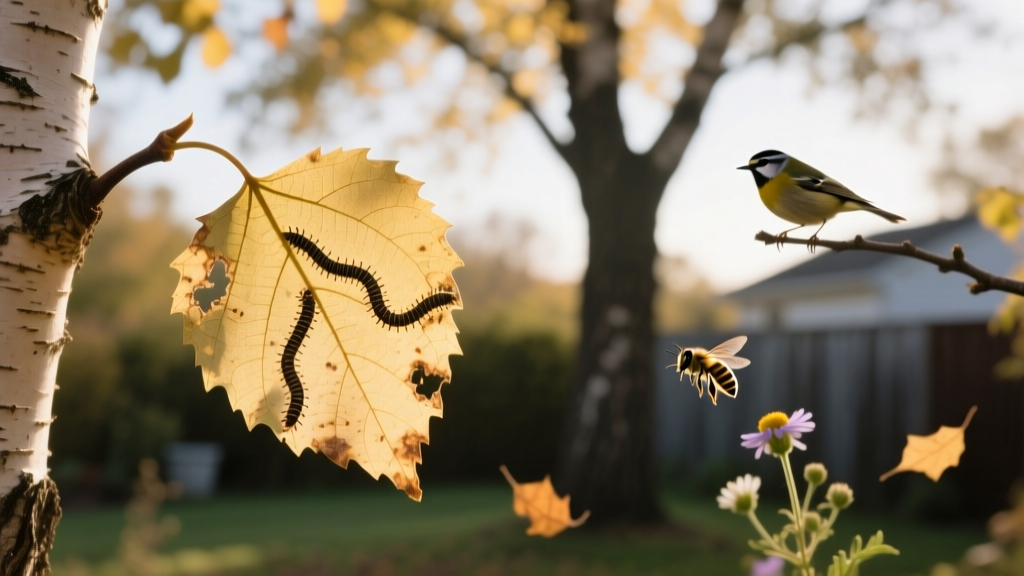
Birch Leaf Miner & Acephate Treatment: 2026 Wildlife Guide
James MillerPublished
Birch Leaf Miner Identification and the 2026 Wildlife Management Challenge
Birch trees (Betula species) are prized for their striking bark and delicate canopies, but they are highly susceptible to the birch leaf miner (Fenusa pusilla). For homeowners balancing a vibrant landscape with a thriving local ecosystem, managing this pest presents a unique challenge. Historically, broad-spectrum insecticides like acephate were the go-to solution for arborists and homeowners alike. However, as we navigate the 2026 landscape of environmental stewardship and wildlife management, the use of acephate requires strict adherence to safety protocols to protect non-target yard animals, pollinators, and soil ecology.
From a wildlife management perspective, treating a tree is never just about the tree; it is about the entire micro-ecosystem that relies on it. Birds nest in birch branches, squirrels forage at the base, and native bees visit nearby understory plants. When a potent chemical like acephate is introduced, the ripple effects can be devastating if not managed correctly. This comprehensive guide explores how to accurately identify the birch leaf miner, the ecological risks associated with acephate, and the 2026 protocols for treating infestations without sacrificing your yard's wildlife.
Identifying the Birch Leaf Miner in Your Yard
The birch leaf miner is not a moth or a beetle, but a sawfly. The adult insects are tiny, black, wasp-like creatures that emerge in early spring. They lay their eggs in the newly expanding leaves of birch trees, particularly favoring European white birch (Betula pendula) and gray birch (Betula populifolia). River birch (Betula nigra) is notably more resistant and is often recommended as an alternative planting in areas with heavy miner pressure.
Once the eggs hatch, the larvae tunnel into the leaf tissue, feeding on the mesophyll layer—the nutrient-rich tissue between the upper and lower leaf surfaces. This feeding creates distinct, irregular brown blotches that expand as the larvae grow. By mid-summer, heavily infested trees can appear entirely scorched, leading to premature leaf drop, reduced photosynthesis, and severe tree stress, which in turn makes the birch vulnerable to secondary pests like the deadly bronze birch borer.
Seasonal Identification and Wildlife Interaction Table
| Season | Life Stage | Visual Signs on Tree | Wildlife Impact Considerations |
|---|---|---|---|
| Early Spring (May) | Adult Emergence | Tiny black sawflies near canopy | Minimal risk; avoid foliar sprays during early pollinator foraging. |
| Late Spring | Egg Laying | Pinprick scars on young, tender leaves | Insectivorous birds may forage for eggs; systemic treatments preferred over contact sprays. |
| Early Summer | Larval Feeding | Brown, irregular, expanding blotches | High risk if foliar acephate is used; residue contaminates foraging birds and beneficial insects. |
| Mid-Summer | Pupation | Larvae drop to soil beneath tree drip line | Soil drenches harm earthworms, ground-nesting bees, and ground-foraging wildlife like robins. |
Accurate identification is crucial. Do not confuse leaf miner damage with leaf scorch caused by drought or fungal leaf spot diseases. Hold a damaged leaf up to the sunlight; if you can see the dark, frass-filled tunnels or the small, pale larva inside the leaf tissue, you are dealing with a leaf miner. According to the University of Minnesota Extension, confirming the presence of active larvae is the first step before considering any chemical intervention.
Understanding Acephate: Efficacy vs. Wildlife Toxicity
Acephate is an organophosphate insecticide that has been used for decades to control sucking and chewing insects. It is highly effective against leaf miners because it possesses systemic properties; when applied to a tree, it is absorbed into the plant's vascular system and translocated to the leaves, where the feeding larvae ingest it and die.
However, from a wildlife management perspective, acephate is a highly problematic compound. It functions as an acetylcholinesterase inhibitor, meaning it disrupts the nervous system of insects, but it is also acutely toxic to a wide range of non-target organisms.
The Ecological Risks of Acephate
- Avian Toxicity: Birds are exceptionally sensitive to organophosphates. Insectivorous birds, such as chickadees, warblers, and nuthatches, that forage on treated leaves or consume contaminated insects can suffer fatal neurological effects. The National Pesticide Information Center (NPIC) notes that acephate and its primary metabolite, methamidophos, pose significant acute toxicity risks to avian species.
- Pollinator Devastation: While birch trees are primarily wind-pollinated, the understory plants surrounding them are often bee-pollinated. Foliar drift or systemic uptake by nearby flowering weeds can lead to mass die-offs of native bees and honeybees.
- Soil and Aquatic Life: Acephate is highly water-soluble. If applied as a soil drench or if foliar runoff occurs during rain, it can easily leach into local waterways, proving highly toxic to fish and aquatic invertebrates. It also decimates beneficial soil organisms, including earthworms and mycorrhizal fungi, which are essential for long-term tree health.
Due to these severe ecological risks, the regulatory landscape in 2026 has heavily restricted the broadcast foliar spraying of acephate in residential and urban environments. Its use is now largely confined to targeted, professional applications where alternative treatments have failed or are unavailable.
2026 Wildlife-Safe Protocols for Acephate Application
If a certified arborist determines that an acephate-based treatment is absolutely necessary to save a heritage birch tree from catastrophic defoliation, it must be applied using methods that completely isolate the chemical from the surrounding yard ecosystem. The era of spraying tree canopies with backpack sprayers is over for residential wildlife management.
1. Closed-System Trunk Injection
The only ecologically responsible way to utilize acephate in a residential yard in 2026 is via direct trunk injection using a closed-system delivery method (such as the Arborjet or TREE-age injection systems). This involves drilling small, shallow ports into the base of the trunk and injecting the formulation directly into the xylem. This ensures zero environmental drift, no residue on the bark for nesting birds, and no soil contamination.
2. Strict Timing and Phenological Awareness
Timing is everything when protecting wildlife. Trunk injections must be scheduled carefully:
- Avoid Bird Nesting Season: Do not perform loud drilling injections during peak spring nesting seasons (typically May through early July) to avoid causing stress-induced nest abandonment by sensitive avian species.
- Avoid Spring Bloom: Ensure that no flowering understory plants (like azaleas, rhododendrons, or native wildflowers) are blooming near the tree's drip line, just in case of minor sap bleeding from the injection sites.
- Post-Rain Application: Apply injections when the soil is adequately moist but not waterlogged, ensuring proper transpiration and upward movement of the systemic chemical without risking root-zone runoff.
3. Proper Port Sealing and Cleanup
After injection, the arborist must seal the drill ports with a sterile, biodegradable plug or specialized tree wound sealant to prevent sap leakage. Any spilled solution must be neutralized and removed immediately to prevent ground-foraging animals, such as squirrels or rabbits, from coming into contact with the concentrated chemical.
Wildlife-Friendly Alternatives to Acephate
Given the stringent protocols and inherent risks associated with acephate, modern urban forestry and wildlife management heavily favor alternative treatments that offer high efficacy with a drastically lower ecological footprint. The Xerces Society for Invertebrate Conservation strongly advocates for integrated pest management (IPM) strategies that prioritize pollinator and wildlife safety.
Emamectin Benzoate (Tree-age)
Emamectin benzoate has become the gold standard for systemic tree injections in 2026. It is highly effective against birch leaf miners and provides multi-year residual control (often protecting the tree for up to two years). Crucially, it has a much lower toxicity profile for birds and mammals compared to organophosphates, and because it is applied via trunk injection, it poses virtually no risk to foraging pollinators or yard wildlife.
Azadirachtin (Neem-Based Systemics)
For homeowners seeking an organic or reduced-risk option, professional-grade azadirachtin formulations can be injected or applied as a soil drench (though drenches should still be used cautiously near aquatic zones). Azadirachtin acts as an insect growth regulator, disrupting the molting process of the leaf miner larvae without the acute neurotoxic effects of acephate.
Biological Controls: Parasitic Wasps
Nature provides its own wildlife-safe pest control. The parasitic wasp Lathrolestes nigricollis is a natural enemy of the birch leaf miner. These tiny, non-stinging wasps lay their eggs inside the leaf miner larvae, eventually killing them. Homeowners can encourage these beneficial insects by avoiding all broad-spectrum insecticides, maintaining a diverse understory of native flowering plants to provide nectar for adult wasps, and leaving some leaf litter undisturbed over the winter to allow pupating beneficial insects to survive.
Cultural Controls and Tree Immunity
A healthy tree can withstand significant leaf miner damage without dying. From a wildlife management perspective, building the tree's natural defenses is the safest route.
- Deep Root Watering: Birches have shallow root systems and are highly susceptible to drought stress. Provide deep, slow watering during dry summer months.
- Proper Mulching: Apply a 2-to-3-inch layer of organic wood chip mulch around the base of the tree, extending to the drip line. Keep the mulch a few inches away from the trunk to prevent rot. This preserves soil moisture, regulates temperature, and fosters a healthy soil microbiome.
- Avoid Soil Compaction: Keep heavy machinery and high foot traffic away from the tree's root zone to ensure proper oxygen exchange.
Conclusion: Balancing Tree Health and Yard Ecology
Managing the birch leaf miner in 2026 requires a paradigm shift from eradication at all costs to holistic ecosystem management. While acephate remains a potent tool in the arborist's arsenal, its severe toxicity to birds, pollinators, and aquatic life means it must be handled with extreme caution and restricted to closed-system trunk injections. By prioritizing accurate identification, utilizing wildlife-safe alternatives like emamectin benzoate, and fostering biological controls, you can protect your beloved birch trees while ensuring your yard remains a thriving sanctuary for local wildlife.