Gardening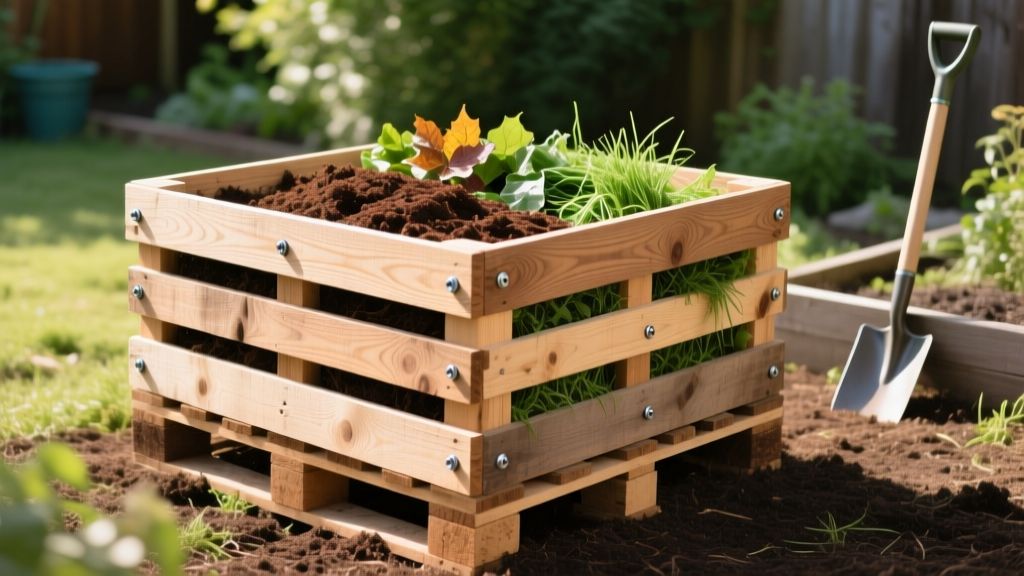
Build a Budget-Friendly DIY Pallet Compost Bin System
David ParkPublished
The Hidden Costs of Commercial Compost Bins
When you are trying to cultivate a thriving vegetable garden or a lush flower bed on a strict budget, purchasing bags of commercial compost or expensive synthetic fertilizers can quickly drain your wallet. Furthermore, buying a high-quality, manufactured compost tumbler or stationary plastic bin can cost anywhere from $80 to over $300. For the budget-conscious gardener, these prices are often prohibitive. Fortunately, there is a highly effective, virtually free alternative that utilizes upcycled materials: the DIY shipping pallet compost bin.
Building your own compost system from reclaimed wooden pallets not only saves you a significant amount of money, but it also provides superior airflow, larger capacity, and easier access for turning your pile compared to many commercial models. According to the Environmental Protection Agency (EPA), food scraps and yard waste together currently make up more than 30 percent of what we throw away, and could be composted instead. By capturing this waste, you are saving money on trash bags, reducing landfill contributions, and manufacturing your own premium 'black gold' for your garden.
Sourcing Safe Pallets for Free
The most critical step in this DIY project is sourcing the right pallets. Not all shipping pallets are safe for use in a garden, especially if you are growing edible crops. You must check the IPPC (International Plant Protection Convention) stamp burned into the wood.
- HT (Heat Treated): These pallets were heated to a minimum core temperature of 56°C for at least 30 minutes to kill pests. They are completely safe for garden use.
- KD (Kiln Dried): Similar to heat-treated, these are safe and often used for lumber.
- MB (Methyl Bromide): Avoid these at all costs. Methyl bromide is a highly toxic pesticide that can leach into your compost and subsequently into your food crops.
- Unmarked or Colored Pallets: Avoid pallets painted blue, red, or brown, as these are usually rental property (like CHEP or PECO) and are often treated with harsh chemicals.
You can typically find free, safe HT pallets behind local hardware stores, garden nurseries, pet supply stores, or on community marketplace apps. Always ask for permission before taking them.
Tools and Materials List
One of the greatest advantages of this project is the low barrier to entry regarding tools and materials. Here is what you will need to build a standard 3x3x3 foot bin, which is the minimum volume required for a compost pile to properly heat up and decompose efficiently.
- 4 to 5 HT Pallets: $0 (Sourced for free)
- Four 6-foot T-Posts or Wooden Stakes: $15 - $20 (For structural support)
- Heavy-Duty Zip Ties or Galvanized Wire: $5 (For securing corners)
- Two Heavy-Duty Bungee Cords: $5 (For the removable front gate)
- Hardware Cloth or Chicken Wire (Optional): $10 (To line the bottom if rodents are a concern)
Total Estimated Cost: $10 to $30, depending on what tools and materials you already have in your garage.
Step-by-Step Construction Guide
Step 1: Site Selection and Preparation
Choose a level, well-draining area of your yard that receives partial shade. Full sun can dry out your compost pile too quickly, while deep shade might keep it too damp. Ensure the location is accessible via a wheelbarrow and close to a water source. Clear the ground of grass and weeds, and lay down a layer of plain cardboard to smother any remaining vegetation while allowing earthworms to migrate up into the pile.
Step 2: Assembling the Back and Side Walls
Stand three pallets on their edges to form a U-shape. The back pallet should be flush against the two side pallets. Drive two T-posts into the ground at the interior corners where the pallets meet, sinking them at least 18 inches deep for stability. Use galvanized wire or heavy-duty zip ties to secure the pallets to the T-posts and to each other. This creates a rigid, three-sided enclosure.
Step 3: Creating a Removable Front Gate
The fourth pallet serves as the front door, allowing you to easily turn the compost or shovel out finished material. Instead of permanently fixing it, attach two heavy-duty bungee cords or wire loops to the front T-posts. Hook the cords over nails or screws driven into the front pallet. This allows you to unhook the front, pull the pallet away, and access the entire pile with a pitchfork or shovel in seconds.
Step 4: Pest Proofing (Optional but Recommended)
If you live in an area with heavy rodent or raccoon activity, staple half-inch hardware cloth to the inside walls and lay it across the ground before adding your first layer of compost. This allows beneficial insects and worms to enter while keeping larger pests out.
DIY Pallet Bin vs. Commercial Alternatives
To truly understand the value of this budget-friendly DIY solution, it helps to compare it directly with the alternatives available on the market.
| Feature | DIY Pallet Bin (3x3 ft) | Commercial Tumbler | Stationary Plastic Bin |
|---|---|---|---|
| Estimated Cost | $10 - $30 | $100 - $300+ | $50 - $120 |
| Capacity | 27 cubic feet (High) | 5 - 10 cubic feet (Low) | 10 - 15 cubic feet (Medium) |
| Airflow & Aeration | Excellent (Natural gaps) | Good (If turned daily) | Poor (Requires manual poking) |
| Ease of Turning | Easy (Open front access) | Very Easy (Spin mechanism) | Difficult (Narrow top access) |
| Ground Contact | Yes (Allows worm access) | No (Elevated on legs) | Yes (Usually open bottom) |
The Science of Feeding Your Bin on a Budget
A compost pile requires a delicate balance of carbon (browns) and nitrogen (greens) to break down efficiently without producing foul odors. As noted by Penn State Extension, maintaining the proper balance of carbon and nitrogen is the secret to a fast-acting, odor-free compost pile. The ideal Carbon-to-Nitrogen (C:N) ratio is roughly 30:1.
Free 'Browns' (Carbon-Rich Materials)
Browns provide the energy for the composting microbes and create bulk and airflow. You can source these for free from your own property or neighborhood:
- Dry, fallen autumn leaves
- Shredded corrugated cardboard and newspaper (avoid glossy inks)
- Straw or hay (ensure it is seed-free)
- Sawdust from untreated wood
- Pine needles (use in moderation as they are acidic)
Free 'Greens' (Nitrogen-Rich Materials)
Greens provide the proteins and amino acids that allow microbes to multiply rapidly and heat up the pile:
- Fresh grass clippings
- Vegetable and fruit kitchen scraps
- Coffee grounds and paper filters (often free from local coffee shops)
- Tea bags (staples removed)
- Pulled weeds (before they go to seed)
Budget Tip: Never buy commercial compost starters or accelerators. A simple shovel-full of finished compost from a friend, or even a few scoops of healthy topsoil from your yard, introduces all the necessary microbes to kickstart your pile for free.
Troubleshooting Common Compost Issues
Even the best-built DIY pallet bin requires a bit of management. Here is how to troubleshoot common problems without spending money on chemical additives:
- The pile smells like ammonia: This indicates too much nitrogen (greens). Fix it by thoroughly mixing in a large volume of dry, shredded leaves or cardboard to absorb the excess moisture and balance the C:N ratio.
- The pile smells like rotten eggs: This means the pile has gone anaerobic due to a lack of oxygen. Use a pitchfork to turn the pile, moving the outside material to the center, and mix in some coarse twigs or woodchips to improve internal airflow.
- The pile is cold and not breaking down: Your pile may be too dry or lack nitrogen. It should feel like a wrung-out sponge. Add water with a hose while turning the pile, and mix in a fresh layer of grass clippings or coffee grounds to reignite the microbial activity.
- Fruit flies or gnats are swarming the bin: Always bury your fresh kitchen scraps at least 6 to 8 inches deep into the center of the pile, and cover them with a thick layer of brown materials. Exposed food is an open invitation for pests.
Harvesting Your Black Gold
Depending on your climate, the materials you add, and how often you turn the pile, your DIY pallet compost bin will produce rich, dark, earthy-smelling compost in anywhere from three to twelve months. When the material at the bottom of the bin no longer resembles its original ingredients and looks like dark potting soil, it is ready to harvest. Simply unhook your bungee cords, pull the front pallet away, and shovel the finished compost into your wheelbarrow. Sift out any large, uncomposted twigs or chunks, throw them back into the active pile, and apply your free, nutrient-dense soil amendment to your raised beds, container gardens, and flower borders. By investing a single afternoon and less than twenty dollars, you have created a perpetual, budget-friendly soil factory that will sustain your garden for years to come.
