Gardening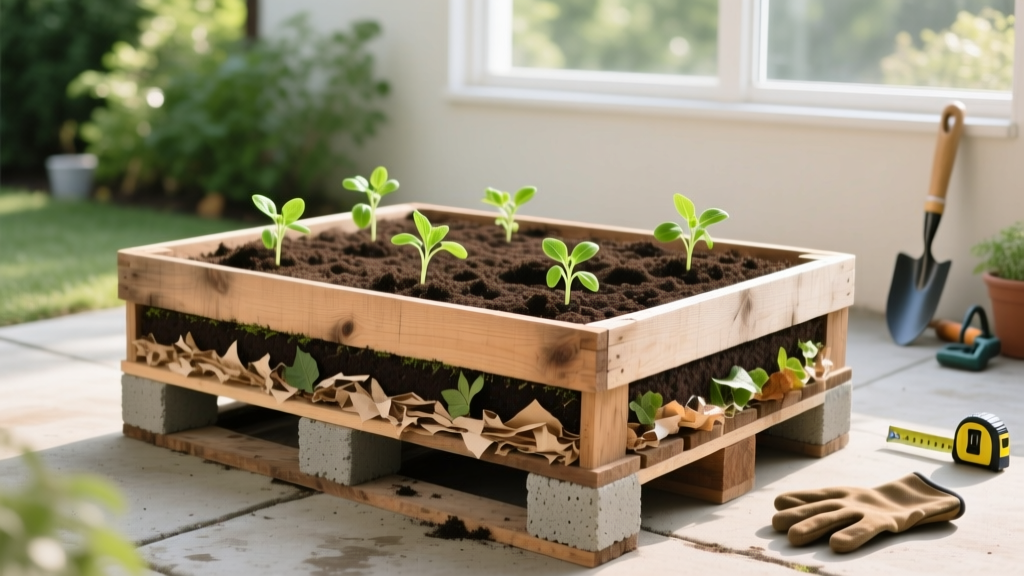
Build Budget Raised Garden Beds With Upcycled Wood And Free Soil
Sarah ChenPublished
The High Cost of Traditional Gardening
Raised bed gardening has exploded in popularity, and for good reason. According to the University of Minnesota Extension, raised beds offer superior drainage, warmer soil in the spring, and a solution for poor native soil. However, the startup costs can be staggering. A single 4x8-foot cedar raised bed can cost upwards of $150 just for the lumber, and filling it with premium bagged garden soil can easily add another $150 to $200 to your bill. For gardeners on a budget, these expenses can turn a relaxing hobby into a financial burden.
Fortunately, you do not need to spend hundreds of dollars to grow a bountiful harvest. By embracing budget-friendly DIY solutions, upcycling free materials, and utilizing natural soil-building techniques, you can construct highly productive raised garden beds for a fraction of the retail cost. This guide will walk you through sourcing free materials, building a sturdy upcycled bed, and filling it using the zero-cost 'lasagna' composting method.
Sourcing Free and Budget-Friendly Bed Materials
The most expensive component of any raised bed is the border material. Instead of purchasing new, pressure-treated lumber or expensive cedar, look for upcycled alternatives that are both free and durable.
1. Heat-Treated (HT) Pallets
Shipping pallets are a goldmine for DIY gardeners. Many local businesses, hardware stores, and warehouses will give away broken or surplus pallets for free. However, safety is paramount. You must inspect the stamp on the pallet wood. Only use pallets stamped with 'HT' (Heat Treated). Avoid any pallets stamped with 'MB' (Methyl Bromide), as this toxic fungicide can leach into your soil and contaminate your vegetables.
2. Urbanite and Cinder Blocks
'Urbanite' is the term for broken or salvaged concrete chunks from construction or demolition sites. With permission from a site manager, you can often haul away concrete rubble for free. Alternatively, standard concrete cinder blocks can be purchased for under $2 each or found for free on local community marketplace apps. Cinder blocks are excellent for raised beds because they require zero carpentry skills—simply stack them to your desired height. The hollow cores can even be filled with soil to plant trailing herbs or marigolds.
3. Fallen Timber and Logs
If you have access to wooded areas or know arborists clearing land, thick logs and branches make beautiful, rustic, and entirely free raised bed borders. Logs of 6 to 10 inches in diameter will last for several years before decomposing, slowly adding organic matter to your garden ecosystem.
Step-by-Step: Building a Pallet Raised Bed
Building a raised bed from pallets requires a bit of elbow grease but saves a massive amount of money. Here is how to construct a standard 4x4-foot bed.
Tools Required
- Pry bar or crowbar
- Reciprocating saw (or a hammer and patience)
- Power drill with wood bits
- 2.5-inch and 3-inch exterior galvanized screws
- Safety goggles and heavy-duty work gloves
- Measuring tape and carpenter's square
Construction Steps
- Dismantle the Pallets: Using your pry bar, carefully remove the top deck boards from the stringers (the thick support beams). If the nails are too stubborn, use a reciprocating saw to cut the nails flush between the boards.
- Cut to Size: Measure and cut your deck boards to 4-foot lengths. You will need enough boards to stack three high on all four sides (typically 12 to 16 boards depending on their width).
- Prepare the Corner Posts: Cut the thick pallet stringers into four 12-inch lengths. These will serve as your internal corner braces.
- Assemble the Walls: Lay your first row of 4-foot boards flat on the ground. Screw them directly into the 12-inch corner posts using your 3-inch galvanized screws. Repeat this process, stacking the second and third rows, ensuring the seams are staggered like brickwork for added structural integrity.
- Level the Ground: Place your assembled box in your desired garden location. Use a shovel to level the soil beneath it, ensuring the box sits flat to prevent water from pooling in one corner.
Pro Tip: Line the bottom of your pallet bed with hardware cloth (wire mesh) before adding soil. This costs about $15 and is a crucial DIY defense against burrowing pests like gophers and moles.
The Lasagna Soil Method: Filling Beds for Pennies
Filling a 4x4-foot raised bed that is 12 inches deep requires roughly 16 cubic feet of soil. At $5 per cubic foot for bagged soil, that is an $80 expense per bed. To eliminate this cost, utilize the 'Lasagna Gardening' or sheet composting method. This technique mimics the natural decomposition of the forest floor and builds incredibly rich, biologically active soil over time. The Environmental Protection Agency (EPA) notes that composting organic waste not only enriches soil but significantly reduces household methane emissions from landfills.
Layering Your Lasagna Bed
Build your soil in layers, alternating between 'browns' (carbon-rich materials) and 'greens' (nitrogen-rich materials).
- Layer 1 (The Weed Barrier): Lay down overlapping sheets of plain brown corrugated cardboard directly on the grass or soil. Remove any tape or glossy labels. Wet the cardboard thoroughly. This smothers existing weeds and grass.
- Layer 2 (The Bulk Base): Add a 3-to-4-inch layer of small twigs, dried leaves, straw, or shredded newspaper. This provides aeration and bulk carbon.
- Layer 3 (The Nitrogen Boost): Add a 2-inch layer of fresh grass clippings, vegetable kitchen scraps, or coffee grounds.
- Layer 4 (Repeat): Continue alternating browns and greens until the bed is about 6 inches from the top rim.
- Layer 5 (The Planting Cap): Finish with a 4-to-6-inch layer of finished compost mixed with a small amount of native topsoil. This is where your seeds and transplants will live for the first season while the lower layers break down beneath them.
Cost Comparison: Traditional vs. DIY Lasagna Bed
The financial difference between buying retail garden supplies and utilizing DIY upcycled methods is staggering. Below is a cost breakdown for a standard 4x8-foot raised bed (32 square feet).
| Material Component | Traditional Retail Cost | DIY Budget Cost |
|---|---|---|
| Bed Border (Lumber) | $120.00 (Cedar) | $0.00 (Upcycled Pallets) |
| Weed Barrier | $25.00 (Landscape Fabric) | $0.00 (Saved Cardboard) |
| Soil Volume (32 cu ft) | $160.00 (Bagged Soil) | $15.00 (Topsoil Cap Only) |
| Hardware & Screws | $15.00 | $10.00 (Salvaged/Bulk) |
| Total Estimated Cost | $320.00 | $25.00 |
By investing sweat equity and utilizing waste streams, you save nearly $300 on a single garden bed.
Budget Irrigation and Free Mulch
Once your bed is built and planted, maintaining it on a budget requires clever water and weed management.
DIY Drip Irrigation
Commercial drip irrigation kits can cost $50 or more. Instead, upcycle 2-liter plastic soda bottles. Poke 5 to 10 small holes in the bottom and lower sides of the bottle using a heated needle or nail. Bury the bottle up to its neck next to your thirsty plants, like tomatoes or squash. When you water, fill the bottle directly. The water will slowly seep into the deep root zone, preventing evaporation and saving you money on your municipal water bill.
Sourcing Free Arborist Wood Chips
Mulch is essential for retaining moisture and suppressing weeds, but bagged mulch is a recurring expense. Reach out to local tree trimming services or use apps like ChipDrop to receive free loads of arborist wood chips. Tree companies often have to pay to dispose of this material at landfills, so they are usually thrilled to drop a load in your driveway for free. Let fresh wood chips age for a few months before using them directly on top of vegetable beds to prevent nitrogen tie-up in the soil.
Best Crops for First-Year Budget Beds
Because the lasagna soil method takes a full season to fully break down the lower layers, your first-year planting strategy should focus on crops that thrive in the 6-inch compost cap and do not require deep, established root penetration. According to planting guides from The Old Farmer's Almanac, shallow-rooted and fast-growing crops are ideal for newly constructed beds.
- Leafy Greens: Lettuce, spinach, and Swiss chard have shallow root systems and will thrive in the top layer of compost.
- Radishes and Carrots: While root vegetables usually need deep soil, radishes mature so quickly they won't notice the decomposing layers below. Stick to shorter carrot varieties like 'Parisian' for the first year.
- Bush Beans: These nitrogen-fixing plants will help supplement the soil biology as the carbon-heavy cardboard and twigs break down beneath them.
- Transplanted Tomatoes and Peppers: If you dig a slightly deeper hole and fill it with finished compost, heavy feeders like tomatoes will do just fine, especially if supported by upcycled bamboo stakes or fallen branches.
Conclusion
Gardening should be an accessible joy, not a luxury pursuit. By upcycling heat-treated pallets, utilizing free urbanite, and building your soil from the ground up with the lasagna composting method, you can create a thriving, highly productive garden space on a shoestring budget. Not only will your wallet thank you, but you will also be diverting valuable organic waste from landfills and building a resilient, living soil ecosystem that will feed your family for years to come.
