Gardening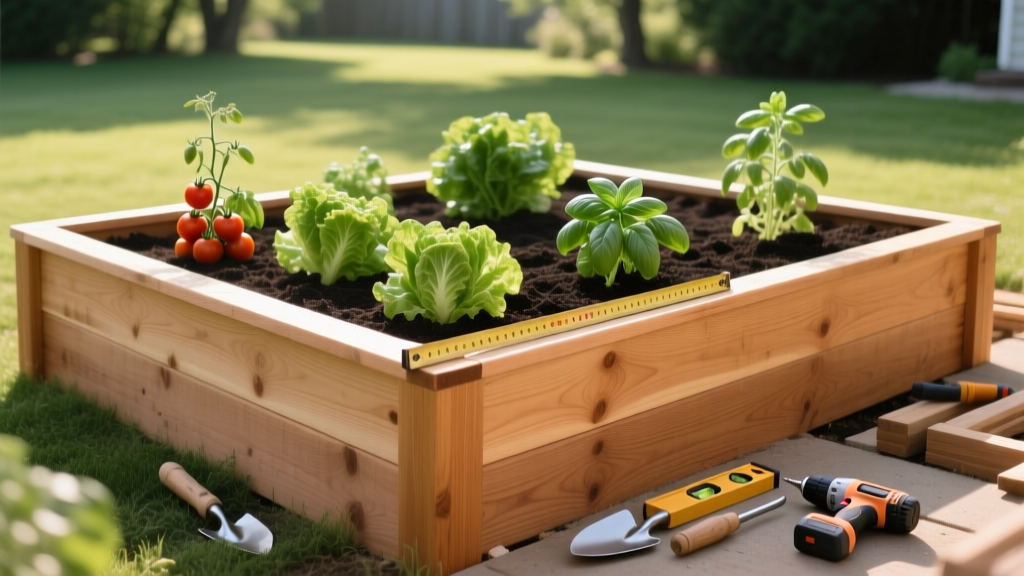
How to Build a 4x8 Cedar Raised Bed for Vegetables
David ParkPublished
Why Choose a 4x8 Cedar Raised Bed?
Raised bed gardening has revolutionized how home growers approach vegetable production, offering superior drainage, faster soil warming in the spring, and an effective barrier against many ground-dwelling pests. Among the various materials available for constructing raised beds, Western Red Cedar stands out as the premier choice. Unlike pressure-treated pine, which historically contained chemical preservatives like CCA (chromated copper arsenate), cedar is naturally resistant to rot, decay, and insect damage thanks to its inherent organic compounds known as thujaplicins. This makes it an exceptionally safe and long-lasting material for growing edible crops.
The 4x8-foot dimension is widely considered the gold standard for raised vegetable beds. According to guidelines highlighted by Penn State Extension, a bed should never be wider than 4 feet. This specific width ensures that the average gardener can comfortably reach the center of the bed (24 inches) from either side without stepping on the soil. Stepping on raised bed soil causes severe compaction, destroying the porous structure you are trying to cultivate. An 8-foot length utilizes standard lumber dimensions efficiently, minimizing waste and reducing the number of cuts required during construction.
Tools and Materials Required
Building a sturdy raised bed requires only basic carpentry skills and a few readily available tools. Below is a comprehensive list of the materials needed to construct a single 4x8 cedar raised bed that is approximately 10 inches deep (using 2x10 lumber).
Materials List
- 3 pieces of 2x10x8 Western Red Cedar boards (untreated)
- 1 box of 2.5-inch exterior-grade star-drive deck screws (minimum 50 screws)
- 4 pieces of 2x4x10 cedar or pressure-treated pine for corner bracing
- 1 roll of heavy-duty landscape fabric or hardware cloth (for the bottom)
- Heavy-duty cardboard (for weed suppression)
Tools List
- Circular saw or miter saw
- Power drill with a star-drive (Torx) bit and a 1/8-inch drill bit for pilot holes
- Measuring tape and carpenter's pencil
- Speed square
- Level and a rubber mallet
- Staple gun
| Item | Quantity | Estimated Unit Cost | Total Cost |
|---|---|---|---|
| 2x10x8 Cedar Boards | 3 | $35.00 | $105.00 |
| 2x4x10 Bracing Lumber | 1 (cut into 4) | $12.00 | $12.00 |
| Exterior Deck Screws (2.5') | 1 Box | $15.00 | $15.00 |
| Hardware Cloth / Landscape Fabric | 1 Roll | $25.00 | $25.00 |
| Total Estimated Cost | $157.00 |
Note: Lumber prices fluctuate seasonally and by region. The costs above reflect average national pricing for mid-grade Western Red Cedar.
Step-by-Step Construction Guide
Step 1: Cut the Lumber
Take two of your 2x10x8 cedar boards and measure them to exactly 8 feet; often, rough-cut lumber can be slightly over or under this length, so square off the ends using your miter saw. Take the third 2x10x8 board and cut it perfectly in half to create two 4-foot end pieces. Next, cut your 2x4 bracing lumber into four 10-inch blocks. These blocks will serve as the internal corner joints, providing immense structural integrity and preventing the bed from bowing outward when filled with heavy, wet soil.
Step 2: Assemble the Frame
Lay one 8-foot board and one 4-foot board flat on the ground, forming an 'L' shape. Place one of your 10-inch 2x4 corner blocks inside the corner, flush with the top and bottom edges of the cedar boards. Using your power drill, pre-drill three holes through the outside of the 2x10 board and into the 2x4 block. Pre-drilling is absolutely critical with cedar; because it is a relatively soft wood, driving screws without pilot holes will cause the boards to split. Secure the joint with your 2.5-inch exterior screws. Repeat this process for all four corners until you have a complete rectangular frame.
Step 3: Reinforce the Long Sides
An 8-foot span of lumber holding back wet soil can bow over time. To prevent this, cut a small piece of 2x4 (about 10 inches long) and attach it to the inside of the long boards at the exact 4-foot midpoint. Drive screws through the outside of the cedar boards into this midpoint brace. This simple addition will double the lifespan of your raised bed walls.
Step 4: Attach the Bottom Barrier
Flip the assembled frame upside down. If you are placing the bed over an area with aggressive weeds or Bermuda grass, lay down overlapping layers of plain, uncoated cardboard. Over the cardboard, staple a layer of heavy-duty landscape fabric or 1/2-inch galvanized hardware cloth. Hardware cloth is highly recommended if you have issues with burrowing pests like gophers or voles, as it creates an impenetrable physical barrier while still allowing beneficial earthworms and water to move freely between the native soil and your raised bed.
Calculating the Perfect Soil Mix
The most common mistake new gardeners make is filling their raised beds with topsoil dug directly from their yard. Native soil, when placed in a confined raised bed, will quickly compact, drain poorly, and restrict root growth. According to soil scientists at the University of Minnesota Extension, raised beds require a specialized, lightweight, and highly porous soilless mix or a heavily amended loam blend to ensure proper aeration and moisture retention.
A standard 4x8 bed built with 2x10 lumber (which has an actual height of 9.25 inches) holds approximately 24.5 cubic feet of soil. To account for settling and mounding, you should prepare roughly 25 to 27 cubic feet of growing medium. We recommend a modified version of the famous 'Mel's Mix', which provides excellent drainage, moisture retention, and a slow-release nutrient profile.
| Ingredient | Volume Ratio | Required Volume | Purpose |
|---|---|---|---|
| Coconut Coir (or Peat Moss) | 33% | 8.5 cu. ft. | Moisture retention and soil lightening |
| Coarse Vermiculite | 33% | 8.5 cu. ft. | Aeration, drainage, and nutrient holding |
| Blended Organic Compost | 33% | 8.5 cu. ft. | Primary nutrition and microbial life |
Pro-Tip on Compost: Do not rely on a single source of compost. Blend at least three different types (e.g., cow manure compost, mushroom compost, and homemade kitchen compost) to ensure a broad spectrum of trace minerals and beneficial microbiology. If using coconut coir, ensure it is in 'expanded' brick form and fully hydrated in a wheelbarrow before mixing it into the bed.
Site Preparation and Installation
Before moving your newly constructed bed into place, carefully select your site. Vegetables require a minimum of 6 to 8 hours of direct, unfiltered sunlight daily. Avoid placing the bed near large trees, as their extensive root systems will compete with your vegetables for water and nutrients, and the tree canopy will block vital sunlight.
Once the site is selected, mow the grass as short as possible. Do not use chemical herbicides like glyphosate to kill the grass if you intend to grow organic vegetables; instead, smother the grass with the cardboard mentioned in Step 4. Move the finished cedar frame into position over the cardboard. Use a level and a rubber mallet to tap the frame into place, ensuring it is perfectly level from side to side and end to end. A level bed ensures that water distributes evenly across the soil surface rather than pooling in one corner.
Fill the bed with your custom soil mix, watering it lightly every few inches as you go. This helps eliminate large air pockets and encourages the materials to bind together. Mound the soil slightly in the center, as it will naturally settle and compress over the first few weeks of watering.
Companion Planting and First Season Strategy
With your bed constructed and filled, you are ready to plant. To maximize the yield of your new 4x8 space, utilize companion planting strategies. For a classic summer layout, plant indeterminate tomatoes in the four corners, providing them with tall trellises. Between the tomatoes, plant bush beans to fix nitrogen in the soil, and edge the entire perimeter with French marigolds. Marigolds release a compound called alpha-terthienyl from their roots, which actively suppresses harmful root-knot nematodes in the soil, protecting your vulnerable tomato roots.
Maintenance and Longevity
Western Red Cedar can easily last 10 to 15 years without any chemical treatments. However, if you wish to preserve its rich, golden-brown color and prevent it from weathering to a silvery-gray patina, you can treat the exterior walls (never the interior soil-facing walls) with raw, food-safe linseed oil once a year. At the end of every growing season, top off the bed with an additional 2 inches of fresh compost to replace the organic matter that has decomposed and been consumed by your crops. By following these practical construction and maintenance steps, your 4x8 cedar raised bed will serve as the highly productive cornerstone of your home garden for over a decade.
