Gardening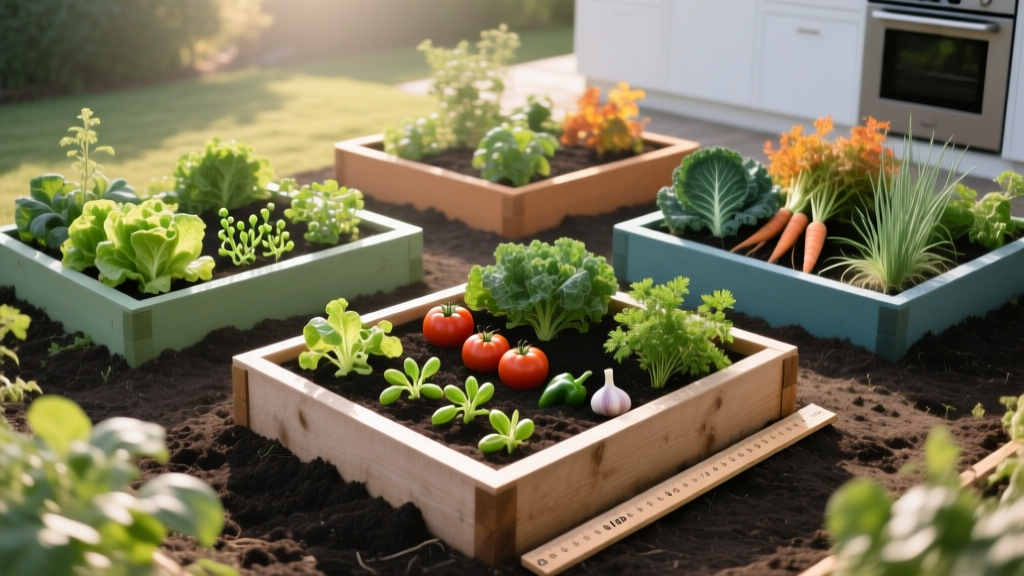
Plan and Design a Four-Season Kitchen Garden Layout
Robert HayesPublished
The Philosophy of the Modern Kitchen Garden
The traditional French potager, or kitchen garden, is a masterclass in blending utility with aesthetic beauty. Unlike standard row-crop vegetable gardens that prioritize sheer caloric yield, a modern kitchen garden is designed for continuous harvest, visual appeal, and seamless integration into your outdoor living space. Designing a four-season kitchen garden requires a strategic approach to spatial planning, microclimate analysis, and succession planting. By treating your garden as an architectural extension of your home, you can create a highly productive space that yields fresh herbs, leafy greens, and vibrant vegetables year-round. This comprehensive planning guide will walk you through the essential design principles, structural dimensions, and planting matrices required to build a resilient and beautiful kitchen garden from the ground up.
Step 1: Site Analysis and Microclimate Mapping
Before purchasing a single bag of soil or drafting a blueprint, you must understand the unique microclimates of your yard. According to the University of Minnesota Extension, proper site selection is the most critical factor in vegetable garden success, primarily dictated by solar exposure and drainage. A productive kitchen garden requires a minimum of six to eight hours of direct sunlight daily. However, in hotter climates (USDA Zones 8-10), providing partial afternoon shade can prevent delicate greens from bolting prematurely.
To map your site accurately, observe your yard over a full weekend. Note where shadows fall from existing trees, fences, and your home at 9:00 AM, noon, and 3:00 PM. Avoid low-lying areas where frost settles or water pools after heavy rains. Proximity to the kitchen is another vital design consideration; the closer the garden is to your back door, the more likely you are to maintain it and harvest ingredients mid-meal. Aim for a location that is within 50 feet of your kitchen to maximize convenience and ensure daily observation of pest pressures and soil moisture levels.
Step 2: Dimensional Planning for Raised Beds
Raised beds are the cornerstone of a well-designed kitchen garden. They provide superior drainage, warm up faster in the spring, and allow for precise soil composition control. The Oregon State University Extension recommends specific dimensional constraints to ensure ergonomic access and structural integrity. The golden rule for raised bed width is four feet. This allows an average adult to reach the exact center of the bed from either side without stepping on and compacting the soil.
For length, eight feet is the standard maximum to prevent the wooden or steel sides from bowing outward under the immense hydrostatic pressure of wet soil. If you require longer runs, you must install cross-braces or mid-span support stakes. Depth is equally crucial: a minimum of 12 inches is required for shallow-rooted crops like lettuce and radishes, but 18 to 24 inches is highly recommended to accommodate deep-rooting vegetables like tomatoes, carrots, and parsnips. When planning your layout, ensure you leave adequate space between beds. A minimum pathway width of 24 inches is necessary for walking, but 36 inches is vastly superior, allowing you to navigate the garden comfortably with a wheelbarrow or garden cart.
Step 3: Hardscaping, Pathways, and Accessibility
The hardscaping elements of your kitchen garden dictate its flow, accessibility, and overall aesthetic. Bare dirt pathways quickly turn into muddy quagmires during spring thaws and autumn rains, making harvesting a chore. To maintain a clean, accessible garden, invest in durable pathway materials. Decomposed granite (DG) is a popular, cost-effective choice that compacts into a hard, permeable surface that suppresses weeds while allowing rainwater to percolate into the water table. Alternatively, thick layers of arborist wood chips provide a soft, natural walking surface that breaks down over time, slowly feeding the adjacent soil biology.
For a more formal, structured look reminiscent of traditional European estate gardens, consider using brick pavers or flagstone set in a bed of sand. While the initial material and labor costs are significantly higher, stone pathways offer unparalleled longevity and require virtually zero annual maintenance. Regardless of the material you choose, install a heavy-duty landscape fabric or a layer of flattened cardboard beneath your pathway base to block aggressive perennial weeds like bindweed and bermudagrass from encroaching into your walking spaces.
Step 4: The Four-Season Succession Matrix
A true four-season kitchen garden relies on meticulous succession planting and crop rotation to maximize yield per square foot. By staggering planting dates and utilizing cold frames or row covers, you can extend your harvest well beyond the traditional summer window. The As noted by the Royal Horticultural Society (RHS), rotating crop families prevents the depletion of specific soil nutrients and disrupts the life cycles of soil-borne pathogens.
Below is a strategic planning matrix for a temperate climate (USDA Zones 6-7) kitchen garden, demonstrating how to transition a single 4x8 raised bed through the seasons:
| Season | Primary Crops | Companion Accents | Harvest Window |
|---|---|---|---|
| Early Spring | Peas, Spinach, Radishes | Sweet Alyssum, Chives | April - June |
| Summer | Indeterminate Tomatoes, Basil, Peppers | Marigolds, Nasturtiums | July - September |
| Autumn | Kale, Garlic, Swiss Chard | Pansies, Calendula | October - December |
| Winter (Protected) | Mache, Overwintering Spinach, Scallions | Winter Savory, Thyme | January - March |
By utilizing quick-maturing spring crops like radishes (which can be harvested in just 25 days), you free up valuable real estate just in time to transplant heat-loving summer crops. In autumn, removing spent tomato vines and immediately sowing cold-hardy brassicas ensures the soil remains productive and protected from erosion during the winter months.
Step 5: Vertical Integration and Companion Planting
Space is at a premium in a kitchen garden, making vertical gardening an essential design strategy. By training vining crops upward, you increase air circulation, reduce fungal disease pressure, and free up ground-level space for shade-tolerant understory crops. Install sturdy trellises on the northernmost edge of your raised beds. This crucial placement ensures that tall, climbing plants do not cast shadows over the sun-loving crops situated to their south.
For trellis materials, galvanized cattle panels are incredibly durable, cost-effective, and capable of supporting the heavy weight of winter squash and indeterminate tomatoes. Alternatively, cedar obelisks and copper wire grids offer a more refined, ornamental aesthetic that complements the formal lines of a potager. Pair your vertical elements with strategic companion planting. For example, plant aromatic basil and pungent marigolds at the base of your tomatoes to deter nematodes and confuse hornworms with their strong volatile oils. Allow trailing nasturtiums to spill over the edges of your raised beds; they act as a brilliant trap crop for aphids while adding vibrant, edible blooms to your summer salads.
Budgeting and Material Sourcing
Designing a kitchen garden is an investment in your property and your health, but costs can escalate quickly without careful planning. When budgeting for raised bed construction, you generally have three primary material tiers. Untreated, rot-resistant cedar or redwood is the traditional choice, offering a beautiful natural aesthetic that weathers to a silvery gray. Expect to spend between $150 and $250 per 4x8 bed for high-quality, two-inch-thick lumber. Galvanized steel troughs and modular steel beds have surged in popularity due to their modern look, rodent-proofing capabilities, and rapid assembly, typically costing between $120 and $200 per unit.
However, the most significant expense in any new garden is the soil. Filling a single 4x8 bed that is 18 inches deep requires roughly 48 cubic feet of growing medium. Do not fill your beds with cheap, heavy topsoil, which will compact and stunt root growth. Instead, invest in a premium blended mix. A highly recommended, well-draining recipe consists of 40% high-quality topsoil, 30% organic compost, 20% coco coir or peat moss for moisture retention, and 10% worm castings for microbial inoculation. Sourcing these materials in bulk from a local landscape supply yard, rather than buying bagged soil from a big-box hardware store, will save you hundreds of dollars and yield a vastly superior growing medium for your four-season kitchen garden.
