Tree Care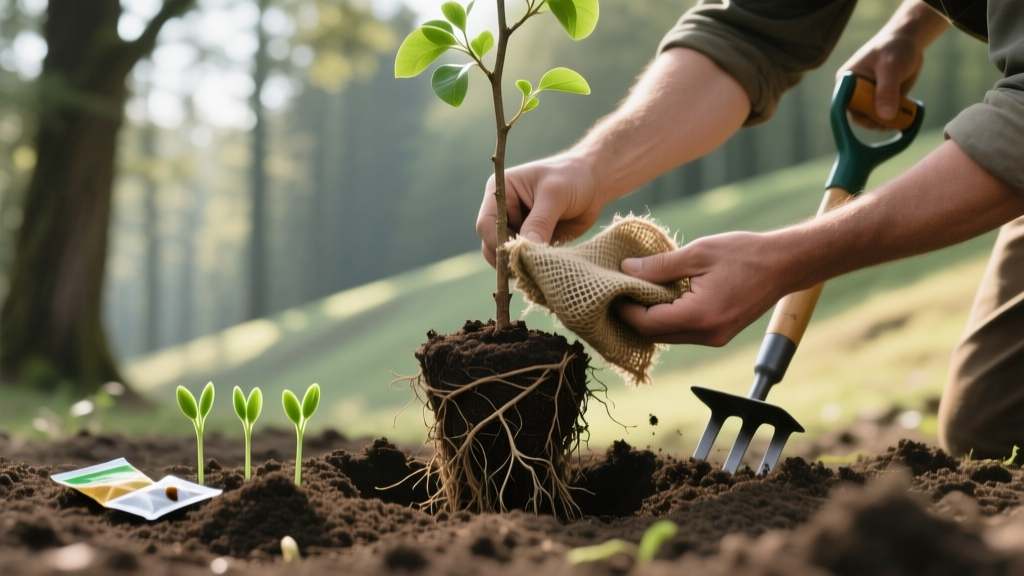
2026 Tree Root Ball Prep, Burlap Removal & Seeding
Emily WatsonPublished
Introduction to Tree Planting and Soil Integration in 2026
Planting a balled and burlapped (B&B) tree is a significant investment in your landscape, but simply digging a hole and dropping the root ball into the ground is a recipe for long-term failure. In 2026, modern arboriculture and turf management have converged, emphasizing that the micro-environment surrounding the tree is just as critical as the root ball itself. Proper tree establishment now requires a holistic approach that combines meticulous root ball preparation, complete burlap removal, targeted soil aeration, and strategic seeding of the surrounding basin.
When heavy machinery or years of foot traffic compact the soil around a planting site, the new tree roots cannot expand, and water pools on the surface rather than penetrating the root zone. By integrating lawn aeration and seeding techniques into your tree planting workflow, you create a biologically active, well-draining environment that prevents erosion, suppresses weeds, and encourages rapid root establishment. This comprehensive guide will walk you through the exact steps to prepare your root ball, remove burlap and wire baskets, aerate the surrounding soil, and seed the area for a thriving landscape.
The Great Burlap Debate: Natural vs. Synthetic
Before you can properly prepare the root ball, you must identify the type of burlap encasing it. According to the Morton Arboretum, leaving the wrong type of burlap on a root ball can lead to girdling roots, moisture wicking, and eventual tree death.
Synthetic Burlap (Plastic)
Synthetic burlap is often made from polypropylene. It does not decompose, will wick moisture away from the root ball, and creates a physical barrier that roots cannot penetrate. If you attempt to burn a corner of the burlap with a lighter and it melts or smells like burnt plastic, it is synthetic. All synthetic burlap must be completely removed before planting.
Natural Burlap (Jute or Cotton)
Natural burlap will decompose over time and smells like burnt leaves or paper when exposed to a flame. While some older guidelines suggested leaving natural burlap under the root ball, 2026 best practices dictate that you should still pull it back entirely from the top and sides of the root ball. If the hole is deep enough and you can safely slide it out from the bottom without dropping and shattering the root ball, complete removal is highly recommended to eliminate any hydrophobic barriers.
Step-by-Step Root Ball Preparation and Burlap Removal
Preparing the root ball goes beyond just stripping away the fabric. Nurseries often pack root balls tightly, leading to circling roots that will eventually strangle the tree. Follow these steps to ensure your tree is ready for its new home.
- Position and Excavate: Roll the B&B tree into the planting hole. The hole should be 2 to 3 times wider than the root ball, but only as deep as the root ball itself. The root flare (where the trunk widens at the base) must sit 1 to 2 inches above the native soil grade.
- Cut the Wire Basket: Using 18-inch bolt cutters, snip the wire loops at the top of the basket. Remove the top one-third to one-half of the wire basket. This prevents the wires from girdling the trunk as it grows over the coming decades.
- Peel Back the Burlap: Cut any twine or rope binding the burlap to the trunk. Never leave rope around the trunk, as it will cut off the phloem and kill the tree. Fold the burlap back into the planting void and extract it if possible.
- Aerate and Score the Root Mass: Just as you would aerate a compacted lawn, you must 'aerate' the root ball. Use a sterilized pruning saw or a sharp hori-hori knife to shave off the outer half-inch of soil and roots all the way around the ball. This exposes the fine feeder roots, breaks up circling root patterns, and encourages them to grow outward into the native soil.
- Backfill with Native Soil: Backfill the void using the native soil you excavated. Avoid heavy amendments like peat moss in the planting hole, as this creates a 'bathtub effect' where water pools in the loose soil and drowns the roots.
Integrating Soil Aeration Around the Planting Zone
Once the tree is planted, the surrounding soil must be prepared to receive the expanding root system and to support surface-level seeding. Compacted soil restricts oxygen flow and prevents water infiltration. Integrating aeration techniques around the tree's future drip line is a critical 2026 planting standard.
Core Aeration vs. Liquid Aeration
For the area immediately surrounding the tree basin (roughly a 3 to 5-foot radius from the trunk), mechanical core aeration can sometimes damage shallow, newly planted surface roots if done too aggressively. Instead, arborists in 2026 heavily favor liquid aeration using humic acid and fulvic acid blends, or shallow radial trenching.
- Liquid Aeration: Apply a high-quality liquid aerator (containing ammonium lauryl sulfate or saponins) to the soil surface around the planting zone. This breaks down soil surface tension, allowing water, oxygen, and newly applied seed to make direct contact with the soil profile without the risk of slicing new roots with mechanical tines.
- Radial Trenching (For Heavy Clay): If you are planting in heavily compacted clay, use an air spade or a narrow trenching shovel to dig 4-inch wide, 8-inch deep trenches radiating outward from the edge of the root ball like spokes on a wheel. Fill these trenches with a mix of compost and biochar to create permanent aeration channels for the roots.
Seeding Strategies for Tree Basins and Erosion Control
Bare soil around a newly planted tree is an invitation for invasive weeds, soil crusting, and erosion during heavy spring rains. Seeding the area immediately after planting and aerating provides a living mulch that regulates soil temperature and feeds the soil microbiome. According to planting guidelines supported by the Arbor Day Foundation, protecting the soil surface is paramount for moisture retention.
Choosing the Right Seed Mix
Do not plant aggressive, deep-rooted turfgrasses like Tall Fescue or Kentucky Bluegrass directly over the root ball, as they will compete fiercely with the young tree for water and nutrients. Instead, opt for low-competition, nitrogen-fixing, or shallow-rooted seed mixes.
- Micro-Clover (Trifolium repens 'Micro'): The top choice for 2026. Micro-clover is drought-tolerant, requires no mowing, fixes atmospheric nitrogen into the soil (feeding the tree), and stays under 4 inches tall.
- Creeping Red Fescue: A shade-tolerant, fine fescue that requires minimal water and features a shallow root system that will not compete with the deeper tree roots.
- Annual Ryegrass (Nurse Crop): If planting in late fall or early spring, broadcast a light layer of annual ryegrass. It germinates in 5 days, holding the soil in place to prevent erosion while the tree establishes, and naturally dies off in the summer heat.
Seeding Application Rates
After liquid aerating the soil surface, broadcast your chosen seed. For micro-clover, apply at a rate of 1 to 2 lbs per 1,000 square feet. For creeping red fescue, apply 4 to 5 lbs per 1,000 square feet. Lightly rake the seed into the top 1/8th of an inch of soil, and cover the seeded area with a thin layer of weed-free straw or a biodegradable erosion control blanket to retain moisture during the 14-day germination window.
Comparison Chart: Aeration & Seeding Tools for Tree Zones
| Tool / Method | Best Use Case | Pros | Cons |
|---|---|---|---|
| Liquid Aerator (Humic/Saponin) | Immediately post-planting soil prep | No root damage; improves water infiltration; safe for new seed. | Requires repeat applications; less effective on extreme clay. |
| Manual Core Aerator | Outer drip line (3+ years post-plant) | Removes physical soil cores; excellent for heavy compaction. | High risk of severing new surface roots if used too close to trunk. |
| Air Spade / Radial Trench | Pre-planting in severe clay soils | Creates permanent oxygen channels; safe for existing roots. | Expensive equipment rental; labor-intensive. |
| Drop Spreader (Seeding) | Precise seed application around basin | Even distribution; prevents seed waste on hardscapes. | Can be difficult to maneuver around tight tree trunks. |
| Hand Broadcast (Seeding) | Small tree basins and irregular edges | Highly maneuverable; inexpensive. | Prone to uneven distribution if not done carefully. |
Common Mistakes to Avoid in 2026
Even with the best aeration and seeding intentions, several common pitfalls can undo your hard work. Penn State Extension notes in their ornamental planting guidelines that improper depth and soil management are the leading causes of transplant mortality.
- Planting Too Deep: The number one killer of B&B trees. If the root flare is buried, the trunk tissue will rot, and the tree will suffocate. Always dig shallow and wide.
- Leaving the Wire Basket: While some landscapers argue the basket holds the ball together, leaving it in the ground restricts root expansion and can girdle the tree a decade later. Always remove the top half.
- Over-Mulching (Volcano Mulching): If you choose to use mulch instead of seeding the immediate basin, keep it 3 inches away from the trunk. Piling mulch against the bark invites fungal pathogens and rodent damage.
- Using Herbicides Near New Seed: Avoid pre-emergent crabgrass preventers in the planting year. These chemicals will stop your erosion-control seed from germinating and can stunt the fine feeder roots of the newly planted tree.
Conclusion
Successfully planting a balled and burlapped tree in 2026 requires looking beyond the hole in the ground. By meticulously removing synthetic burlap, cutting away wire baskets, and scoring the root ball to encourage outward growth, you set the foundation for a resilient tree. When you pair this root ball preparation with localized liquid aeration and the strategic seeding of low-competition ground covers like micro-clover, you transform a vulnerable planting site into a thriving, biologically active ecosystem. Take the time to prepare both the tree and the soil, and your landscape will reward you with decades of health, shade, and beauty.