Tree Care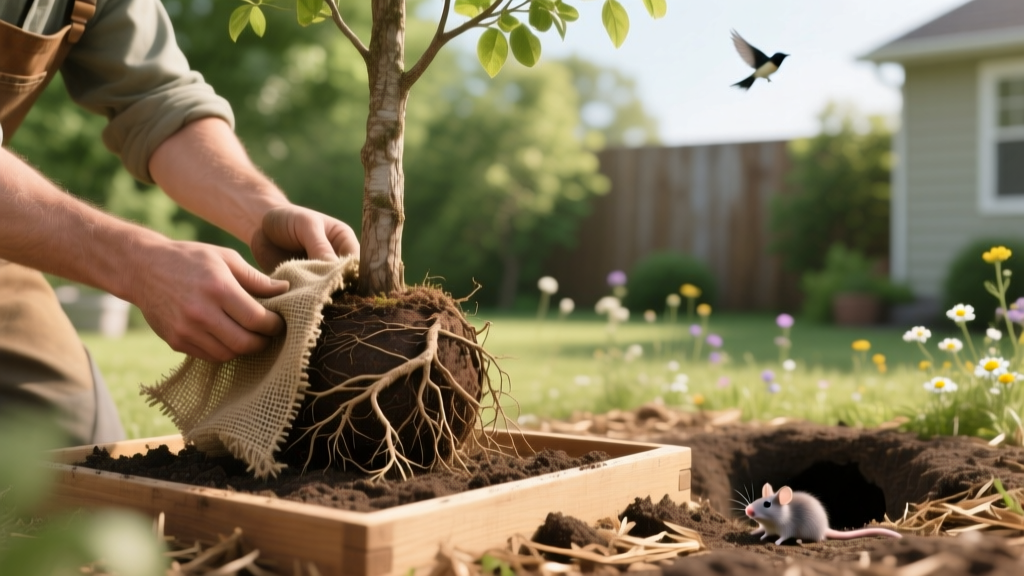
2026 Tree Planting: Burlap Removal & Root Prep for Wildlife
Anna KowalskiPublished
The Intersection of Tree Planting and Wildlife Management
When we plant trees in our yards, we are often thinking about the future: shade for our homes, beauty for our landscapes, and vital habitat for local wildlife. A mature oak or maple provides nesting sites for songbirds, acorns and seeds for foraging mammals, and essential canopy cover. However, as we navigate the shifting climate patterns and evolving pest pressures of 2026, arborists and wildlife biologists are sounding the alarm on a critical, often overlooked aspect of tree planting: root ball preparation and burlap removal. Improper handling of the root ball during planting does not just stunt tree growth; it actively invites destructive yard animals and rodents that can decimate your newly planted wildlife habitat before it ever has a chance to thrive.
From the perspective of yard animal management, the way you handle the burlap, wire basket, and root flare of a B&B (balled and burlapped) tree dictates whether your new tree will become a robust pillar of the local ecosystem or a magnet for voles, mice, and bark-girdling pests. This comprehensive guide will walk you through the exact steps to prepare your root ball, remove synthetic and natural burlap, and expose the root flare to deter destructive wildlife while fostering a healthy tree.
Why Root Ball Preparation Dictates Pest Pressure
The most common mistake made by homeowners and even some landscaping contractors is planting the tree too deep and leaving the burlap intact around the trunk. This creates a cascade of ecological problems. According to the Arbor Day Foundation, the root flare—the area where the trunk widens and transitions into the structural roots—must always be visible above the soil line. When the root flare is buried, or when excess soil and burlap are left piled against the trunk, it creates a dark, moist, and sheltered microhabitat.
This microhabitat is exactly what destructive rodents, particularly voles and meadow mice, are looking for. In the winter of 2026, with fluctuating freeze-thaw cycles pushing rodents to seek stable environments, a buried root flare covered in mulch or decaying burlap becomes a prime nesting site. Once established, these rodents will chew through the tree's cambium layer (the vital tissue beneath the bark that transports water and nutrients). This girdling process severs the tree's vascular system, effectively killing the tree. As noted by the Clemson University Home & Garden Information Center, vole damage is one of the leading causes of unexplained tree death in residential landscapes, and it is almost entirely preventable through proper root flare exposure and planting depth.
The Dangers of Leaving Burlap and Wire Baskets
Nursery practices have evolved, and the burlap used to wrap root balls in 2026 is not always what it seems. While traditional natural jute burlap will eventually decompose, it can take over a year to do so. During that time, it wicks moisture away from the root ball and can harbor fungal pathogens. Worse, many nurseries now use synthetic, plastic-based burlap that mimics the look of natural jute but will never decompose. If left on the root ball, synthetic burlap girdles the expanding roots, severely stunting the tree's growth.
A stunted, stressed tree is highly vulnerable to other wildlife interactions. For example, deer are known to rub their antlers on the trunks of young trees in the fall to remove velvet. A vigorous, fast-growing tree can recover from minor bark scoring, but a tree whose roots are choked by synthetic burlap and a wire basket lacks the energy to compartmentalize the wound, leading to fatal insect infestations or rot. Furthermore, wire baskets, while they rust eventually, restrict the lateral growth of the uppermost structural roots, leading to a weak anchor system that is highly susceptible to being toppled by burrowing animals or high winds.
Step-by-Step Root Ball and Burlap Preparation Guide
To ensure your tree establishes quickly and remains resilient against yard pests, follow these precise preparation steps:
- Locate and Expose the Root Flare: Before digging your hole, use a hand trowel or a soft-bristled brush to gently excavate the top 2 to 4 inches of the root ball's soil. You must find the root flare. Removing this excess 'nursery soil' ensures the tree will not be planted too deep, eliminating the primary hiding spot for voles and mice.
- Dig a Wide, Shallow Hole: Dig your planting hole two to three times wider than the root ball, but slightly shallower than the root ball's height. The goal is to have the root flare sit 1 to 2 inches above the surrounding grade. This prevents water from pooling against the trunk and deters moisture-loving pests.
- Position the Tree and Cut the Burlap: Place the tree in the hole. Once positioned, use sharp bypass pruners or a utility knife to cut the burlap away from the trunk and the sides of the root ball. Do not pull the burlap, as this can tear the delicate feeder roots. Cut it into strips and remove it entirely from the hole.
- Remove the Wire Basket: Using bolt cutters, remove the entire wire basket. If the basket is heavily integrated into the root mass and removal threatens to break the root ball apart, you must at least cut away the top half of the basket and all loops or handles protruding above the soil line. Protruding wire can injure foraging wildlife and makes it impossible to apply proper trunk guards later.
Material Comparison: Burlap Types and Wildlife Impacts
Understanding the material wrapping your tree's roots is essential for long-term wildlife management and tree health. The table below outlines the common root ball wrappings found in 2026 and their implications for your yard.
| Material Type | Decay Rate | Wildlife & Pest Impact | Required Action at Planting |
|---|---|---|---|
| Natural Jute Burlap | 6 to 12 months | Can harbor moisture and provide temporary nesting material for mice if left against the trunk. | Cut away from trunk and top third of root ball; remove if possible. |
| Synthetic (Plastic) Burlap | Never decomposes | Traps heat and moisture, causing root rot. Attracts fungus gnats. Girdles roots, weakening the tree against deer browsing. | Must be 100% removed from the root ball before backfilling. |
| Galvanized Wire Basket | 15 to 30 years | Protruding wires can lacerate yard animals. Restricts root growth, leading to poor canopy health and reduced seed/nut production for wildlife. | Remove entirely, or at minimum cut away the top half and all surface loops. |
| Untreated Cotton Twine | 1 to 3 months | Minimal impact, but can wick moisture away from the root ball during dry spells. | Cut and remove after the tree is secured in the hole. |
Post-Planting Protection for Habitat Trees
Once the burlap is removed and the tree is backfilled with native soil, your wildlife management strategy must shift to physical deterrence. The University of Minnesota Extension strongly advises against 'volcano mulching'—the practice of piling mulch high against the trunk. Mulch should be applied in a wide, flat donut shape, 2 to 3 inches deep, and kept at least 3 inches away from the trunk itself. This exposes the root flare and removes the protective cover that rodents rely on to chew on the bark undetected.
To further protect your young habitat tree from voles and rabbits, install a physical barrier. In 2026, the standard recommendation is to use 19-gauge, 1/4-inch mesh galvanized hardware cloth rather than solid plastic tree tubes. Plastic tubes can trap humidity, encouraging fungal diseases and providing a hidden highway for insects. Hardware cloth allows for airflow and visibility while physically blocking rodents. Cut a piece of hardware cloth roughly 24 inches tall and form it into a cylinder around the trunk, burying the bottom 2 inches into the soil to prevent voles from tunneling underneath. The cost for a 2-foot by 10-foot roll of hardware cloth averages around $18 to $22 at most home improvement centers, a small price to pay to protect a tree that will support local bird and mammal populations for decades.
Warning Signs of Rodent Activity Around Root Balls
Even with proper burlap removal and planting, keep an eye out for these signs that destructive wildlife is targeting your tree's base:
- Small, golf-ball-sized holes in the soil near the root zone, indicating active vole tunnels.
- Runways or flattened paths in the grass or mulch leading directly to the tree trunk.
- Missing bark at the soil line, often revealing bright, fresh wood underneath (a sign of recent girdling).
- Accumulations of tiny, pellet-like droppings near the base of the trunk or under nearby rocks and landscape timbers.
Conclusion: Planting for the Future Ecosystem
Taking the extra 15 minutes to properly excavate the root flare, cut away synthetic and natural burlap, and remove the wire basket is the single most important thing you can do for your new tree. By eliminating the hidden, damp environments that attract rodents and ensuring the tree has the unrestricted root growth needed to fight off environmental stress, you are securing the future of your landscape. A properly planted tree will grow faster, produce wildlife-sustaining mast and seeds earlier, and stand strong against the pressures of yard animals, ensuring your yard remains a thriving sanctuary for the wildlife you actually want to attract.