Tree Care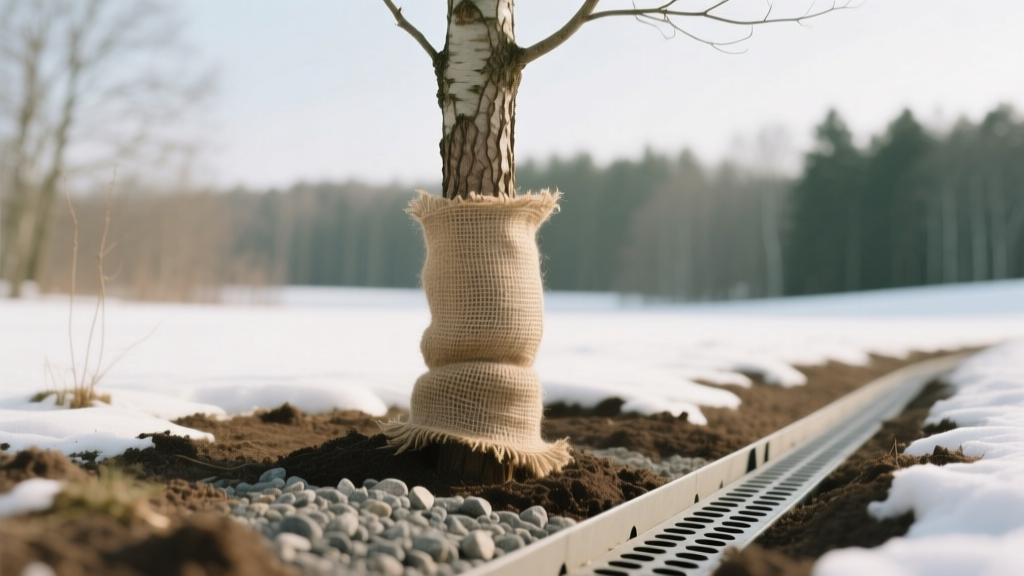
2026 Burlap Tree Wrapping for Sunscald & Drainage Setup
Mike RodriguezPublished
The Intersection of Trunk Protection and Root Zone Drainage
As French drain installation specialists, we frequently encounter a critical oversight in residential winter landscaping: homeowners invest heavily in sub-surface drainage to protect their foundations, yet completely neglect the microclimates of their established trees. When we trench through a yard to install a French drain, we are often working in areas with historically poor soil percolation. Trees situated in these waterlogged zones are already under immense environmental stress. If we only address the trunk protection without managing the root zone hydrology, the tree will likely fail. Our comprehensive 2026 winterization protocol mandates a dual approach: precise burlap wrapping to prevent winter sunscald on the trunk, coupled with strategic French drain installation to eliminate frost heave and root asphyxiation in the surrounding soil.
Understanding Winter Sunscald and Southwest Injury
Winter sunscald, often referred to as southwest injury, is a devastating physiological disorder that primarily affects young, thin-barked, and newly transplanted trees. During the winter months, the low angle of the sun intensely heats the south and southwest-facing bark of a tree. This localized heating tricks the dormant cells in the phloem and cambium layers into breaking dormancy and becoming active. When the sun sets and temperatures rapidly plummet below freezing, these newly activated cells freeze and rupture, causing permanent tissue death.
According to The Morton Arboretum, the resulting damage manifests as sunken, discolored, and eventually cracking bark on the lower trunk. This structural compromise invites opportunistic pathogens, wood-boring insects, and severe moisture loss. While plastic tree guards were once a popular remedy, the 2026 arboricultural consensus strongly favors breathable, natural materials that regulate temperature fluctuations without trapping excess moisture against the cambium.
Why Burlap is the 2026 Standard for Tree Wrapping
Burlap, specifically 100% natural jute, has emerged as the premier material for winter tree wrapping. Unlike rigid plastic guards or synthetic wraps, burlap allows the trunk to respire while diffusing the harsh, direct solar radiation that triggers the freeze-thaw cycle. Furthermore, when we are installing French drains near the drip line of a tree, the soil disturbance can temporarily stress the tree's vascular system. A breathable burlap wrap reduces the transpiration rate and wind desiccation, giving the tree the metabolic breathing room it needs to recover from the drainage trenching process.
Step-by-Step Burlap Wrapping Technique
Proper application is vital. If wrapped too tightly or with the wrong materials, burlap can cause girdling or harbor fungal pathogens. Follow these precise steps for the 2026 winter season:
- Preparation: Inspect the trunk for existing wounds or insect bore holes. Treat any active issues before wrapping. Ensure the trunk is completely dry to prevent trapping moisture.
- Base Anchoring: Begin wrapping at the very base of the trunk, overlapping the soil line by about one inch. This prevents small rodents, like voles, from accessing the bark under the snow line.
- The Overlap Method: Wrap the burlap upward at a slight angle, ensuring each successive layer overlaps the previous one by at least 30% (roughly 2 to 3 inches). This shingle effect sheds winter rain and melting snow away from the trunk.
- Height Target: Continue wrapping until you reach the lowest major scaffold branches. For most ornamental and shade trees, this requires 4 to 6 feet of vertical coverage.
- Securing the Wrap: Use natural jute twine or biodegradable paper tape to secure the top, middle, and bottom of the wrap. Never use wire, zip ties, or duct tape, as these will girdle the trunk as it expands in the spring.
- Timely Removal: Remove the burlap in early spring (typically late March to early April, depending on your hardiness zone) just as the buds begin to swell. Leaving it on too long traps spring humidity and encourages fungal cankers.
The French Drain Connection: Mitigating Root Zone Frost Heave
While burlap protects the above-ground vascular tissues, the roots below ground face an equally lethal winter threat: frost heave. In poorly drained soils, water accumulates around the root ball. When temperatures drop, this saturated soil freezes and expands, literally lifting the tree out of the ground and snapping critical feeder roots. When the soil thaws, the tree settles back down, but the severed roots cannot reattach, leading to severe drought stress and eventual death the following summer.
This is where our expertise in French drain installation becomes a vital component of tree health. By installing a targeted sub-surface drainage system, we intercept lateral groundwater and roof runoff before it can pool in the tree's root zone. The University of Minnesota Extension emphasizes that managing soil moisture is one of the most effective, yet overlooked, methods of preventing winter root injury and frost heave in temperate climates.
Installing a French Drain Near Established Trees
Trenching near mature trees requires surgical precision to avoid severing structural roots. In 2026, we utilize advanced, low-impact drainage materials to minimize the trench footprint.
- Root Mapping and Hand Digging: Never use heavy mechanized trenchers within the critical root zone (the area from the trunk to the drip line). We use hand tools and compressed air excavation (air spades) to carefully expose and tunnel beneath major structural roots.
- Trench Dimensions and Slope: A standard French drain requires a trench 12 to 18 inches deep. The trench must maintain a minimum slope of 1 inch per 8 feet to ensure positive gravity flow away from the tree's basin.
- Modern Drainage Materials: Instead of traditional gravel, which requires a massive trench volume, we now utilize NDS EZ-Drain systems. These are lightweight, gravel-free polystyrene aggregate bundles wrapped in filter fabric. They allow us to dig narrower, shallower trenches, drastically reducing root disturbance.
- Geotextile Wrapping: The perforated pipe and aggregate must be fully encapsulated in a non-woven geotextile landscape fabric. This prevents fine clay particles from migrating into the pipe and clogging the system over the decades.
2026 Materials and Cost Breakdown
Budgeting for comprehensive winter tree protection requires accounting for both the above-ground wrapping supplies and the sub-surface drainage infrastructure. Below is our current pricing matrix for a standard residential project protecting three medium-sized shade trees.
| Material / Service | Specification | Estimated 2026 Cost |
|---|---|---|
| Natural Jute Burlap Roll | 12-inch width, 100 linear feet | $28.00 |
| Biodegradable Jute Twine | 3-ply, heavy-duty | $12.50 |
| NDS EZ-Drain Bundle | 4-inch x 10-foot gravel-free pipe | $45.00 per stick |
| Non-Woven Geotextile Fabric | 4 oz, commercial grade | $85.00 per roll |
| Specialized Trenching Labor | Hand-digging / Air spade near roots | $125.00 per hour |
Species Susceptibility and Protection Matrix
Not all trees require the same level of intervention. Thin-barked species are highly vulnerable to sunscald, while species native to upland environments will suffer rapidly in waterlogged, freezing soils. Use this matrix to prioritize your winterization efforts.
| Tree Species | Sunscald Risk (Trunk) | Frost Heave Risk (Roots) | Recommended Protocol |
|---|---|---|---|
| Red Maple (Acer rubrum) | High | Moderate | Mandatory burlap wrap; monitor soil moisture. |
| Honeylocust (Gleditsia) | High | Low | Burlap wrap; standard drainage is sufficient. |
| Crabapple (Malus spp.) | Moderate | High | Light wrap; aggressive French drain installation required. |
| White Pine (Pinus strobus) | Low | Very High | No trunk wrap; prioritize deep French drainage. |
| Linden (Tilia americana) | High | Moderate | Mandatory burlap wrap; ensure positive yard grading. |
Long-Term Monitoring and Maintenance
Installing a French drain and applying a burlap wrap is not a 'set it and forget it' solution. Throughout the winter of 2026, landscape professionals and diligent homeowners must periodically inspect the burlap for signs of tearing, wind displacement, or rodent nesting. Following heavy snowfalls, gently brush accumulated snow away from the base of the wrapped trunk to prevent prolonged moisture exposure and deter voles from burrowing under the snowpack to chew on the bark.
Similarly, the French drain outflow must be checked after major winter thaws. If the discharge point freezes or becomes blocked by ice dams, the water will back up into the trench, defeating the purpose of the installation and potentially flooding the tree's root zone just before a deep freeze. By combining the ancient, proven technique of burlap wrapping with modern, low-impact French drain engineering, you create a holistic defensive perimeter that protects the tree from the canopy down to the deepest feeder roots.
