Tree Care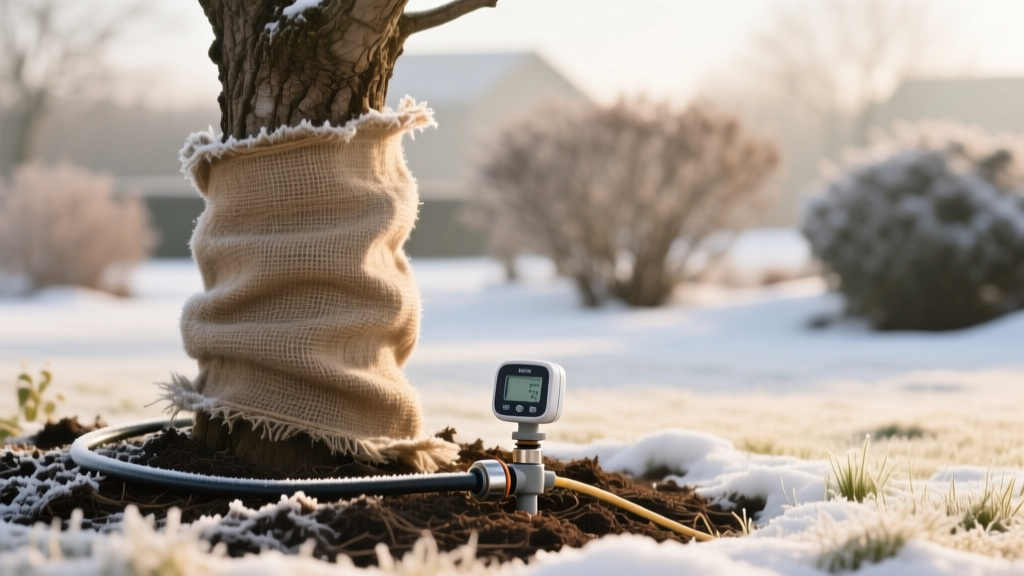
2026 Guide: Burlap Tree Wrapping & Winter Irrigation
Lisa ThompsonPublished
The Dual Threat: Winter Sunscald and Root Desiccation in 2026
As we navigate the unpredictable winter climate of 2026, homeowners and landscape professionals are facing a compounded threat to young and thin-barked trees: winter sunscald and severe root desiccation. While extreme cold snaps are dangerous, it is often the rapid temperature fluctuations that cause the most catastrophic damage to landscape trees. On a bright, sunny January afternoon, the southwest-facing bark of a tree can heat up to over 100°F, tricking the dormant cambium layer into waking up and drawing sap. When the sun sets and temperatures plummet below freezing just hours later, the active cells freeze and burst, resulting in sunscald. This leaves vertical fissures in the bark that invite pests, fungi, and structural decay.
However, wrapping the trunk is only half the battle. A tree suffering from winter root desiccation lacks the internal moisture reserves necessary to heal sunscald wounds or survive frost cracks. This is where the intersection of proper tree wrapping techniques and modern smart irrigation systems becomes critical. In 2026, integrating your winter hydration strategy with your physical trunk protection is the gold standard for comprehensive tree care.
Step-by-Step Burlap Wrapping for Sunscald Protection
To effectively shield your trees from solar radiation and freezing winds, you must use the correct materials and application methods. According to the University of Minnesota Extension, improper wrapping can trap moisture against the bark, leading to fungal infections that are just as deadly as the cold itself.
- Select the Right Material: Purchase 100% natural, untreated burlap. Avoid synthetic wraps or plastic tree guards, which do not breathe and can create a greenhouse effect against the bark. In 2026, commercial-grade natural burlap typically costs between $12 and $18 per roll.
- Prepare the Trunk: Ensure the bark is completely dry before wrapping. Never wrap a tree immediately after a rainstorm or an irrigation cycle.
- The Shingle Technique: Start wrapping at the base of the trunk, slightly below the soil line. Overlap each subsequent layer by about one-third. This "shingle" effect ensures that any precipitation or accidental sprinkler overspray sheds downward and away from the bark, rather than seeping underneath the fabric.
- Secure with Natural Twine: Use jute or hemp twine to tie off the burlap at the top, middle, and bottom. Never use zip ties, wire, or duct tape, as these can girdle the tree as it experiences subtle winter expansion and contraction.
- Timing: Apply the wrap after the first hard freeze in late autumn (usually November or early December, depending on your USDA zone) and remove it promptly in early spring as soon as the ground thaws.
The Irrigation Conflict: Why Sprinkler Overspray Ruins Wraps
The most common mistake homeowners make when combining tree care with automated lawn maintenance is allowing sprinkler heads to spray directly onto the burlap-wrapped trunk. When burlap gets wet in sub-freezing temperatures, it absorbs the water and freezes solid. This creates an "ice jacket" around the tree.
An ice jacket completely negates the insulating properties of the burlap. Instead of buffering the tree against temperature swings, the frozen fabric conducts the cold directly into the cambium layer, accelerating frost damage. Furthermore, if the ice melts during a warm spell and refreezes at night, the constant wet-dry cycle promotes severe bark rot and invites pathogens like Cytospora canker. To prevent this, your irrigation system must be meticulously adjusted to accommodate wrapped trees.
Adjusting Sprinkler Heads and Nozzles
Before the ground freezes and you begin your winter deep-soak schedule, physically inspect every sprinkler head within a 10-foot radius of your wrapped trees. If you are using rotary nozzles (such as the Hunter MP Rotator or Toro Precision series), adjust the left and right arc stops to ensure the spray pattern completely bypasses the tree trunk. For spray heads, install specialized pattern nozzles (like a 90-degree or 180-degree edge strip nozzle) that direct water outward toward the turf or mulch bed, keeping the trunk entirely dry. If a head cannot be adjusted away from the tree, cap it and rely on targeted drip irrigation for that specific zone.
Integrating Smart Irrigation for Winter Root Hydration
While the trunk must remain dry and insulated, the root zone requires consistent moisture throughout the winter. The Colorado State University Extension emphasizes that trees continue to lose moisture through their needles and twigs during winter, and without supplemental watering, the root system will desiccate and die back.
Modern smart irrigation controllers released in 2026, such as the latest Rachio and Hunter Hydrawise models, feature advanced "Winter Dormant" scheduling modes. Here is how to configure your system for wrapped trees:
- Isolate Tree Zones: Ensure your newly planted or thin-barked trees are on a separate irrigation valve from your main turf zones. This allows you to run deep, infrequent soaks without accidentally watering the lawn or spraying the tree trunks.
- Set Temperature and Freeze Overrides: Program your smart controller to automatically skip watering if the ambient air temperature is below 40°F, or if a local freeze sensor detects ice on the soil surface. Watering frozen ground leads to runoff and dangerous ice sheeting on your landscape.
- The Mid-Day Deep Soak: Schedule your winter irrigation to run only between 10:00 AM and 2:00 PM. This gives the water ample time to penetrate the soil and be absorbed by the roots before the evening freeze returns.
- Utilize Drip Irrigation: For wrapped trees, drip irrigation is vastly superior to overhead spray. Run a 1-gallon-per-hour (GPH) drip line in a spiral pattern starting 12 inches from the trunk and extending out to the drip line. This delivers water directly to the root zone while guaranteeing the burlap wrap remains bone dry.
Comparison Chart: Winter Watering vs. Wrapping Strategies by Species
Not all trees require the same level of intervention. The table below outlines the sunscald risk, wrapping requirements, and winter irrigation needs for common landscape trees in 2026.
| Tree Species | Sunscald Risk Level | Burlap Wrapping Required? | Winter Watering (Gallons/Month) | Irrigation Method Recommendation |
|---|---|---|---|---|
| Maple (Acer spp.) | High (Thin bark) | Yes (Years 1-5) | 10-15 gallons per inch of trunk diameter | Subsurface Drip (Avoid trunk spray) |
| Linden (Tilia spp.) | High | Yes (Years 1-5) | 10-15 gallons per inch of trunk diameter | Subsurface Drip |
| Colorado Blue Spruce | Low (Needle cover) | No (Windbreaks preferred) | 5-10 gallons per inch of trunk diameter | Overhead Rotary (Keep away from trunk base) |
| Red Oak (Quercus rubra) | Moderate | Yes (Years 1-3 only) | 8-12 gallons per inch of trunk diameter | Bubbler or Drip Ring |
| Crabapple (Malus spp.) | Moderate to High | Yes (Years 1-4) | 10 gallons per inch of trunk diameter | Micro-sprayers (Directed at root zone only) |
Note: Winter watering should only occur on days when the air temperature is above 40°F and the ground is not frozen. Always refer to The Morton Arboretum for species-specific regional guidelines.
Common Mistakes to Avoid This Winter
Even with the best intentions, combining tree wrapping and irrigation can lead to costly errors if you are not vigilant. Avoid these common pitfalls:
- Leaving Wraps On Too Long: Failing to remove burlap in early spring traps spring rains against the bark, creating a breeding ground for fungal diseases and boring insects that emerge in 2026's warmer months.
- Watering Frozen Soil: Ignoring your smart controller's freeze-sensor alerts will result in water pooling around the root crown, freezing into a solid block of ice that suffocates the roots and causes frost heaving.
- Using Black Plastic Tree Guards: Often sold alongside irrigation supplies at big-box stores, black plastic absorbs solar heat and exacerbates the exact sunscald temperature swings you are trying to prevent.
- Mulching Against the Wrap: Ensure your winter mulch layer (no more than 3 inches deep) does not push up underneath the burlap wrap. Mulch holds moisture, and if it touches the wrapped bark, it defeats the purpose of keeping the trunk dry.
Conclusion
Protecting your landscape trees in 2026 requires a holistic approach that bridges physical barriers and automated hydration. By meticulously wrapping susceptible trunks with natural burlap using the shingle technique, and simultaneously programming your smart irrigation system to deliver targeted, mid-day deep soaks via drip lines, you eliminate the dual threats of sunscald and root desiccation. Take the time this autumn to adjust your sprinkler arcs, isolate your tree zones, and stock up on high-quality burlap. Your trees will reward you with vigorous, healthy growth when spring finally arrives.