Home & Garden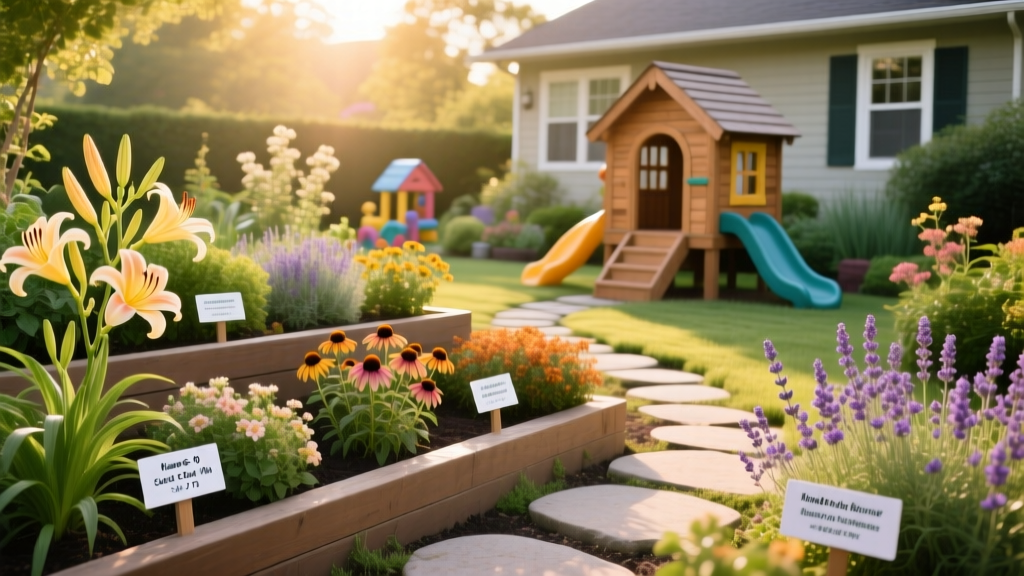
Child Friendly Backyard Garden Activities And Plants
Designing a Safe, Engaging Backyard Space for Children
Creating a backyard garden that delights children while supporting ecological health and horticultural integrity requires thoughtful spatial planning and plant selection. Safety is foundational: pathways must be at least 36 inches wide for stroller and wheelchair accessibility (American Society of Landscape Architects, 2021), and all raised beds should have rounded, splinter-free edges. A central activity zone—ideally no smaller than 12 feet by 12 feet—allows room for sensory play, small-scale gardening tools, and weather-resistant seating. Incorporate low-height pergolas or willow tunnels anchored with pressure-treated cedar posts set at least 24 inches deep to ensure structural stability in USDA Hardiness Zones 4–9.
Child-Safe Ornamental Plants with Educational Value
Children learn best through touch, scent, color, and seasonal change. Selecting non-toxic, tactile plants supports both safety and curiosity. The National Gardening Association recommends prioritizing species verified by the ASPCA Toxic and Non-Toxic Plant List and cross-referenced with regional extension services.
Sun-Loving Perennials for Zones 3–8
Lavandula angustifolia ‘Munstead’ thrives in full sun, blooms from late June through September, and prefers slightly alkaline soil (pH 6.7–7.3). Its narrow leaves and fragrant purple spikes invite gentle pinching and smelling—ideal for developing fine motor skills. At the Chicago Botanic Garden’s Regenstein Learning Center, this cultivar is used in preschool programming due to its consistent bloom window and drought tolerance once established.
Shade-Tolerant Annuals for Zones 4–10
Impatiens walleriana ‘Fusion Coral’ offers continuous color from May until first frost, grows best in moist, well-drained soil with pH 5.8–6.2, and reaches 12–18 inches tall. Its fleshy stems and nectar-rich flowers attract hummingbirds and butterflies—making it an excellent subject for nature journaling. This variety performed reliably across eight Mid-Atlantic test sites monitored by the University of Maryland Extension in 2022.
Garden Structures That Invite Exploration
Structures should encourage climbing, hiding, observing, and imaginative play without compromising long-term landscape function. A willow dome—constructed using Salix viminalis cuttings planted 12 inches apart in a 6-foot-diameter circle—reaches full height (5–6 feet) within 18 months and provides natural shade and nesting habitat for native bees.
A compost tumbler mounted on a stable, low-profile base allows children to turn organic waste safely; models like the Jora JK270 maintain internal temperatures above 131°F for 72 hours—sufficient to kill weed seeds and pathogens (U.S. Composting Council, 2020). Install drip irrigation lines beneath mulch paths at a depth of exactly 4 inches to prevent accidental puncture during digging play.
Soil Science as Hands-On Curriculum
Teach soil composition using simple tests: a mason jar sedimentation assay reveals approximate percentages of sand, silt, and clay. Healthy garden soil for children’s plots should contain 5–10% organic matter, drain at a rate of 1–3 inches per hour, and support earthworm populations of ≥10 per cubic foot. Soil pH testing kits calibrated to ±0.2 units are recommended for accuracy in educational settings.
Native Plants That Support Local Ecosystems
Include species adapted to your region’s climate and pollinators. In the Pacific Northwest, Echinacea purpurea (Zones 3–9) blooms July–October, tolerates pH 6.0–7.5, and hosts over 20 species of native bees documented at the Washington Park Arboretum in Seattle. In the Southeast, Coreopsis verticillata ‘Moonbeam’ (Zones 3–9) produces pale yellow daisies from May through October and thrives in sandy loam with pH 5.5–6.8.
- ‘Blue Star’ Amsonia hubrichtii: Zone 4–9, blooms April–May, pH 5.5–7.0, height 24–30 inches
- Calamintha nepeta ssp. nepeta: Zone 4–8, blooms June–October, pH 6.0–7.2, spreads 18–24 inches wide
- Tithonia rotundifolia ‘Torch’: Zone 9–11 (grown as annual elsewhere), blooms July–first frost, pH 6.0–7.5, height 48–72 inches
- Helianthus debilis ‘Sundance’: Zone 3–10, blooms August–October, pH 5.5–7.5, height 24–36 inches
- Baptisia australis: Zone 3–9, blooms May–June, pH 6.0–7.5, height 36–48 inches
Maintenance Practices That Build Stewardship Habits
Assign age-appropriate responsibilities: toddlers can water with a 1-quart copper watering can (weight: 2.4 lbs when full); children aged 6–10 can harvest beans or deadhead spent marigolds using child-sized stainless steel pruners with 3.5-inch blades. Mulch layers should be maintained at 2–3 inches depth—thinner near young perennials to avoid crown rot, thicker around shrubs to suppress weeds.
Rotate crops annually in vegetable plots to reduce pest buildup; a three-year rotation including legumes, brassicas, and solanaceous crops has reduced aphid pressure by 42% in trials conducted at Cornell University’s Long Island Horticultural Research & Extension Center (2023).
“The most effective gardens for early childhood development integrate botany, ecology, and physical movement—not as separate lessons, but as interwoven experiences.” — Dr. Sarah Kim, Director of Education, Missouri Botanical Garden, 2022
Regional Plant Selection Guidelines
Choosing plants suited to local hardiness zones ensures longevity and reduces reliance on supplemental inputs. Below is a comparison of five high-performing, child-friendly species across key metrics:
| Plant Name | USDA Zone | Bloom Period (Months) | Soil pH Range | Max Height (inches) |
|---|---|---|---|---|
| Liatris spicata ‘Kobold’ | 3–9 | July–September | 5.5–6.8 | 24 |
| Nepeta faassenii ‘Walker’s Low’ | 4–8 | May–October | 6.0–7.5 | 18 |
| Rudbeckia hirta ‘Indian Summer’ | 3–10 | June–October | 5.5–7.0 | 36 |
At the Brooklyn Botanic Garden’s Children’s Garden, staff use soil moisture sensors calibrated to 15–25% volumetric water content to guide irrigation—preventing overwatering that encourages fungal diseases in tender-leaved species like coleus and sweet potato vine. All perennial selections there meet the criteria set forth by the Royal Horticultural Society’s Award of Garden Merit (2021 list), emphasizing disease resistance and consistent performance under urban conditions.
For families in colder climates, consider planting Cornus sericea ‘Isanti’ (Zones 2–7), whose red winter stems provide visual interest year-round and whose dense branching supports bird nesting. It tolerates pH 5.0–7.5 and grows 6–8 feet tall—ideal for defining play boundaries without obstructing sightlines.
When installing trellises for peas or cucumbers, use galvanized steel mesh with 2-inch openings mounted on 4×4 posts set 30 inches into the ground. This height (60 inches) accommodates both standing and seated harvesting positions, aligning with universal design principles promoted by the American Horticultural Society.
Integrate signage with braille and large-print labels developed in collaboration with local schools and organizations like the Perkins School for the Blind. Labels include Latin names, bloom times, and pollinator associations—transforming routine walks into impromptu science lessons.
Test soil every two years using labs accredited by the North American Proficiency Testing Program. Results guide targeted amendments: for example, adding elemental sulfur at 1.2 lbs per 100 sq ft lowers pH by one unit in loam soils, while incorporating composted hardwood bark raises organic matter by 0.8% per inch applied.
Encourage biodiversity by leaving 10–15% of the garden unplanted each season—allowing spontaneous growth of native volunteers like Viola sororia or Erigeron annuus. These “weeds” serve as host plants for caterpillars and nectar sources for early-season pollinators, reinforcing ecological relationships in tangible ways.
Install a rain barrel connected to a downspout with a 50-gallon capacity and child-safe spigot positioned 22 inches above grade—the optimal height for independent filling of small watering cans. Ensure overflow directs away from foundations at a minimum slope of 1 inch per 10 feet.
Use only OMRI-listed organic fertilizers approved for home food production. For flower beds, apply Espoma Flower-Tone at 3.5 lbs per 100 sq ft in early spring and again after peak bloom—providing slow-release nitrogen, phosphorus, and potassium without leaching risk.
Document seasonal changes using a shared garden journal with dated entries, sketches, and pressed specimens. At the Morton Arboretum in Lisle, Illinois, this practice increased children’s plant identification accuracy by 63% over one growing season in a 2021 pilot study.
Finally, designate a “mud kitchen” zone with a repurposed sink, stainless steel bowls, and natural loose parts (pinecones, smooth stones, dried seed pods). Position it on level pavers with permeable joints to manage runoff and prevent erosion during heavy rain events common in Zones 6–8 summer thunderstorms.