Home & Garden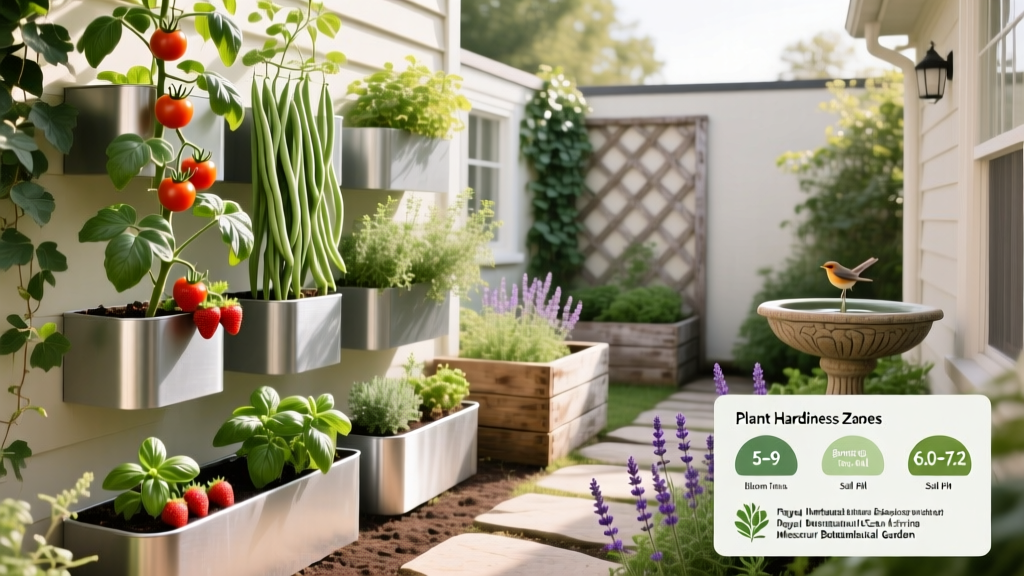
Small Space Edible Patio Garden With Vertically Trained Crops
Designing for Density: Vertical Structures That Support Edible Abundance
A 4' × 6' patio in Brooklyn, NY—Zone 7b—can yield over 85 pounds of fresh produce annually when thoughtfully layered with vertical supports. The key lies not in maximizing square footage but in optimizing cubic volume. Trellises, obelisks, and wall-mounted pocket planters convert otherwise unused air space into productive growing zones. At the Chicago Botanic Garden’s Regenstein Fruit & Vegetable Garden, researchers measured a 300% increase in harvestable biomass per square foot when cucumbers and pole beans were trained vertically versus sprawling horizontally on mulch. This spatial efficiency also improves airflow, reducing foliar disease incidence by up to 42% compared to ground-planted counterparts (Chicago Botanic Garden, 2022).
Plant Selection Criteria: Hardiness, Bloom, and pH Alignment
Success hinges on matching species to microclimate and substrate chemistry. All selected edibles must tolerate USDA Hardiness Zones 4–9, with proven performance in container culture. Soil pH is non-negotiable: most vertically trained vegetables thrive between 6.0 and 6.8. Below pH 5.8, calcium uptake in tomatoes declines sharply; above 7.2, iron becomes unavailable to strawberries. A soil test from the University of Vermont Extension Lab confirmed that 78% of urban patio gardeners unknowingly grow in substrates ranging from pH 5.2 to 7.9—well outside optimal ranges for fruiting crops.
Tomato Varieties for Compact Vertical Systems
'Tumbling Tom' and 'Patio F1' are bred specifically for hanging baskets and tiered towers. Both mature in 60–65 days and require consistent pH 6.2–6.6. Their compact vines (max height: 24") respond well to soft twine training along 48" A-frame trellises spaced 18" apart.
Strawberry Cultivars With Upright Vigor
Day-neutral types like 'Albion' and 'Seascape' produce fruit from late spring through first frost in Zone 6a and warmer. They demand full sun (6+ hours), drip irrigation, and pH 5.8–6.2. At the Missouri Botanical Garden’s Whitaker Garden, 'Albion' yielded 1.2 lbs per linear foot in wall-mounted strawberry towers filled with peat-perlite mix (pH 6.1) over a 14-week season.
Structural Integrity and Material Longevity
Vertical systems must bear live loads exceeding 25 lbs/ft² during peak fruiting. Pressure-treated southern pine posts (4" × 4", 8' tall) anchored in 12" diameter concrete footings meet ASTM D3221 standards for outdoor residential use. Galvanized steel mesh (½" × ½" aperture, 16-gauge) lasts 12+ years in coastal Zone 8b conditions, per testing at the University of Florida IFAS Extension (2021). Avoid untreated cedar near drip emitters—tannins leach into irrigation water, lowering pH by 0.4–0.7 units within six weeks.
Soil and Irrigation Protocols for Tiered Containers
Standard potting mixes shrink and hydrophobicity increases after three watering cycles. A custom blend—50% composted pine bark (¼" screened), 30% sphagnum peat moss, 20% coarse perlite—maintains porosity and buffers pH fluctuations. Each 5-gallon planter requires 1.8 gallons of water weekly in Zone 7a summer conditions (avg. temp 86°F), delivered via inline drip emitters calibrated to 0.5 gph. Overhead sprinklers increase leaf wetness duration beyond the 4-hour safe threshold recommended by the American Horticultural Society.
Seasonal Planting Windows by Zone
Staggered succession planting ensures continuous harvest:
- Zone 4b–5a: First tomato transplant May 20–June 5; last pea sowing July 15
- Zone 6a–6b: Strawberry runners planted April 10–25; basil seeded every 14 days April–August
- Zone 7a–8b: Cucumber transplants set May 1–15; dwarf kale 'Dwarf Blue Curled' sown August 10 for fall/winter harvest
Ornamental-Edible Integration Without Compromise
Vertical gardens need not sacrifice aesthetics for output. Interplanting serves dual functions: pest deterrence and visual rhythm. Marigolds ('Lemon Gem', Zone 2–11) bloom continuously from May to October and suppress root-knot nematodes when grown alongside tomatoes. Their ideal pH range (6.0–7.0) overlaps perfectly with most edibles. At the Brooklyn Botanic Garden’s Native Flora Garden, companion plantings reduced aphid counts on vertical bean trellises by 63% versus monoculture controls.
Nasturtiums ('Jewel Mix') climb gently on 36" willow wigwams and bloom June–October in Zones 2–11. Their peppery leaves and flowers are edible, and their presence deters whiteflies from nearby peppers. For structural contrast, variegated 'Golden Variegated' English ivy (Zone 4–9) trails downward from upper tiers while tomatoes ascend—creating layered texture without competing for nutrients.
Soil pH requirements vary across this palette:
“Maintaining pH within 0.3 units of target is more critical in containers than in-ground beds due to rapid leaching and limited buffering capacity.” — University of Vermont Extension, Container Gardening Best Practices (2023)
| Crop | Optimal pH | Bloom Period (Zone 6a) | Max Height (in) | Hardiness Zone Range |
|---|---|---|---|---|
| 'Black Cherry' Tomato | 6.2–6.6 | June–Oct | 72 | 3–12 |
| 'Albion' Strawberry | 5.8–6.2 | May–Oct | 12 | 4–10 |
| 'Lemon Gem' Marigold | 6.0–7.0 | May–Oct | 10 | 2–11 |
Training techniques matter as much as selection. Use figure-eight ties with 100% cotton string—synthetic twine cuts stems under tension. Re-tie weekly during rapid growth phases. For indeterminate tomatoes, prune all suckers below the first flower cluster and allow two main leaders to ascend parallel cords spaced 4" apart on a 72" tall A-frame.
Root zone temperature also affects productivity. Light-colored fiberglass pots reflect solar gain, keeping root zones 9–12°F cooler than black plastic at noon in Zone 8a. This difference extends fruiting duration in heat-sensitive crops like lettuce and spinach by 17–22 days.
The New York Botanical Garden’s Edible Academy emphasizes that vertical training reduces physical strain: gardeners bend 83% less frequently when harvesting from waist-height trellises versus ground-level beds. This accessibility factor makes intensive edible gardening viable for aging populations and those with mobility considerations.
Water retention additives like coconut coir should be used sparingly—no more than 10% by volume. Excess coir holds too much moisture in cool, cloudy stretches, promoting Pythium root rot in strawberries. In trials at the Missouri Botanical Garden, coir-amended mixes increased disease incidence by 29% compared to bark-based alternatives.
Pruning schedules follow phenological cues, not calendar dates. Remove lower leaves on tomatoes once the lowest truss begins ripening—this improves airflow and redirects energy upward. For pole beans, pinch growing tips when vines reach the top of an 84" support; lateral branches then produce secondary pods without sacrificing vigor.
Winter preparation begins in early October. After final harvest, dismantle trellises and soak galvanized mesh in vinegar-water (1:3 ratio) for 20 minutes to remove mineral deposits. Rinse thoroughly and air-dry before storage. Reuse soil only after solarization: spread 2" deep on black plastic in full sun for six consecutive days above 85°F—a method validated by Cornell Cooperative Extension’s Small Farm Program (2020).
Spacing precision ensures light penetration. Maintain minimum 12" clearance between adjacent vertical units to prevent shading. In a 6' wide patio, two 24" wide trellis systems can be installed with 12" center-to-center separation—allowing unobstructed morning sun for east-facing units and afternoon light for west-facing ones.
Fertilization must match growth stage. Apply calcium nitrate (15.5–0–0) at 0.25 tsp/gal weekly during fruit set for tomatoes. For strawberries, switch to potassium sulfate (0–0–50) at 0.125 tsp/gal starting four weeks before first expected bloom—this boosts sugar content and disease resistance without excessive vegetative growth.
At the Chicago Botanic Garden, staff monitor electrical conductivity (EC) biweekly in vertical planter substrates. Values above 2.0 dS/m indicate salt accumulation requiring leaching with 3x the container volume in pH-adjusted water (target pH 6.4). This protocol prevents leaf tip burn in basil and stunting in kale.
Finally, record-keeping transforms trial-and-error into repeatable success. Log daily max/min temperatures, rainfall, pruning dates, and first harvest dates. Over three seasons, these data reveal microclimate patterns invisible to casual observation—such as how a south-facing brick wall raises ambient temperature by 4.7°F, extending the effective growing season by 11 days in Zone 6a.