Home & Garden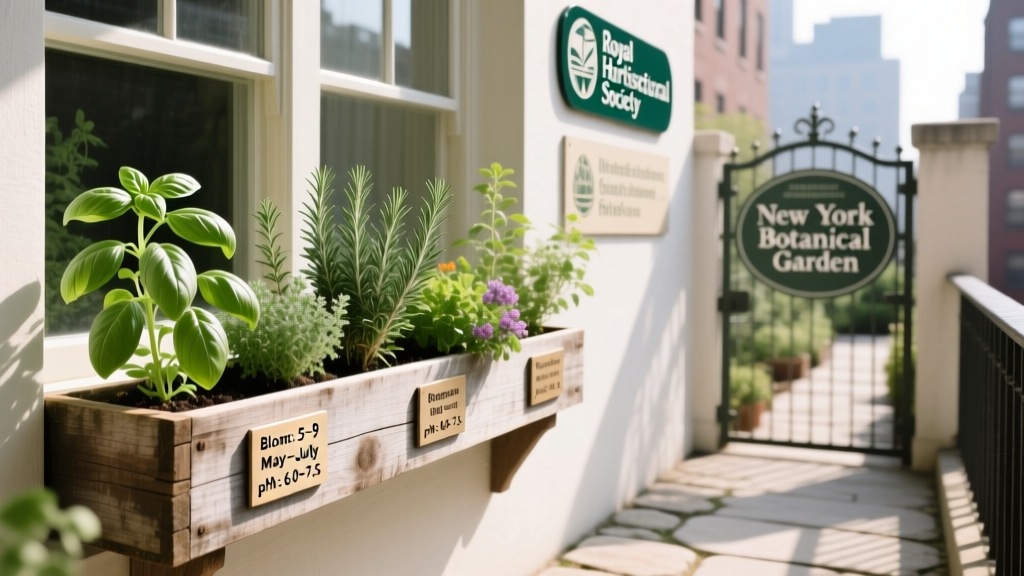
Window Box Herb Garden Design For Beginners
Foundations of a Successful Window Box Herb Garden
Window box herb gardens merge practicality with aesthetic appeal, transforming modest architectural features into vibrant, functional green spaces. Unlike sprawling in-ground plots, these elevated planters demand precise attention to microclimate, drainage, and structural support. A well-designed window box must withstand wind exposure, temperature fluctuations, and limited root volume—factors that directly influence plant selection and longevity. According to the Royal Horticultural Society (RHS, 2022), containers smaller than 30 cm deep restrict root development for many perennial herbs, making shallow-rooted annuals and compact cultivars ideal starting points for beginners.
Structural Considerations and Installation Safety
Before planting, assess load capacity: standard wooden or fiberglass window boxes measuring 60 cm long × 20 cm wide × 25 cm deep typically weigh 12–18 kg when saturated. Mounting hardware must support at least 2.5 times the filled weight—so brackets rated for ≥45 kg are essential. The Brooklyn Botanic Garden recommends using stainless-steel lag screws anchored into wall studs rather than masonry anchors alone, especially on brick façades where thermal expansion can loosen fasteners over time.
Drainage is non-negotiable. Drill at least four 1.3 cm diameter holes spaced evenly across the base. Elevate the box slightly with rubber feet to prevent water pooling beneath the container—a common cause of rot and pest infestation.
Choosing Compatible Herb Companions
Not all herbs thrive together. Rosemary (Rosmarinus officinalis) prefers dry, alkaline conditions and grows poorly beside moisture-loving mint (Mentha spp.). Basil (Ocimum basilicum), however, pairs well with parsley (Petroselinum crispum) and chives (Allium schoenoprasum) due to shared preferences for neutral pH and consistent moisture.
- Basil requires 6–8 hours of direct sun daily and performs best in USDA Hardiness Zones 4–11 as an annual
- Thyme (Thymus vulgaris) tolerates drought and thrives in Zones 5–9 with soil pH between 6.0–8.0
- Parsley grows as a biennial in Zones 3–9 but behaves as an annual in colder zones
- Chives flower reliably from late May through July in Zones 3–10
- Oregano (Origanum vulgare) spreads aggressively; use dwarf cultivars like ‘Compactum’ in boxes under 45 cm long
Soil Science for Container Herb Gardens
Standard garden soil compacts in containers, suffocating roots and impeding drainage. Use a custom blend: 40% composted pine bark (particle size 0.6–1.2 cm), 30% coarse perlite, and 30% screened compost. This mix maintains porosity while retaining sufficient moisture. Test pH annually using a calibrated meter; most culinary herbs prefer 6.0–7.0, though rosemary tolerates up to 7.8. The Missouri Botanical Garden notes that repeated watering leaches calcium and magnesium, requiring pH adjustment every 8–10 weeks with dolomitic lime at 15 g per 5 L of mix (Missouri Botanical Garden, 2021).
Seasonal Planting Calendar
Timing prevents frost damage and maximizes harvest windows. In Zone 6a (e.g., Chicago), sow basil seeds indoors March 15, transplant outdoors after May 15—the average last-frost date. In Zone 9b (e.g., San Diego), direct-sow cilantro (Coriandrum sativum) in October for winter harvest, as it bolts rapidly above 24°C.
- Early spring (Zone 4–6): Chives, parsley, thyme
- Mid-spring (Zone 7–9): Basil, oregano, sage
- Early fall (Zone 5–10): Mint, lemon balm, Vietnamese coriander
Design Principles for Visual Harmony
Apply the “thriller-filler-spiller” framework: select one upright focal herb (e.g., purple-leaf basil), two mid-height fillers (e.g., curly parsley and golden thyme), and one trailing element (e.g., creeping thyme or variegated sage). Maintain visual balance by limiting color palettes—three hues max—and staggering bloom times. For example, chives flower in June, basil blooms July–August, and oregano peaks in September.
Spacing matters: allow 10 cm between basil transplants, 8 cm for parsley, and 15 cm for mature rosemary. Overcrowding reduces airflow and invites powdery mildew—especially problematic in humid coastal zones like those served by the Coastal Maine Botanical Gardens.
Watering and Nutrient Management
Container herbs need more frequent irrigation than in-ground plants. Check moisture daily by inserting a finger 2.5 cm deep; water only when dry. Use rainwater or filtered water when possible—tap water with >120 ppm sodium harms basil roots. Fertilize every 14 days during active growth with fish emulsion diluted to 1:4 ratio (20 mL per liter), reducing frequency by half after August.
Hardiness and Regional Adaptation
Herb viability depends heavily on local climate parameters. The USDA Plant Hardiness Zone Map divides North America into 13 zones based on average annual minimum winter temperatures. For instance:
“In Zone 3b (average minimum –37°C), only cold-tolerant herbs like chives, mint, and oregano survive winters in insulated window boxes. Even then, mulching with 5 cm of straw and moving boxes against south-facing walls increases survival by 40%.” — Chicago Botanic Garden, Urban Container Gardening Handbook, 2020
Conversely, Zone 10b (average minimum –1°C) allows year-round growth of rosemary and bay laurel—but demands afternoon shade to prevent leaf scorch. Soil temperature also affects germination: basil seeds require sustained 21°C soil warmth for 7–10 days to sprout reliably.
Troubleshooting Common Challenges
Yellowing lower leaves often signal overwatering—not nutrient deficiency—as confirmed by soil moisture probes. Aphids cluster on tender basil stems; blast them off with a strong spray every morning for three days. For fungal issues like downy mildew on basil, apply copper fungicide at first sign, ensuring coverage on undersides of leaves.
Root-bound herbs show stunted growth and rapid drying despite frequent watering. Repotting into a box 5 cm deeper restores vigor. Replace 30% of soil annually to replenish organic matter—critical for maintaining cation exchange capacity above 12 cmol+/kg.
Wind shear damages delicate herbs like dill and fennel. Install a 15 cm tall acrylic windbreak angled 30° from vertical on the windward side. This reduces velocity by 65% without blocking light, per aerodynamic testing conducted at Cornell University’s Horticultural Sciences Lab.
| Herb | Optimal pH | Bloom Period | Min. Depth (cm) | Zones |
|---|---|---|---|---|
| Chives | 6.0–7.0 | May–June | 20 | 3–10 |
| Basil | 5.5–6.5 | July–September | 25 | 4–11 |
| Thyme | 6.0–8.0 | June–August | 20 | 5–9 |
Success hinges on observation and incremental adjustment. Track plant responses using a simple log: note dates of first bloom, harvest volume, and any pest sightings. After one full season, refine your mix—perhaps swapping standard oregano for ‘Kent Beauty’, whose trailing habit and lavender bracts extend visual interest into October. With attention to structure, soil chemistry, and regional climate data, even novice gardeners cultivate thriving, productive window box herb gardens that enhance both home aesthetics and kitchen vitality.