Pest Control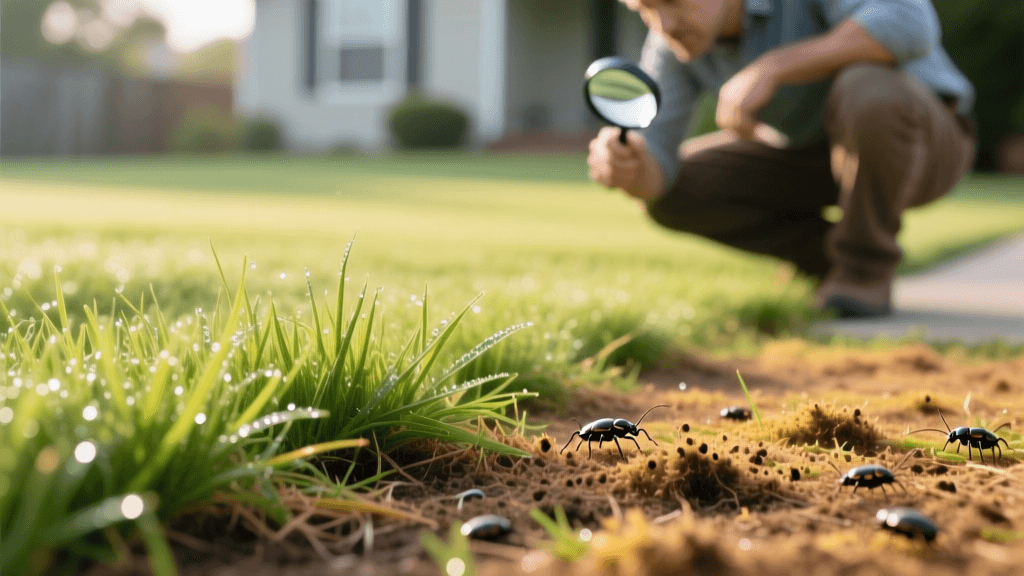
Chinch Bug Lawn Damage: Diagnosis and Treatment Guide
The Silent Destroyer of Southern Lawns
If you maintain a warm-season lawn, particularly St. Augustinegrass, centipedegrass, or zoysiagrass, you are likely familiar with the sudden, devastating appearance of yellow and brown patches during the peak of summer. While many homeowners immediately blame drought stress or fungal diseases, the true culprit is often the southern chinch bug (Blissus insularis). These tiny, sap-sucking insects can decimate thousands of square feet of turf in a matter of weeks if left undiagnosed and untreated.
Unlike grubs that feed on roots beneath the soil, chinch bugs operate right at the surface, hiding in the thatch layer and crown of the grass. They use piercing-sucking mouthparts to extract plant sap, but the real damage comes from the phytotoxic saliva they inject into the turf. This saliva effectively blocks the grass's vascular system, preventing water and nutrients from reaching the blades. As a result, the grass wilts, turns yellow, then brown, and eventually dies, even if the soil is perfectly moist. Understanding how to accurately diagnose this pest and implement a targeted Integrated Pest Management (IPM) strategy is critical for saving your lawn.
Problem Diagnosis: Drought Stress vs. Chinch Bug Damage
The most common mistake in lawn care is misdiagnosing chinch bug damage as drought stress. Because both issues cause the grass to wilt and turn brown, and because chinch bugs thrive in hot, dry conditions, the two are frequently confused. However, there are distinct diagnostic clues that can help you pinpoint the exact problem.
Location and Pattern of Damage
Drought stress typically appears in large, uniform areas, or in zones where your irrigation system has poor coverage or where the soil is highly compacted and sandy. Chinch bug damage, on the other hand, usually begins as small, irregular, localized patches of yellowing grass. These patches often start in the hottest, sunniest areas of the lawn, particularly radiating outward from concrete sidewalks, driveways, and curbs. The concrete absorbs and reflects heat, creating a microclimate that chinch bugs absolutely love.
The Coffee Can Float Test
To definitively diagnose a chinch bug infestation, lawn care professionals rely on the 'float test.' This simple, highly effective diagnostic tool takes less than ten minutes and requires nothing more than an empty coffee can or a large tin can with both the top and bottom lids removed.
- Step 1: Identify the margin of a damaged patch, specifically the transition zone between the dead brown grass and the healthy green grass.
- Step 2: Push the open-ended can about two to three inches deep into the soil right on that transition line.
- Step 3: Fill the can with water and wait for three to five minutes.
- Step 4: Observe the surface. Chinch bugs will float to the top as the water saturates the thatch and forces them out of hiding.
If you see two or three bugs, you may have a minor, manageable population. However, if 20 or more chinch bugs float to the surface within that five-minute window, you have an active, destructive infestation that requires immediate treatment.
Identifying the Culprit: Nymphs vs. Adults
Once they float to the top, you need to know what you are looking at. Adult southern chinch bugs are small, measuring about one-fifth of an inch long. They have black bodies with distinctive white wings that fold over their backs, featuring a small, dark, triangular marking in the center. Nymphs (the juvenile stage) look entirely different. They are wingless, bright red or orange, and feature a distinct white band across their abdomen. As they molt and mature, they turn dark gray and eventually black. Seeing a mix of red nymphs and black adults indicates an actively breeding population that is causing exponential damage.
Integrated Pest Management (IPM) Solutions
Effective chinch bug control relies on an Integrated Pest Management approach, combining cultural, biological, and chemical strategies to eradicate the current population and prevent future outbreaks.
Cultural and Preventative Controls
Chinch bugs thrive in lawns with thick thatch layers and shallow root systems. Thatch—the layer of dead and living organic matter between the soil surface and the green grass blades—provides the perfect insulated habitat for chinch bugs to hide, breed, and avoid predators and insecticides.
- Thatch Management: Keep your thatch layer below 0.5 inches. If it exceeds this, schedule core aeration or dethatching in the early spring or late fall. A thick thatch layer not only harbors pests but also prevents water and chemical treatments from reaching the soil and crown.
- Proper Irrigation: Water deeply and infrequently. Apply 0.5 to 0.75 inches of water per irrigation session to encourage deep root growth. Frequent, shallow watering keeps the thatch layer constantly moist, which is the exact environment chinch bugs prefer for egg-laying.
- Mowing Height: Maintain St. Augustinegrass at a height of 3.5 to 4 inches. Scalping the lawn stresses the grass, reduces its ability to photosynthesize, and exposes the soil and thatch to the sun, accelerating chinch bug reproduction.
Biological Controls
Nature provides several natural enemies of the chinch bug. The most notable is the 'big-eyed bug' (Geocoris species), a beneficial predator that closely resembles the chinch bug but has distinctly larger, protruding eyes. Other natural predators include predatory earwigs, lacewings, and certain parasitic wasps. Additionally, the naturally occurring entomopathogenic fungus Beauveria bassiana can infect and kill chinch bugs. To protect these beneficial insects, avoid using broad-spectrum, preventative insecticides unless a severe threshold has been crossed.
Chemical Control Options and Resistance Management
When cultural and biological controls are insufficient, chemical intervention is necessary. However, southern chinch bugs are notorious for developing resistance to chemical insecticides, particularly pyrethroids, due to decades of overuse in states like Florida and Texas. To combat this, you must rotate insecticides with different Modes of Action (IRAC Groups).
| Treatment Type | Active Ingredient (Brand Example) | IRAC Group | Target Stage | Est. Cost per 1,000 sq ft |
|---|---|---|---|---|
| Chemical Contact | Bifenthrin (Talstar P) | Group 3A | Adults / Nymphs | $0.05 - $0.10 |
| Chemical Systemic | Imidacloprid (BioAdvanced) | Group 4A | Nymphs | $0.12 - $0.18 |
| Chemical Diamide | Chlorantraniliprole (Acelepryn) | Group 28 | Larvae / Nymphs | $0.25 - $0.40 |
| Organic / Botanical | Azadirachtin (Neem Oil Extract) | Group UN | Nymphs | $0.20 - $0.35 |
Step-by-Step Chemical Application Protocol
If the float test confirms an infestation exceeding the threshold of 20 bugs per square foot, follow this precise application protocol to ensure maximum efficacy while minimizing environmental impact.
- Timing is Everything: Apply insecticides in the late afternoon or early evening. Chinch bugs are most active near the surface during these cooler hours, and applying chemicals when the sun is low prevents rapid UV degradation of the active ingredient.
- Mow and Prepare: Mow your lawn one day prior to treatment and remove the clippings. This reduces the physical barrier between the insecticide and the thatch layer where the bugs reside.
- Mix and Apply: For a liquid contact insecticide like Bifenthrin, mix 0.5 to 1.0 fluid ounces per gallon of water. Use a pump sprayer or a hose-end sprayer calibrated to deliver the mixture evenly over 1,000 square feet. Focus heavily on the transition zones and the sunny edges of the lawn.
- Water-In the Treatment: Immediately after application, irrigate the lawn with exactly 0.25 inches of water. The goal is not to drench the soil, but to wash the chemical off the grass blades and down into the thatch and crown where the chinch bugs are hiding.
- Follow-Up and Rotation: Most contact insecticides do not kill the eggs. You must reapply a treatment 21 to 28 days later to catch the newly hatched nymphs. Crucially, rotate to a different IRAC group (e.g., switch from Bifenthrin to Imidacloprid) for the second application to prevent the survivors from developing genetic resistance.
Expert Insights and Authoritative Citations
According to the University of Florida IFAS Extension, one of the premier authorities on warm-season turfgrass management, chinch bug resistance is a severe and growing problem in the southeastern United States. In their comprehensive guide on St. Augustinegrass maintenance, IFAS researchers emphasize that reliance on a single class of chemicals, specifically pyrethroids, has led to widespread treatment failures.
'Homeowners and lawn care professionals must adopt a proactive scouting regimen. Do not apply insecticides on a calendar schedule. Treat only when the float test confirms a population of 20 or more chinch bugs per square foot, and always rotate chemical modes of action to preserve the long-term efficacy of our available turfgrass insecticides.'
— University of Florida IFAS Extension, 'Southern Chinch Bug Management on St. Augustinegrass'
This expert guidance underscores the core philosophy of Integrated Pest Management: diagnose accurately, treat only when necessary, and use a multi-faceted approach to outsmart the pest.
Conclusion: Reclaiming Your Turf
Chinch bugs are a formidable opponent for any southern lawn enthusiast, but they are not invincible. By learning to distinguish their distinct damage from routine drought stress, utilizing the coffee can float test for accurate diagnosis, and implementing a strategic, rotating chemical and cultural IPM plan, you can halt an invasion in its tracks. Remember that a thick, healthy lawn with a robust root system and minimal thatch is your first and best line of defense. Monitor your turf weekly during the hot summer months, act swiftly when thresholds are met, and your St. Augustinegrass will remain a lush, green carpet for years to come.