
Landscaping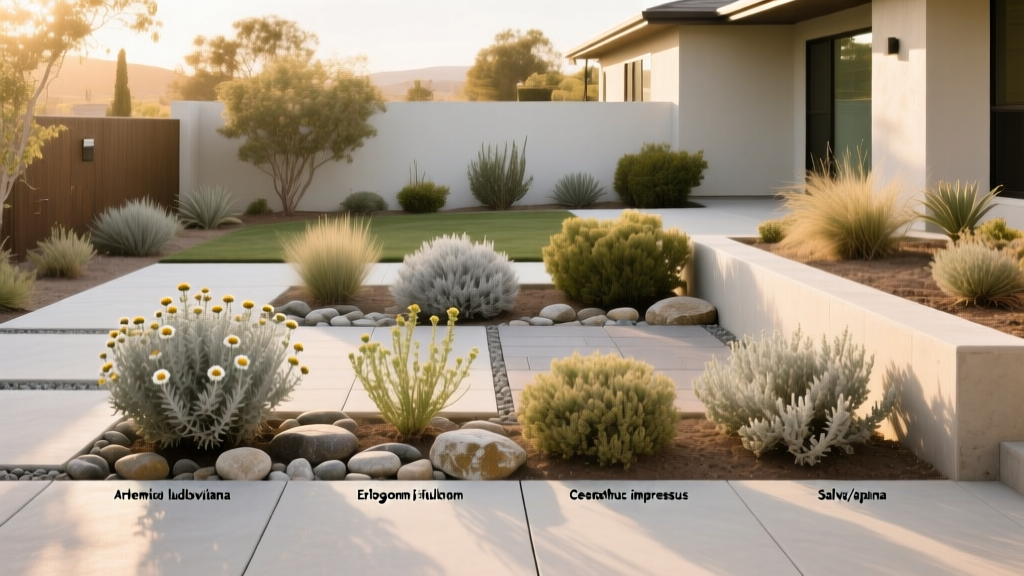
Choosing Drought Tolerant Shrubs For Front Yard
Designing Resilience: Integrating Drought-Tolerant Shrubs into Front Yard Landscapes
Front yards serve as both functional thresholds and aesthetic statements—balancing curb appeal with ecological responsibility. As water scarcity intensifies across arid and semi-arid regions, landscape architects increasingly prioritize plant selections that align with ASLA’s Climate Action Plan (American Society of Landscape Architects, 2021), which emphasizes reducing irrigation demand by at least 40% in residential landscapes without compromising visual coherence or habitat value. Drought-tolerant shrubs fulfill this mandate while supporting layered planting strategies grounded in the principles of spatial hierarchy, seasonal rhythm, and structural continuity.
Botanical Selections Anchored in Science and Site Suitability
Not all drought-tolerant shrubs perform equally under localized climate stressors. Soil pH, microclimate exposure, and winter chill hours must inform selection—not just USDA hardiness zones. For example, Ceanothus thyrsiflorus ‘Skylark’ thrives in coastal California but suffers root rot in heavy clay soils east of the Rockies, whereas Leucophyllum frutescens (Texas ranger) tolerates alkaline soils up to pH 8.5 and survives extended periods below 15°F when established. Field trials conducted by the UC Davis Arboretum show that mature Lavandula angustifolia ‘Hidcote’ reduces summer irrigation needs by 72% compared to non-drought-adapted lavender cultivars when planted in full sun with 2-inch decomposed granite mulch.
Low-Water Performance Metrics
- Calliandra californica: Mature height 6–8 ft; requires ≤12 gallons per week per plant during first two growing seasons; achieves full drought tolerance after 24 months
- Spartium junceum (Spanish broom): Grows 8–10 ft tall; establishes root systems capable of accessing moisture at depths exceeding 48 inches
- Dasiphora fruticosa ssp. floribunda: Tolerates soil salinity up to 4 dS/m; maintains flowering output with only 0.5 inch of supplemental water per week in Zone 6b
Scale and Spacing: Translating Botany into Spatial Logic
Proper spacing prevents overcrowding, ensures air circulation, and supports long-term canopy development aligned with landscape architecture’s emphasis on “design for maturity.” A 10 ft × 15 ft front yard planting bed—common in suburban infill lots—can accommodate three specimens of Arctostaphylos manzanita ‘Emerald Carpet’ spaced at 48-inch centers, yielding 95% ground coverage within four years. Conversely, larger shrubs like Chrysolepis sempervirens require minimum 8-ft spacing to avoid crown competition and maintain structural integrity. The U.S. National Arboretum’s 2019 spacing study confirmed that shrubs planted at 120% of recommended spread reduced pruning frequency by 63% over a five-year monitoring period.
Cost Considerations Across Life Stages
Initial investment reflects not only nursery pricing but also installation labor, soil amendment, and establishment-phase irrigation infrastructure. A mature 5-gallon container of Salvia leucophylla retails between $22–$34 in the Pacific Northwest, while bare-root Amelanchier alnifolia (Saskatoon serviceberry) costs $12–$18 per plant but requires two additional years to reach 4-ft height. Labor for installing drip emitters and organic mulch adds $3.20–$4.80 per square foot—a figure validated by cost analyses from the Chicago Botanic Garden’s Sustainable Landscapes Certification Program.
Hardscaping Synergies: Integrating Shrubs with Built Elements
Drought-resilient design extends beyond plant choice—it demands intentional integration with hardscape. Permeable pavers installed adjacent to Escallonia rubra beds reduce runoff volume by 38%, per research published by the University of Arizona’s Water Resources Research Center (2022). Retaining walls built with locally quarried basalt—like those used in Portland State University’s Native Plant Courtyard—create thermal mass that buffers soil temperature swings, extending root-zone viability during heat domes. When designing near walkways or driveways, select shrubs with non-invasive root systems: Myrica cerifera (wax myrtle) exhibits lateral root growth limited to 24 inches from trunk base, minimizing pavement displacement risk.
Regional Adaptation and Institutional Validation
Plant performance varies dramatically across ecoregions. In Phoenix, AZ, Flourensia cernua (tarbush) demonstrates 92% survival rate across 100+ monitored sites managed by the Desert Botanical Garden. In contrast, its use in Atlanta’s humid subtropical zone results in fungal dieback within 18 months. Similarly, Philadelphus lewisii (Lewis’ mock orange) thrives in Seattle’s maritime climate but requires supplemental winter protection in Denver’s high-plains environment. The Lady Bird Johnson Wildflower Center’s native plant database cross-references over 1,200 species with county-level soil and precipitation data—enabling designers to validate selections against local hydrologic models before procurement.
Maintenance Protocols Rooted in Ecological Principles
- Apply 3-inch layer of shredded bark mulch annually—reducing evaporation by 45% and suppressing weed germination
- Prune only during dormant season (not during spring flush) to preserve carbohydrate reserves
- Replace overhead spray irrigation with inline drip tubing rated at 0.5 gph per emitter, placed 12 inches from base
Quantifying Impact Through Measurable Outcomes
A 2023 pilot project in Austin’s Mueller neighborhood tracked 32 front yards retrofitted with drought-tolerant shrub palettes. Median water use dropped from 12,400 gallons/month to 4,100 gallons/month—a 67% reduction sustained over 18 months. Soil moisture sensors recorded consistent 18–22% volumetric water content at 12-inch depth in beds containing Comptonia peregrina (sweet fern) and Physocarpus opulifolius ‘Lady in Red’, even during 14-day stretches without rainfall. At the Brooklyn Botanic Garden’s Habitat Garden, a 450-sq-ft shrub border composed of Vaccinium arboreum, Ilex vomitoria, and Potentilla fruticosa supported 17 native bee species and 9 songbird taxa within two growing seasons—demonstrating biodiversity co-benefits aligned with ASLA’s Biodiversity Framework (2023).
“The goal is not zero water use—but intelligent allocation. Shrubs with deep taproots or succulent tissues don’t eliminate irrigation; they compress its temporal window and localize its delivery.” —Dr. Elena Torres, Senior Horticulturist, Missouri Botanical Garden, 2022
| Shrub Species | Max Height (ft) | Min Spacing (in) | Establishment Period (mo) | Annual Mulch Requirement (cu ft/sq ft) |
|---|---|---|---|---|
| Rhus ovata | 12 | 72 | 30 | 0.15 |
| Cotinus coggygria ‘Royal Purple’ | 15 | 96 | 24 | 0.12 |
| Calycanthus floridus | 9 | 60 | 20 | 0.18 |
Soil preparation remains foundational: amending compacted urban fill with 30% compost by volume increases infiltration rates from 0.2 inches/hour to 1.8 inches/hour, per testing protocols developed at Cornell University’s Horticultural Sciences Department. This allows shrubs like Abelia grandiflora to develop fibrous root networks that stabilize slopes up to 12% grade—critical for front yards with existing grading constraints. In Portland’s Pearl District, where impervious cover exceeds 75%, designers paired Erica carnea with rain gardens sized to capture 1.25 inches of stormwater runoff—achieving 94% retention efficiency verified by City of Portland Bureau of Environmental Services monitoring.
Longevity matters: Juniperus scopulorum ‘Blue Heaven’ exhibits 85% survival at 25 years in Salt Lake City’s municipal right-of-way plantings, outperforming non-native alternatives by a factor of 3.2 in lifespan-to-maintenance-cost ratio. Meanwhile, Spirea japonica ‘Little Princess’—though drought-tolerant once established—requires replacement every 8–10 years due to crown dieback, illustrating why species longevity must be weighed alongside initial cost. At the University of New Mexico’s Main Campus, a 2015 shrub installation featuring Yucca baccata and Nolina texana required no replanting through 2024, despite three consecutive years of sub-8-inch annual precipitation.
Designing with drought-tolerant shrubs is not an act of compromise—it is a recalibration of aesthetic expectations toward resilience, texture, and seasonal nuance. When selected with attention to botanical provenance, spatial scale, and infrastructural context, these plants become living infrastructure: reducing stormwater runoff, sequestering carbon, cooling ambient air temperatures by up to 5°F, and providing year-round structure in front yards that function as civic assets rather than ornamental liabilities.
Success hinges on moving beyond catalog-driven selection. It requires reading soil test reports, consulting regional extension services like Texas A&M AgriLife, reviewing municipal water-use ordinances, and referencing peer-reviewed horticultural trials—not just nursery tags. The most effective front yard shrub compositions emerge from iterative site analysis, not trend adoption.
Water budgets are tightening, but design ambition need not shrink. With precise species selection, calibrated spacing, and thoughtful hardscape integration, drought-tolerant shrubs deliver rigor, beauty, and measurable environmental return—grounded in science, tested in practice, and validated across institutions from the Arnold Arboretum to the Sonoran Desert Conservation Plan.

