Tree Care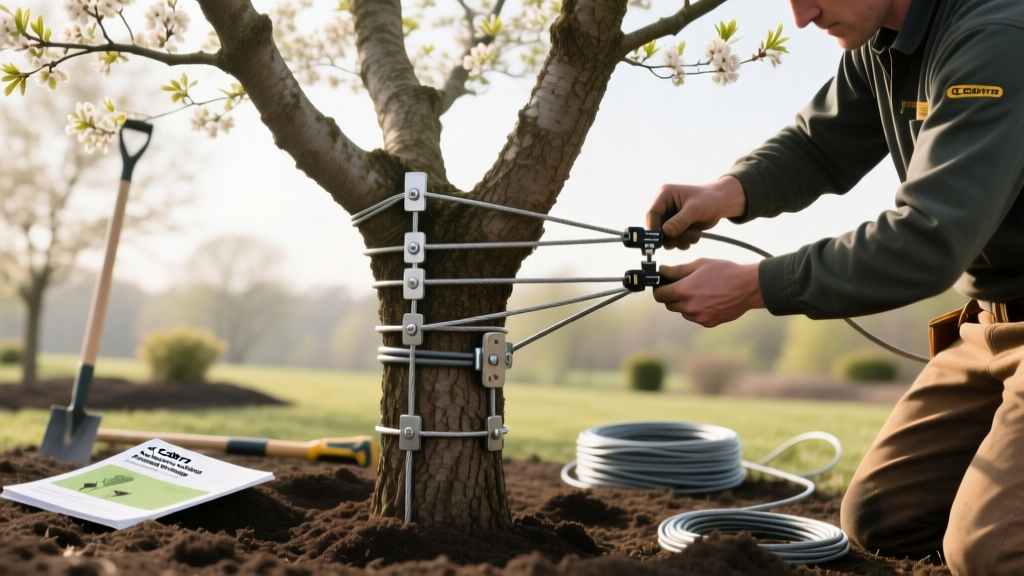
2026 Guide: Cobra Dynamic Tree Cabling at Planting
James MillerPublished
Introduction to Proactive Tree Support in Modern Landscaping
As we navigate the 2026 planting season, landscape architects and homeowners are increasingly drawn to multi-trunked, architectural trees. Species like multi-stemmed Crape Myrtles, River Birches, and Japanese Maples offer stunning visual interest and immediate canopy coverage. However, these aesthetic choices often come with inherent structural vulnerabilities, particularly weak branch unions and co-dominant stems. Historically, arborists only addressed these issues reactively, installing rigid steel cables in mature trees that were already failing. Today, the paradigm has shifted. Integrating the Cobra dynamic tree support system at the time of planting is now considered a best practice for ensuring long-term structural integrity and tree health.
Unlike traditional static hardware, the Cobra system is engineered to work with the tree's natural biology. By allowing controlled movement, it encourages the tree to build its own structural reinforcement. In this comprehensive 2026 guide, we will explore how to select the right nursery stock, understand the biology of dynamic cabling, and properly install the Cobra system during the initial planting phase to safeguard your landscape investment for decades to come.
The Biology of Dynamic Support: Why Trees Need to Sway
To understand why the Cobra system is the industry standard in 2026, we must first understand a biological process called thigmomorphogenesis. This is the physiological response of a plant to mechanical stimulation, such as wind. When a tree sways in the wind, it triggers the formation of reaction wood—dense, highly fibrous tissue that strengthens the trunk and branch unions. According to the International Society of Arboriculture (ISA), trees that are artificially rigidized with static steel cables fail to develop this crucial reaction wood, leaving them permanently dependent on the hardware and highly susceptible to catastrophic failure if the hardware snaps.
The Cobra dynamic support system utilizes high-tenacity, hollow braided polyester ropes. This material is specifically designed to stretch slightly under extreme wind loads, acting as a shock absorber while still preventing the branches from splitting past their critical angle. By installing this system on a newly planted, multi-trunked tree, you provide a safety net during severe 2026 storm events while still allowing the micro-movements necessary for the tree to build its own internal strength.
Selecting Trees for Early Cobra Cabling Integration
Not every tree requires cabling, and part of successful tree selection is identifying which specimens will benefit from early dynamic support. When visiting nurseries in 2026, look for trees with the following characteristics:
- Co-dominant Stems: Trees with two or more main trunks of roughly equal diameter originating from the same point on the main stem. These form 'V-shaped' unions which are notoriously weak compared to 'U-shaped' unions.
- Multi-Trunked Specimens: Architectural trees intentionally pruned to have three or more trunks from the base. While beautiful, the outward leverage of these trunks increases the risk of splitting as the canopy matures and catches more wind.
- Species with Brittle Wood: Certain species are genetically predisposed to weak wood or included bark (bark that grows inward at the branch union). Examples include Bradford Pears, Silver Maples, and certain varieties of Olive trees.
When selecting your tree, inspect the primary unions closely. If you see bark rolling inward at the crotch of the branches, or if the trunks are rubbing against one another, that tree is a prime candidate for a proactive Cobra installation immediately upon planting.
Cobra System Components and 2026 Pricing Overview
The Cobra system is modular, allowing arborists to customize the support based on the tree's size and the specific wind loads of your region. For young to medium-sized trees planted in 2026, the Cobra 2T (2-ton breaking strength) or Cobra 8T (8-ton breaking strength) systems are typically utilized. Below is a breakdown of the essential components and their estimated retail costs for the 2026 season.
| Component | Function | Estimated 2026 Cost |
|---|---|---|
| Cobra Flatband Sling | Wraps around the trunk/branch to protect the bark from friction and girdling. | $15 - $25 per sling |
| Cobra Hollow Braided Rope | The dynamic line that connects the stems, allowing for controlled sway. | $2 - $4 per foot |
| Cobra Shock Absorber | A specialized loop that elongates under peak loads, reducing sudden stress on the wood. | $30 - $45 per unit |
| Cobra QuickLink | A stainless steel carabiner-style connector for easy installation and future adjustments. | $12 - $18 per link |
| Cobra Installation Tool | A specialized fid used to splice the hollow rope without cutting or weakening the fibers. | $40 - $60 (one-time) |
Investing in these components at the time of purchase is a fraction of the cost of removing and replacing a mature tree that splits during a severe weather event. Furthermore, the Arbor Day Foundation emphasizes that proactive structural training and support during a tree's establishment years drastically reduces the need for invasive corrective pruning later in its life.
Step-by-Step Installation During the Planting Phase
Installing the Cobra system is most effective when done just as the tree is being planted, before the soil is fully tamped and the tree is left to settle. This allows you to assess the natural lean and wind exposure of the site. Follow these steps for a professional-grade installation:
1. Position and Assess
Place the tree in the planting hole and backfill halfway. Step back and observe the tree's natural resting position and how the multi-trunks interact. Identify the weakest union that requires support. The ideal placement for the cable is in the upper two-thirds of the canopy, above the weak union but below the bulk of the leaf mass.
2. Install the Flatband Slings
Wrap the Cobra Flatband Sling around each trunk or co-dominant stem. Ensure the sling is seated flat against the bark with no twists. The flatband is designed to widen under pressure, distributing the load and preventing the rope from cutting into the tree's vascular system as it grows in diameter over the coming years.
3. Measure and Cut the Rope
Measure the distance between the two slings. Add approximately 10% to this measurement to allow for the necessary dynamic slack and the length required for the splicing eyes. Cut the Cobra hollow braided rope using a hot knife to seal the ends and prevent fraying.
4. Integrate the Shock Absorber
Using the Cobra Installation Tool (fid), splice one end of the rope to the Cobra Shock Absorber. The shock absorber should be positioned near one of the slings. This component is critical; it remains dormant during normal winds but engages during extreme gusts, elongating to absorb the kinetic energy that would otherwise snap the branch union.
5. Connect and Tension
Attach the rope and shock absorber to the Flatband Slings using the Cobra QuickLinks. The system should not be pulled drum-tight. There must be a slight amount of slack (about 1% to 2% of the total distance) to allow the tree to move naturally in light to moderate breezes. If the rope is too tight, you defeat the purpose of the dynamic system and risk girdling the tree.
Post-Planting Maintenance and Long-Term Inspection
While the Cobra system is incredibly durable and UV-stabilized, it is not a 'set it and forget it' solution. As part of your overall tree health assessment and seasonal care schedule, you must incorporate hardware inspections. In 2026, modern polyester ropes are rated for 8 to 12 years of continuous outdoor exposure, but local environmental factors like extreme UV index, salt spray, or heavy ice loads can accelerate wear.
Conduct a visual inspection every spring before the severe storm season begins. Check the Flatband Slings to ensure they are not being overgrown by the expanding bark; the Cobra system is designed to accommodate growth, but aggressive species may require the sling to be manually adjusted or replaced after 5 to 7 years. Inspect the braided rope for any signs of fuzzing, severe discoloration, or broken outer strands. If the shock absorber has been permanently elongated from a past storm event, it has done its job and must be replaced immediately to maintain the tree's safety net.
By thoughtfully selecting multi-trunked trees and integrating the Cobra dynamic support system at the exact moment of planting, you are setting the stage for a resilient, thriving landscape. You bridge the gap between the aesthetic desires of modern landscape design and the biological realities of tree mechanics, ensuring your architectural trees remain safe, healthy, and beautiful for generations.