Tree Care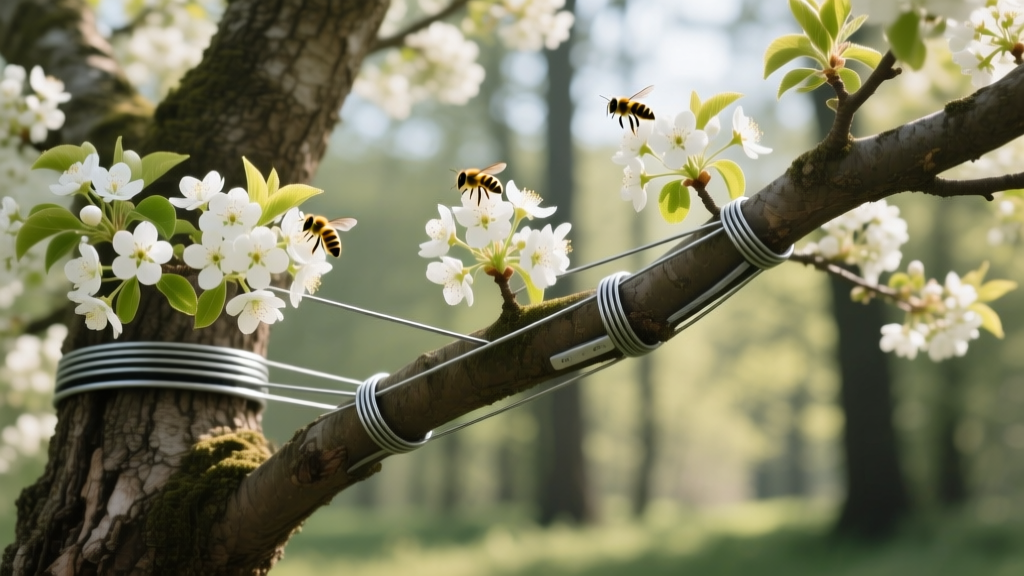
Cobra Dynamic Tree Cabling 2026: Save Pollinator Canopies
Emily WatsonPublished
The Intersection of Tree Safety and Pollinator Conservation
As we navigate the 2026 landscaping season, the paradigm of garden design has shifted decisively toward ecological stewardship. Homeowners and landscape architects are no longer satisfied with purely ornamental plantings; they are demanding resilient, pollinator-friendly garden designs that support local ecosystems. At the heart of these vibrant ecosystems are mature, flowering trees. However, many of the most valuable trees for pollinators are also massive, fast-growing species prone to structural defects like co-dominant stems and heavy, overextended lateral limbs. When these trees pose a risk to property or human safety, the traditional reflex has been to heavily prune the canopy or remove the tree entirely. In 2026, there is a better, ecologically sound alternative: the Cobra dynamic tree cabling and bracing system.
Why Mature Trees Are Non-Negotiable for Pollinators
To understand why preserving mature trees is critical, we must look at the specific species that anchor the pollinator food web. Trees like the American Linden (Tilia americana), Tulip Poplar (Liriodendron tulipifera), and Black Locust (Robinia pseudoacacia) are ecological powerhouses. According to the Xerces Society for Invertebrate Conservation, mature trees provide essential early-spring nectar, massive volumes of summer pollen, and critical nesting habitats for native bees, butterflies, and other beneficial insects. A single mature Linden tree can produce millions of highly fragrant, nectar-rich flowers that sustain honeybee hives and native sweat bees alike.
Unfortunately, these exact species are notorious for developing weak branch unions. A Tulip Poplar with a tight, V-shaped co-dominant stem is a prime candidate for catastrophic failure during a summer microburst. Historically, arborists would mitigate this risk by installing rigid steel cables or by executing severe reduction pruning. Both methods severely compromise the tree's value to pollinators. Reduction pruning strips away the flowering wood and alters the tree's hormonal balance, while invasive steel cabling damages the tree's internal vascular system, accelerating decay and shortening the lifespan of the very canopy we are trying to protect.
The Hidden Dangers of Traditional Steel Cabling
Traditional static cabling involves drilling large lag bolts directly into the heartwood of the tree to anchor steel cables. As detailed in arboricultural best management practices outlined by UMass Extension, drilling into a tree creates a permanent wound. Trees do not heal; they compartmentalize. The process of Compartmentalization of Decay in Trees (CODIT) is triggered, but the physical breach of the xylem and phloem creates an entry point for fungal pathogens and wood-boring insects.
Furthermore, steel cables are rigid. They restrict the natural movement of the tree in the wind. When a tree cannot sway, it fails to develop reaction wood—the dense, structurally reinforced wood that trees naturally grow in response to mechanical stress. Over time, the limb above the steel cable becomes weaker, while the hardware slowly girdles the growing branch, creating a hazardous point of failure. For a pollinator garden, a decaying, stressed tree produces fewer flowers, less nectar, and ultimately dies decades earlier than it would have otherwise.
The Cobra Dynamic Support System: A 2026 Overview
Enter the Cobra dynamic support system by Teufelberger, which has become the gold standard for eco-conscious arborists in 2026. Unlike rigid steel, Cobra utilizes high-tenacity, hollow-braid polyester ropes designed to mimic the natural damping mechanisms of the tree. The system allows the canopy to move and sway in moderate winds, encouraging the tree to build its own structural strength, while suddenly locking up and absorbing shock during extreme wind events to prevent the branch from splitting.
Key Components of the Cobra System
- Cobra Hollow-Braid Ropes: Available in 2T (2-ton), 4T (4-ton), and 8T (8-ton) breaking strengths, these UV-stabilized polyester ropes are spliced into loops that wrap around the branches without the need for a single drilled hole.
- Cobra QuickLock: The 2026 iteration of this hardware allows for rapid, tool-free tensioning and adjustment of the rope system, making maintenance visits incredibly efficient.
- Cobra Shock Absorber: A specialized woven sleeve integrated into the rope system. Under normal wind loads, it remains slack. During a sudden gust or structural shift, the absorber elongates, dissipating kinetic energy and reducing the peak load on the branch union.
- Rubber Sleeves: Placed between the polyester loop and the tree bark to prevent friction damage and allow for years of secondary growth without girdling.
Preserving the Canopy: Benefits for Bees, Butterflies, and Birds
By choosing Cobra dynamic cabling over invasive pruning or steel hardware, you are directly contributing to the biodiversity of your garden. First, you preserve the floral biomass. A mature American Linden that is cabled dynamically retains its full, sprawling canopy, ensuring maximum bloom production for summer pollinators. Second, the non-invasive nature of the Cobra loops means the tree's vascular system remains entirely intact, allowing for optimal water and nutrient transport to the leaves and flowers.
Additionally, the Cobra system allows arborists to safely retain deadwood in the upper canopy. In a traditional safety assessment, deadwood is immediately removed. However, in a pollinator-friendly garden design, standing deadwood (snags) is vital. It provides nesting cavities for solitary bees, carpenter bees, and serves as a host for wood-boring beetles that are a crucial food source for insectivorous birds. By using a Cobra 8T system to securely tether a large, dead lateral limb to a healthy primary leader, you eliminate the hazard of it falling on your patio while preserving a premium habitat feature for local wildlife.
Step-by-Step Installation Guide for Pollinator Trees
Installing a Cobra system requires the expertise of an ISA Certified Arborist, but understanding the process helps homeowners appreciate the non-invasive nature of the work.
- Risk Assessment and Canopy Mapping: The arborist identifies the weak union (e.g., a co-dominant stem in a Tulip Poplar) and calculates the weight and wind-sail area of the limbs involved to select the appropriate rope strength (usually 4T or 8T for mature shade trees).
- Loop Splicing and Placement: Using specialized rigging equipment, the arborist ascends the canopy. The Cobra loops are spliced and placed roughly two-thirds of the way out from the weak union to the tip of the branch. This provides optimal leverage.
- Bark Protection: A specialized rubber or geotextile sleeve is placed under the loop to protect the cambium layer from abrasion and to accommodate future radial growth.
- Tensioning with QuickLock: The rope is connected via the Cobra QuickLock hardware. The arborist applies just enough tension to support the limb during a failure event, while leaving enough slack to allow the tree to move naturally in a 20-30 mph breeze.
- Shock Absorber Integration: The shock absorber is woven into the system to ensure that if the branch drops suddenly, the kinetic energy is safely dispersed.
Static vs. Dynamic: A Comparative Analysis
To fully grasp why the Cobra system is the superior choice for a pollinator-friendly garden in 2026, consider this direct comparison between traditional methods and dynamic support.
| Feature | Traditional Steel Cabling | Cobra Dynamic System (2026) |
|---|---|---|
| Installation Method | Invasive (drilled lag bolts into heartwood) | Non-invasive (spliced exterior loops) |
| Impact on Vascular System | High (creates decay columns, invites pathogens) | Zero (bark protected, cambium intact) |
| Canopy Movement | Restricted (prevents reaction wood formation) | Dynamic (encourages natural strengthening) |
| Shock Absorption | None (rigid, transfers shock to branch union) | High (integrated elongating shock absorbers) |
| Longevity & Maintenance | Permanent but degrades tree; requires hardware replacement | 10-15 year lifespan; easily adjusted via QuickLock |
| Pollinator Impact | Negative (decay reduces bloom vigor, limits deadwood retention) | Positive (preserves full canopy, allows safe deadwood retention) |
2026 Pricing, Longevity, and Maintenance
Investing in a Cobra dynamic support system is an investment in the ecological longevity of your landscape. As of 2026, the cost for a professional installation of a standard two-point Cobra 4T system by an ISA Certified Arborist typically ranges from $450 to $850, depending on the height of the canopy, the complexity of the climb, and regional labor rates. While this is slightly higher upfront than basic steel cabling, the long-term value is vastly superior.
The polyester ropes are UV-resistant and engineered to last 10 to 15 years in outdoor conditions. However, because trees grow, the system requires a maintenance inspection every 2 to 3 years. During these visits, the arborist will check the bark sleeves to ensure they are not girdling the expanding branch, inspect the QuickLock hardware for wear, and adjust the tension. This periodic, non-invasive check-up ensures the tree remains safe and structurally sound without accumulating the compounding wounds associated with traditional hardware.
When to Choose Support Over Pruning
It is important to note that dynamic cabling is not a cure-all for every tree defect. If a limb is already severely decayed, or if the tree is suffering from advanced root rot, no cabling system will save it, and removal is the only safe option. However, if the tree is vibrant, healthy, and ecologically valuable, but simply suffers from a poor architectural form (like a narrow crotch angle or an overextended lateral limb), Cobra cabling is the ideal intervention. By choosing support over amputation, you allow the tree to maintain its natural, asymmetrical beauty while safeguarding your property below.
Conclusion
The 2026 approach to tree care and garden design demands that we look beyond mere aesthetics and human convenience. We must recognize our landscapes as living, breathing habitats. By utilizing the Cobra dynamic tree cabling system, homeowners and arborists can work together to preserve the majestic, pollinator-laden canopies of our most valuable shade trees. It is a triumph of modern arboricultural engineering meeting ecological conservation, ensuring that the hum of native bees and the flutter of swallowtail butterflies continue to grace our gardens for decades to come.