Tree Care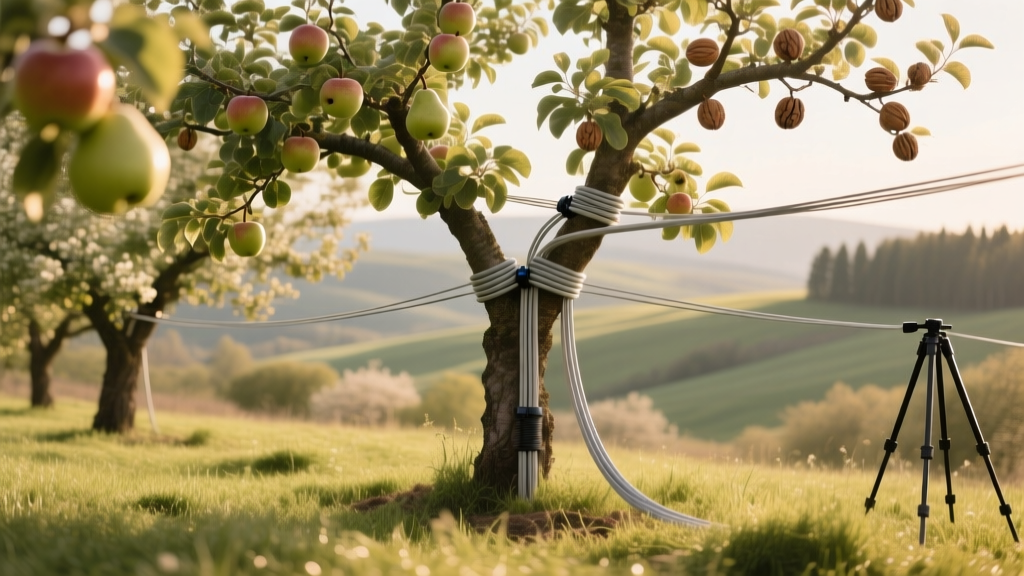
Cobra Dynamic Tree Cabling for Edible Landscapes 2026
David ParkPublished
The Hidden Vulnerability of High-Yield Foodscapes
As edible landscaping and foodscaping continue to dominate home garden trends in 2026, homeowners are increasingly investing in mature, high-yield fruit and nut trees. Species like pecan (Carya illinoinensis), apple (Malus domestica), persimmon (Diospyros virginiana), and mulberry (Morus) are prized for their dual purpose: providing stunning structural shade and producing hundreds of pounds of organic food annually. However, this massive caloric output comes with a significant structural risk.
Many popular fruit and nut trees naturally develop narrow, V-shaped branch unions (crotches). When these trees are pushed to their maximum yield during a bumper crop year, the sheer weight of the fruit—combined with the late-summer microbursts and heavy winds characteristic of the 2026 climate patterns—can cause catastrophic limb failure. Losing a primary scaffold branch doesn't just mean a lost harvest; it opens the tree's heartwood to devastating pathogens like fire blight, silver leaf disease, and wood-decay fungi. To protect your edible investment, modern arboriculture has moved away from rigid steel cables and embraced the Cobra Dynamic Support System.
What is the Cobra Dynamic Support System?
Developed by Teufelberger, the Cobra system is a revolutionary, non-invasive tree cabling and bracing solution designed specifically to mimic a tree's natural biomechanics. Unlike traditional static steel cables that bolt directly into the heartwood and lock branches in place, the Cobra system utilizes high-tenacity, UV-stabilized polypropylene hollow-braid ropes paired with specialized shock absorbers.
For the foodscaper, this technology is a game-changer. Because the Cobra system uses soft, spliced loops that wrap around the branches, it requires zero drilling. Drilling into a fruit tree creates an open wound that serves as a direct highway for orchard pests and fungal spores. By eliminating hardware penetration, the Cobra system preserves the tree's natural compartmentalization processes (CODIT), ensuring your apple or pecan tree remains healthy, disease-free, and productive for decades.
Static Steel vs. Cobra Dynamic System: A Structural Comparison
Understanding why dynamic cabling is superior for edible landscapes requires comparing it to the outdated static methods. Below is a breakdown of how the two systems perform in a modern orchard or backyard foodscape.
| Feature | Traditional Static Steel Cable | Cobra Dynamic System (2026 Standard) |
|---|---|---|
| Material | Galvanized steel wire | UV-stabilized polypropylene hollow braid |
| Installation Method | Drilling through the branch (invasive) | Spliced soft loops (non-invasive) |
| Tree Movement | Restricted (rigid) | Allowed (flexible with shock absorption) |
| Reaction Wood Growth | Stunted (branch weakens over time) | Stimulated (branch builds natural strength) |
| Disease Risk (Fruit Trees) | High (drilling invites rot and blight) | Minimal (bark remains intact) |
| Lifespan | 10-15 years (requires hardware replacement) | 8-12 years (rope degrades safely, easily replaced) |
The Biology of Reaction Wood in Fruit Trees
To understand why the Cobra system is heavily recommended by experts, we must look at tree biology. Trees respond to mechanical stress through a process called thigmomorphogenesis. When a branch sways in the wind, the tree senses the mechanical load and responds by growing denser, stronger "reaction wood" at the base of the branch union.
When you install a rigid steel cable, you immobilize the branch. Deprived of natural movement, the tree stops investing energy into reinforcing that union. Over time, the branch becomes brittle and heavily reliant on the steel cable. If the cable snaps during a severe storm, the branch will immediately fail. According to guidelines published by the Penn State Extension, dynamic cabling systems restrict extreme, destructive movement while allowing enough sway to stimulate continuous reaction wood growth. For heavy-bearing nut and fruit trees, this means the tree naturally builds the muscle required to support its own bumper crops year after year.
Step-by-Step Cobra Installation for Edible Trees
While the International Society of Arboriculture (ISA) always recommends hiring a certified arborist for any work performed at height, understanding the installation process is vital for the informed foodscaper. Here is how a professional approaches a mature, heavy-yielding persimmon or apple tree using the Cobra system in 2026.
Step 1: Canopy Assessment and Sizing
The arborist identifies the weak V-crotch and measures the diameter of the two limbs that need to be connected. The Cobra system comes in various load-bearing capacities (e.g., Cobra 2T, 4T, and 8T). For a standard 12-inch diameter apple scaffold branch, a Cobra 4T (4-ton) kit is typically selected to handle the immense weight of a wet, fruit-laden canopy.
Step 2: Creating the Soft Loop
Instead of drilling a hole through the wood, a specialized splicing tool is used to feed the hollow-braid rope back through itself, creating a smooth, continuous eye-splice. This loop is gently slipped over the branch and seated in the upper third of the limb, roughly two-thirds of the way out from the weak crotch. A protective rubber or felt sleeve is placed under the loop to prevent friction damage to the bark as the tree grows and sways.
Step 3: Integrating the Shock Absorber
The defining feature of the Cobra system is the integrated shock absorber. This is a specially woven section of the rope that acts like a bungee cord. During a sudden gust of wind or when a heavy cluster of pecans pulls the branch downward, the shock absorber elongates, dissipating the kinetic energy and preventing a sudden, snapping shock-load on the branch union.
Step 4: Tensioning and the G-Connect
The rope is connected to the opposing branch using a Cobra G-Connect or a secondary spliced loop. The system is installed with a slight amount of slack. This is crucial: the cable should only engage when the branch is under severe stress from heavy fruit loads or high winds. Under normal conditions, the tree should move freely.
2026 Cost Breakdown and ROI for the Foodscaper
Investing in dynamic cabling is a financial decision that protects the long-term ROI of your edible landscape. Replacing a 30-year-old, fully productive pecan or mulberry tree can take decades of lost harvests. Here is what you can expect to pay for Cobra cabling in the 2026 market:
- DIY Material Costs: A genuine Cobra 4T kit (including rope, shock absorber, and splicing accessories) typically ranges from $160 to $220 per connection point. However, DIY installation is highly discouraged due to the dangers of climbing and the precision required for splicing.
- Professional Installation: Hiring an ISA Certified Arborist to assess, prune, and install a single Cobra dynamic connection generally costs between $450 and $850 in 2026, depending on tree height, canopy density, and regional labor rates.
- Pruning Integration: Cabling should never be used as a substitute for proper pruning. An arborist will often perform weight-reduction pruning on the ends of the scaffold branches before cabling, which may increase the initial service cost but ensures the system functions correctly.
When you calculate the value of a mature tree's annual yield—often exceeding $300 to $500 in organic, homegrown produce—the $800 investment to save a failing primary scaffold branch pays for itself in less than two harvest seasons.
Seasonal Maintenance and Harvest Considerations
According to the University of Minnesota Extension, all cabled trees require regular inspection. For edible landscapes, this maintenance schedule aligns perfectly with the growing and harvesting seasons.
- Early Spring (Pre-Bloom): Inspect the Cobra loops. As fruit trees experience rapid secondary growth (thickening of the trunk and branches) during the spring, the soft loops can begin to girdle the bark if they are too tight. An arborist may need to adjust the splices or add padding to accommodate the 2026 growth flush.
- Mid-Summer (Fruit Set): As the fruit develops and the weight on the branches increases, check the shock absorbers. You should see slight elongation during windy days, indicating the system is actively absorbing the dynamic loads of your heavy crop.
- Late Autumn (Post-Harvest): Once the harvest is complete and the tree enters dormancy, perform a thorough visual inspection from the ground using binoculars. Look for any fraying on the polypropylene rope caused by rubbing against rough bark or adjacent branches.
Conclusion: Securing Your 2026 Harvest
Foodscaping is about building a resilient, sustainable, and abundant ecosystem right in your backyard. Mature fruit and nut trees are the cornerstone of this ecosystem, but their heavy yields make them vulnerable to structural failure. By upgrading from invasive, rigid steel hardware to the Cobra Dynamic Support System, you are not just preventing a branch from splitting; you are actively encouraging the tree to build its own natural strength. Protect your canopy, preserve your harvest, and ensure your edible landscape thrives for the 2026 season and far beyond.