Tree Care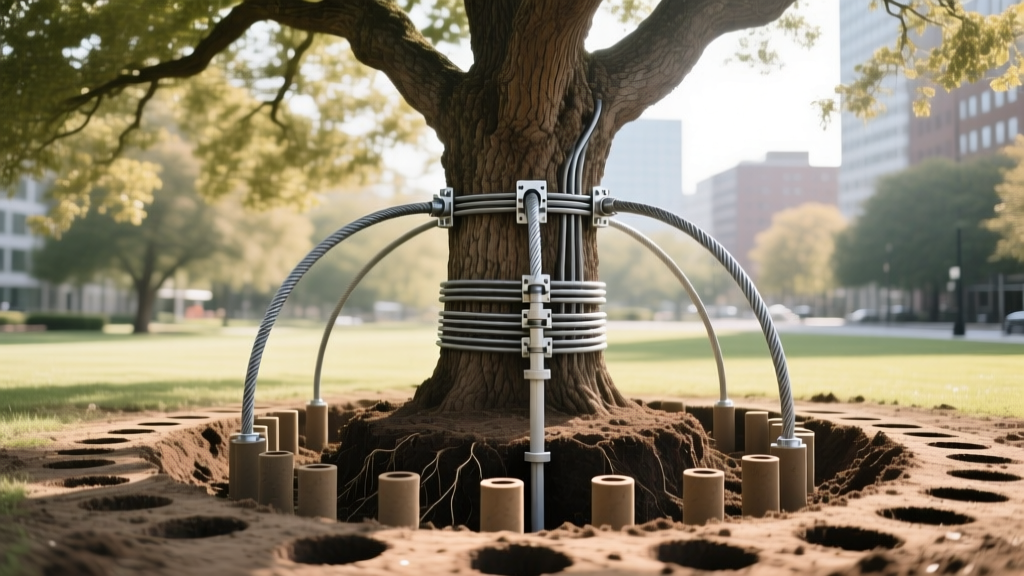
2026 Guide: Cobra Tree Cabling & Root Zone Core Aeration
Sarah ChenPublished
The 2026 Approach to Holistic Tree Stability
As extreme weather patterns and high-velocity wind events become increasingly common in 2026, protecting mature landscape trees requires a more sophisticated approach than in previous decades. Homeowners and property managers often focus solely on the canopy when preparing for storm season, installing rigid steel cables to prevent branches from splitting. However, a tree is only as stable as its foundation. If the root zone is compromised by severe soil compaction, no amount of above-ground cabling will prevent the entire tree from uprooting during a saturated-soil windstorm.
To achieve true structural resilience, modern arboriculture now emphasizes a dual-pronged strategy: utilizing the Cobra dynamic tree support system to safely manage canopy movement, combined with targeted core aeration in the root zone to restore soil oxygenation and promote deep, anchoring root growth. This comprehensive guide explores how integrating these two critical tree care practices in 2026 will safeguard your most valuable landscape assets.
Understanding the Cobra Dynamic Support System
Historically, arborists relied on rigid steel cables and threaded rods to brace weak tree unions. While effective in the short term, steel cables do not allow the tree to move naturally in the wind. This lack of movement prevents the tree from developing reaction wood (the natural structural reinforcement trees build in response to wind stress). Furthermore, rigid hardware can girdle growing branches and act as a lightning conductor, causing catastrophic trunk failure.
The Cobra dynamic support system, engineered by Gebr. Frenger, represents the gold standard in 2026 for above-ground tree bracing. Unlike steel, Cobra utilizes high-strength, UV-stabilized polypropylene braided ropes that mimic the natural flexibility of the tree. Key features of the Cobra system include:
- Dynamic Shock Absorption: The system incorporates specialized rubber shock absorbers that catch sudden, violent loads during wind gusts, gently decelerating the branch rather than snapping it back rigidly.
- Bark-Sparing Installation: Modern Cobra loops are threaded around branches without the need for invasive drilling or lag bolts, preserving the tree's vascular system and preventing entry points for fungal pathogens.
- Hollow-Core Braid Technology: The ropes are designed to flatten slightly under pressure, distributing the load over a wider surface area of the bark to prevent cutting or girdling as the tree grows.
According to the International Society of Arboriculture (ISA), dynamic cabling systems like Cobra are highly recommended for managing codominant stems and overextended lateral limbs, as they reduce the risk of failure while allowing the tree to maintain its natural sway and build internal strength.
The Hidden Threat: Soil Compaction and Root Failure
While the Cobra system secures the canopy, it cannot compensate for a failing root system. In urban and suburban environments, the soil beneath a tree's drip line is subjected to immense compaction from lawn mowers, foot traffic, construction equipment, and natural settling over time. Compacted soil loses its pore space, effectively suffocating the fine feeder roots and preventing water infiltration.
When roots are deprived of oxygen, they remain shallow and weak. A mature oak or maple with a shallow root plate is highly susceptible to windthrow (uprooting) when the soil becomes saturated by heavy rains. This is where the lawn care practice of core aeration becomes a vital component of advanced tree care.
Core Aeration: The Foundation of Tree Anchorage
Core aeration involves the mechanical removal of small plugs of soil to alleviate compaction, increase gas exchange, and improve water penetration. While commonly associated with turfgrass management, adapting core aeration techniques for the tree root zone is a critical 2026 best practice for urban forest management.
Research from Penn State Extension highlights that reducing soil compaction around trees is essential for restoring root vitality and preventing premature decline. By opening the soil profile, you encourage fine roots to grow deeper in search of water and nutrients, effectively increasing the tree's underground anchorage footprint.
Types of Aeration for the Tree Zone
Depending on the proximity to the trunk, different aeration methods are required to avoid severing major structural roots:
- Traditional Plug Aeration (Outer Drip Line): In the outer two-thirds of the tree's drip line, where roots are primarily fine and fibrous, standard lawn core aerators can be used. Pulling 3-inch plugs and leaving them on the surface allows soil microbes to break down the thatch and improve the soil structure.
- Pneumatic Air Excavation (Inner Root Flare): Near the trunk, major structural roots are present. Using an AirSpade (a tool that uses compressed air to safely fracture soil without cutting roots), arborists can perform radial trenching or vertical mulching. This involves digging narrow trenches or holes and backfilling them with porous materials like expanded shale or compost.
Synergizing Canopy Support and Root Aeration
Combining Cobra cabling with root zone aeration creates a holistic stability matrix. The aeration ensures the roots can grip the earth firmly by promoting deep, healthy growth in oxygen-rich soil. Simultaneously, the Cobra system ensures that if a localized branch union fails, or if the wind load exceeds the tree's natural tolerance, the dynamic ropes will hold the canopy together, preventing property damage and preserving the tree's aesthetic form.
Step-by-Step Implementation Guide for 2026
To properly execute this dual-treatment plan, follow these actionable steps:
- Canopy Risk Assessment: Hire an ISA Certified Arborist to identify weak unions, included bark, and overextended limbs. Determine the appropriate Cobra rope diameter (typically 2-ton, 4-ton, or 8-ton breaking strength) based on the limb's weight and sail area.
- Cobra Installation: Install the Cobra system in the upper two-thirds of the tree's crown. Ensure the shock absorbers are properly pre-tensioned according to the manufacturer's 2026 specifications, allowing just enough slack for normal wind sway before engaging.
- Root Zone Mapping: Identify the critical root zone (CRZ), typically defined as a 1-foot radius for every 1 inch of trunk diameter at breast height (DBH). Mark any visible surface roots to avoid them during mechanical aeration.
- Execute Core Aeration: Perform plug aeration across the lawn area under the drip line during the tree's active growing season (late spring to early summer) so roots can immediately capitalize on the improved soil conditions.
- Topdressing and Mulching: After aeration, apply a thin layer of compost and a 2-to-3-inch layer of organic wood chip mulch over the root zone. Keep mulch at least 3 inches away from the trunk flare to prevent rot.
Cobra Dynamic System vs. Traditional Steel Cabling
Understanding the differences between support systems is crucial for making informed tree care investments.
| Feature | Cobra Dynamic System | Traditional Steel Cabling |
|---|---|---|
| Material | UV-stabilized Polypropylene | Galvanized Steel Wire |
| Movement | Flexible, allows natural sway | Rigid, restricts movement |
| Shock Absorption | Integrated rubber dampeners | None (transfers shock to wood) |
| Installation | Bark-sparing loops, no drilling | Requires drilling lag bolts into wood |
| Lifespan | 8 to 12 years (replaceable) | 15+ years (but risks girdling) |
| Lightning Risk | Non-conductive | Highly conductive |
2026 Cost and Maintenance Expectations
Investing in holistic tree stability requires budgeting for both the canopy and the soil. In 2026, the national average cost for professional Cobra dynamic cabling installation ranges from $350 to $850 per union, depending on tree height, accessibility, and the required rope tonnage. Because the system is non-invasive, it does not require the annual wound-treatment monitoring that drilled steel hardware demands, though a visual inspection by an arborist every two years is highly recommended to check for rope wear and adjust tension as the tree grows.
Deep root core aeration and pneumatic radial trenching typically cost between $250 and $600 per tree, depending on the size of the drip line and the severity of soil compaction. When combined, a comprehensive storm-prep package for a large, mature shade tree may range from $800 to $1,500. While this is a significant investment, it pales in comparison to the $5,000 to $15,000 cost of emergency tree removal, roof repair, or liability claims resulting from a storm-damaged tree falling on a home.
Seasonal Timing for Maximum Efficacy
Timing is everything in arboriculture. The ideal window for installing the Cobra system is during the dormant season (late fall or winter) when the canopy is bare, allowing arborists clear visibility of the branch architecture and easier access to the upper crown. Conversely, core aeration should be performed in the early spring or early fall when the tree is actively growing and soil moisture levels are moderate. Aerating during the heat of summer or the freeze of winter can stress the tree and yield poor root recovery.
Conclusion
As we navigate the unpredictable weather of 2026, relying on outdated, rigid tree bracing methods or ignoring the health of the root zone is a recipe for landscape disaster. By integrating the cutting-edge flexibility of the Cobra dynamic support system with the foundational soil restoration provided by core aeration, you provide your trees with a comprehensive defense against nature's forces. This synergistic approach not only prevents catastrophic failure but also promotes the long-term health, vigor, and beauty of your urban forest for decades to come.