Pest Control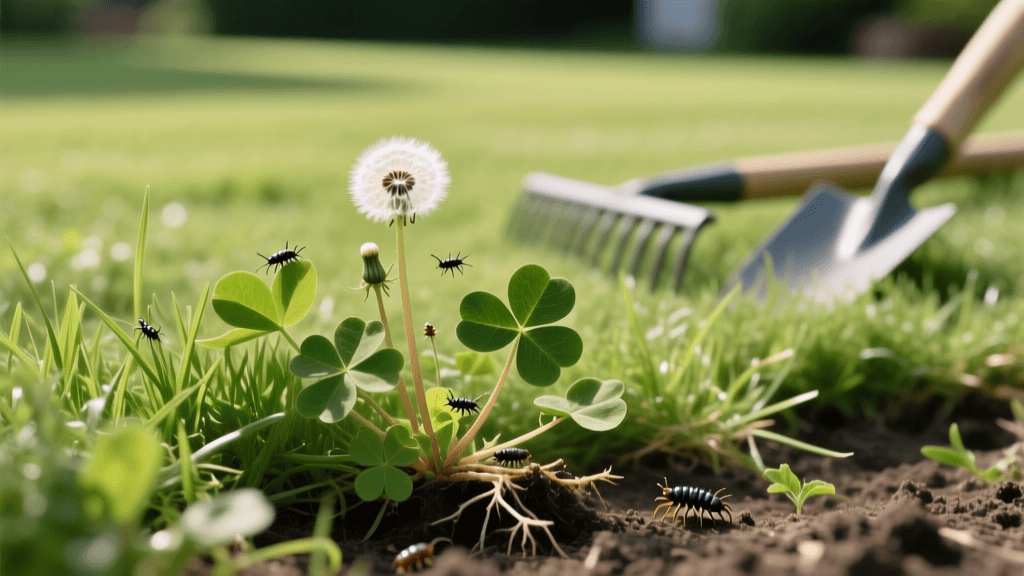
Common Lawn Weeds And How To Remove Them
A lush, green lawn is one of the most satisfying results of consistent yard care — but weeds have a way of undermining that effort quickly. Whether they creep in from neighboring properties, blow in on the wind, or sprout from dormant seeds already in your soil, common lawn weeds compete for water, nutrients, and sunlight. Knowing which weeds you're dealing with, how they spread, and what methods actually work to remove them helps you manage your lawn more effectively.
Identifying the Most Common Lawn Weeds
Accurate identification is the first step toward effective control. Many homeowners treat the wrong weed with the wrong product, wasting time and money while the infestation spreads. Weeds fall into three main groups: broadleaf, grassy, or sedge. Each group responds differently to herbicides and cultural controls.
Broadleaf Weeds
Broadleaf weeds are among the easiest to spot because their leaf structure looks different from turfgrass. Dandelion (Taraxacum officinale) is perhaps the most recognized lawn weed in North America. Its deep taproot — which can extend 10 to 18 inches into the soil — makes hand-pulling ineffective unless the entire root comes out. A single dandelion plant can produce up to 15,000 seeds per year, each capable of traveling up to 5 miles on the wind.
Broadleaf plantain (Plantago major) thrives in compacted soils and often shows up where lawn health is weak. White clover (Trifolium repens) pulls nitrogen from the air, which can help surrounding grass in low-fertility soils, but it spreads fast through stolons and can crowd out desirable turf in as little as one growing season. Ground ivy (Glechoma hederacea), also called creeping Charlie, is especially tough in shaded, moist areas and resists many standard broadleaf herbicides.
Grassy Weeds
Crabgrass (Digitaria sanguinalis) is an annual grassy weed that starts growing when soil temperatures reach 55°F at a 2-inch depth for several days — usually in early spring across most of the United States. According to research from the University of Maryland Extension, a single crabgrass plant can produce up to 150,000 seeds before dying at first frost, so stopping it before it sprouts works better than trying to kill it later. Annual bluegrass (Poa annua) is another prolific seeder that likes cool, moist conditions and shows up often on golf courses and fine lawns throughout the Midwest.
Sedges
Yellow nutsedge (Cyperus esculentus) is often mistaken for a grass but is actually a sedge — you can tell by its triangular stem cross-section and yellow-green color. It spreads through underground tubers called nutlets, and a single plant can produce hundreds of nutlets in one season. Standard grass herbicides don’t touch nutsedge, so getting the ID right before treatment matters.
Weed Life Cycles and Spread
Weeds fall into three life cycle categories: annual, biennial, or perennial. Annual weeds like crabgrass and annual bluegrass finish their whole life in one year and only reproduce by seed. Perennial weeds like dandelion, ground ivy, and nutsedge come back year after year from established roots and are generally harder to get rid of.
Biennial weeds such as wild carrot (Daucus carota) spend their first year as a low rosette and flower and set seed in their second year. Mowing before seed set works well for biennials, but timing matters. Missing the window by even a week can let thousands of seeds scatter.
Weed seeds can stay alive in the soil for years — sometimes decades. The "weed seed bank" in an average lawn can hold tens of thousands of seeds per square foot. Tilling or aerating stirs up those seeds and can trigger more germination, so limiting soil disturbance fits into a balanced weed management plan.
Integrated Pest Management for Lawn Weeds
Integrated Pest Management (IPM) combines cultural, mechanical, biological, and chemical controls to manage weeds with minimal environmental impact. According to the EPA's IPM guidelines updated in 2022, the goal isn’t to eliminate every weed, but to keep populations below levels that cause economic or aesthetic problems — a concept called the action threshold.
"A healthy, dense turf is the single most effective weed management tool available to homeowners. Weeds are symptoms of underlying problems — thin turf, poor soil, improper mowing, or inadequate irrigation — and treating those root causes is more effective long-term than repeated herbicide applications." — Penn State Extension Turfgrass Program
For residential lawns, most turfgrass specialists suggest stepping in when weed coverage goes above 10 to 15 percent of the total lawn area. Below that, cultural improvements — overseeding, fertilization, proper mowing height — often give desirable grass enough of an edge to outcompete weeds naturally.
Cultural Controls
Mowing at the correct height is one of the most useful cultural controls. Cool-season grasses like Kentucky bluegrass and tall fescue do best mowed at 3 to 4 inches, which shades the soil and slows weed seed germination. Research from Rutgers University's turfgrass science program found that raising mowing height from 1.5 inches to 3.5 inches cut crabgrass numbers by up to 60 percent over a single growing season — no herbicide needed.
When you fertilize also makes a difference. Putting nitrogen on the lawn in early spring can boost crabgrass germination along with the grass. For cool-season lawns, the main fertilization window should be late summer to fall, when desirable grasses are actively growing and crabgrass is winding down. Soil testing every 2 to 3 years through your local cooperative extension office — such as those tied to land-grant universities — helps you fix real nutrient gaps instead of guessing.
Mechanical Removal
Hand-pulling and mechanical tools work well for small patches and for weeds with shallow roots. A fishtail weeder or dandelion digger pulls taprooted weeds more completely than grabbing by hand. The best time to pull weeds is after rain or irrigation, when the soil is soft and roots come free more easily. For larger areas, a stand-up weed puller with a foot pedal cuts down on back strain.
Herbicide Selection and Application
When cultural and mechanical controls aren’t enough, herbicides become a practical option. Matching the right active ingredient to the target weed — and applying it at the right time — improves results and reduces risk.
Herbicides fall into two main types: pre-emergent and post-emergent. Pre-emergent herbicides form a barrier in the soil that stops weed seeds from sprouting — they won’t kill weeds already growing. Post-emergent herbicides go on actively growing weeds and work either by contact (killing only the part they touch) or systemically (moving through the plant to kill roots and all).
| Weed | Scientific Name | Type | Recommended Active Ingredient | Application Timing |
|---|---|---|---|---|
| Crabgrass | Digitaria sanguinalis | Annual grassy | Prodiamine, Dithiopyr (pre-emergent) | Early spring, soil temp 50–55°F |
| Dandelion | Taraxacum officinale | Perennial broadleaf | 2,4-D, Triclopyr, Dicamba (post-emergent) | Fall or early spring, actively growing |
| Ground ivy | Glechoma hederacea | Perennial broadleaf | Triclopyr (post-emergent, repeat applications) | Fall preferred; spring also effective |
| Yellow nutsedge | Cyperus esculentus | Perennial sedge | Halosulfuron-methyl, Sulfentrazone | Summer, when actively growing |
| White clover | Trifolium repens | Perennial broadleaf | 2,4-D + MCPP + Dicamba (three-way mix) | Spring or fall, avoid heat stress |
Always read the full herbicide label before use. The label tells you which turfgrass species are safe to treat, what protective gear you need, when it’s safe to re-enter the area, and how to protect the environment. Applying herbicides during high heat (above 85°F) or right before rain — within 24 hours — lowers effectiveness and raises the chance of runoff into nearby water.
Preventing Weed Reinfestation
Getting rid of weeds is only half the job. Without a follow-up plan, they’ll likely return — sometimes faster and thicker — within a single growing season. A solid prevention strategy tackles both the conditions that let weeds take hold and the seed sources that fuel new growth.
Overseeding thin or bare spots is one of the simplest and most effective prevention steps. Bare soil is an open door for weeds. According to USDA research published in 2021, even a bare patch as small as 4 square inches can be taken over by crabgrass in two weeks during peak germination season. Overseeding in fall with a high-quality, regionally appropriate grass seed mix — and keeping those areas moist until the new grass sprouts — closes the gaps before weeds move in.
Mulching garden beds next to the lawn helps reduce weed pressure where lawn meets landscape. A 2 to 3 inch layer of organic mulch keeps weed seeds from sprouting while holding moisture in the soil. Just don’t pile mulch against plant stems or tree trunks — that creates damp, sheltered spots where disease and pests can thrive.
Core aeration, done once a year in fall for cool-season grasses or late spring for warm-season grasses, eases soil compaction — a key condition that favors weeds like plantain and annual bluegrass over healthy turf. Pairing aeration with overseeding and a starter fertilizer gives your lawn a strong start going into the next growing season.
Regional Considerations and Seasonal Timing
Weed pressure and what works best vary widely by region and climate. In the Southeast, warm-season weeds like dallisgrass (Paspalum dilatatum) and torpedograss (Panicum repens) show up regularly but rarely appear in northern states. In the Pacific Northwest, the cool, wet weather supports moss and annual bluegrass more than the broadleaf weeds common in drier areas.
Texas A&M AgriLife Extension has found that pre-emergent herbicide timing in Texas can shift by up to six weeks depending on whether you’re in the Panhandle or the Gulf Coast — a reminder that national application calendars are just a starting point. Checking soil temperature with an inexpensive probe thermometer gives a more reliable signal for pre-emergent timing than the calendar alone.
In northern states, fall is a key window for post-emergent broadleaf herbicides. Perennial weeds like dandelion and ground ivy move sugars down to their roots in fall, so systemic herbicides applied then travel deeper into the root system and kill more thoroughly than spring treatments. Most turfgrass specialists in the Midwest recommend applying broadleaf herbicides between mid-September and early November, before the first hard frost.
- Apply pre-emergent herbicides when soil temperatures reach 50–55°F at a 2-inch depth in spring
- Mow cool-season grasses at 3 to 4 inches throughout the growing season to suppress weed germination
- Overseed bare patches in fall to prevent weed colonization the following spring
- Test soil pH every 2 to 3 years — most turfgrasses prefer a pH of 6.0 to 7.0, and weeds like moss thrive in acidic soils below 5.5
- Water deeply and infrequently (1 inch per week) to encourage deep grass roots and discourage shallow-rooted weeds
- Hold off on nitrogen fertilizer in early spring, which can stimulate crabgrass germination alongside desirable grass
Keeping simple records helps improve your approach over time. Note which weeds showed up, where they were concentrated, what treatments you tried, and how well they worked. Patterns often emerge — a persistently weedy corner may point to poor drainage or compaction, issues no herbicide will fix for good. Fixing the underlying cause usually works better than repeating chemical treatments.
- Identify the weed accurately — broadleaf, grassy, or sedge — before selecting any control method
- Assess coverage — if weeds cover less than 10–15% of the lawn, cultural improvements may be sufficient
- Choose the appropriate control method — mechanical removal for small infestations, herbicides for larger ones
- Apply at the correct timing — pre-emergent before germination, post-emergent when weeds are actively growing
- Follow up with prevention — overseed, aerate, and adjust cultural practices to reduce future pressure
Lawn weed management is ongoing, not a one-time fix. The most successful lawns are those maintained with steady attention to mowing, fertilization, irrigation, and soil health — conditions that favor dense, competitive turfgrass over opportunistic weeds. Chemical controls are helpful, but they work best when used as part of a broader IPM plan rather than on their own.