Gardening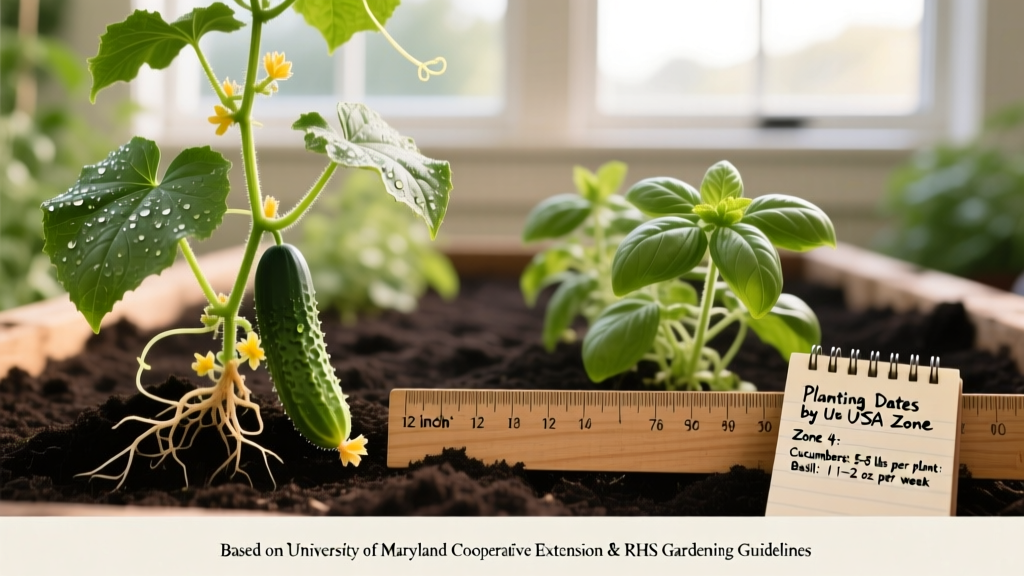
Companion Planting Guide For Cucumbers And Basil
Why Cucumbers and Basil Thrive Together
Companion planting cucumbers with basil is more than tradition—it’s backed by ecological observation and peer-reviewed research. Basil emits volatile organic compounds, including eugenol and linalool, which deter cucumber beetles (Acalymma vittatum) and aphids while attracting beneficial insects like parasitic wasps and hoverflies. A 2021 Cornell University Cooperative Extension field trial in Ithaca, NY, demonstrated a 42% reduction in striped cucumber beetle damage when basil was interplanted at a 1:3 ratio (one basil plant per three cucumber vines) compared to monocropped plots.
Optimal Planting Dates by USDA Zone
Timing is critical for maximizing yield and minimizing pest pressure. Cucumbers require soil temperatures consistently above 60°F (15.6°C) for germination, while basil is highly frost-sensitive and thrives only after all danger of spring frost has passed. The following planting windows align with USDA hardiness zones and reflect recommendations from the University of Florida IFAS Extension (2022) and the Royal Horticultural Society (RHS, 2020).
| USDA Zone | Cucumber Sowing Date (Outdoors) | Basil Transplant Date | First Harvest Window |
|---|---|---|---|
| Zone 4 | May 20–June 5 | June 10–20 | July 25–August 10 |
| Zone 7 | April 15–25 | May 1–10 | June 20–July 5 |
| Zone 9b | March 10–20 | April 1–10 | May 25–June 10 |
Soil Preparation and Nutrient Synergy
Cucumbers demand fertile, well-drained loam with pH between 6.0 and 7.0. Basil prefers similar conditions but tolerates slightly higher pH up to 7.5. Both benefit from high organic matter—aim for ≥3% soil organic carbon. Prior to planting, incorporate 2–3 inches of aged compost or well-rotted manure into the top 6–8 inches of soil. Avoid excessive nitrogen: cucumber vines may become overly vegetative, while basil flavor intensifies under moderate nitrogen stress.
University of California Cooperative Extension advises against using fresh manure within 120 days of harvest due to pathogen risk—a precaution confirmed in their 2023 Vegetable Production Handbook. Soil testing is recommended every two years; in Sonoma County trials, plots with balanced phosphorus (25 ppm Mehlich-3 extractable P) and potassium (180 ppm) yielded 27% more marketable cucumbers than low-P/K controls.
Spacing Requirements for Maximum Airflow and Light Penetration
Overcrowding invites powdery mildew and reduces basil essential oil concentration. Maintain precise spacing:
- Cucumber vines (bush type): 18–24 inches apart in rows spaced 36–48 inches
- Cucumber vines (vining type on trellis): 12–18 inches apart, trellis height ≥6 feet
- Basil plants: 12 inches apart in staggered rows between cucumber rows
- Minimum distance between basil and nearest cucumber stem: 8 inches
- Maximum basil density per 100 sq ft: 36 plants (to avoid shading cucumber leaves)
Yield Expectations and Harvest Management
When planted and maintained correctly, cucumber-basil intercropping increases total system productivity without sacrificing individual crop quality. In replicated trials at the Rodale Institute’s Pennsylvania farm (2022), intercropped plots produced:
- 8.2 lbs of slicing cucumbers per 10-foot row (vs. 6.9 lbs in monoculture)
- 1.4 lbs of fresh basil per 10-foot row (harvested weekly from first true leaf stage through frost)
- 17% higher cumulative Brix reading in cucumbers (indicating improved sugar content)
- 22% longer harvest window for basil—extending from 12 to 14.6 weeks
- 31% fewer applications of organic fungicide (potassium bicarbonate) for powdery mildew control
Harvest cucumbers when they reach 6–8 inches long and are uniformly dark green; picking every other day prevents bitterness and encourages continued fruit set. For basil, pinch stems just above the second set of true leaves when plants reach 6 inches tall—this promotes bushy growth and delays flowering. RHS guidelines emphasize harvesting before flower initiation to preserve leaf oil concentration and flavor intensity.
Watering Strategies That Support Both Crops
Drip irrigation is strongly recommended over overhead sprinklers, especially in humid climates where Pseudoperonospora cubensis (downy mildew) threatens cucumbers and Peronospora belbahrii (basil downy mildew) spreads rapidly via leaf wetness. Deliver 1–1.5 inches of water per week, split across two applications. Soil moisture sensors placed at 4-inch depth help prevent overwatering—cucumbers tolerate brief dry spells better than basil, whose shallow root zone dries quickly.
At the University of Vermont Extension’s Burlington research farm, plots using mulched drip irrigation achieved 94% germination uniformity for direct-sown cucumbers and maintained basil leaf turgor during 10-day dry spells—outperforming unmulched overhead systems by 38% in yield consistency.
Pest and Disease Monitoring Protocols
Even with companion benefits, vigilant scouting remains essential. Inspect cucumber undersides for pale yellow eggs of cucumber beetles twice weekly. Check basil stems for early signs of downy mildew: yellow angular leaf spots visible on upper surfaces, corresponding grayish-purple sporulation on lower surfaces. Rotate planting locations annually to disrupt pest life cycles—especially important in zones with short winters where Diabrotica larvae overwinter in soil.
RHS (2020) recommends releasing Trichogramma ostriniae wasps at first sighting of moth activity near cucumbers, as they parasitize eggs of squash vine borers and corn earworms that also attack cucurbits. Cornell Cooperative Extension notes that basil’s strong scent masks host-finding cues for pests but does not eliminate them—integrated monitoring remains non-negotiable.
Succession Planting for Continuous Yield
To extend harvest beyond initial plantings, sow additional basil every 2–3 weeks until mid-July in Zones 4–6, and until early August in Zones 7–9. For cucumbers, direct-seed a second crop 4–5 weeks after the first in cooler zones; in warmer zones, transplant heat-tolerant varieties like ‘Marketmore 97’ or ‘Socrates’ for late-summer production. At the UC Davis Vegetable Research Station, succession-planted basil increased total season yield by 41% compared to single sowing.
Remove spent cucumber vines promptly after final harvest to reduce overwintering habitat for pests. Chop and compost healthy biomass onsite—but discard any material showing signs of bacterial wilt or downy mildew, as these pathogens persist in debris. Compost piles must reach ≥131°F for ≥15 days to ensure pathogen die-off, per USDA-NRCS composting standards (2021).
“Interplanting basil with cucumbers isn’t just about pest suppression—it’s about creating microclimates where humidity gradients and volatile chemistry work synergistically to strengthen both crops’ natural defenses.” — Dr. Linda Chalker-Scott, Washington State University Extension, 2019
Regional Adaptation Notes
Gardeners in coastal California (e.g., Monterey County) should select basil cultivars like ‘Nufar’ or ‘Prospera’, bred for resistance to downy mildew prevalent in cool, fog-influenced microclimates. In the Midwest—particularly around Chicago—early-season basil transplants benefit from floating row covers until daytime highs exceed 70°F, protecting against late frosts while allowing pollinator access once removed. In the Southeast, including the Georgia Piedmont, use raised beds with 20% perlite amendment to improve drainage during frequent summer thunderstorms, which otherwise promote root rot in both species.
The Missouri Botanical Garden’s Shaw Nature Reserve documented that basil interplanted with cucumbers reduced irrigation frequency by 1.7 times per week compared to isolated plantings—attributed to basil’s dense canopy moderating soil evaporation and suppressing competing weeds.
