Gardening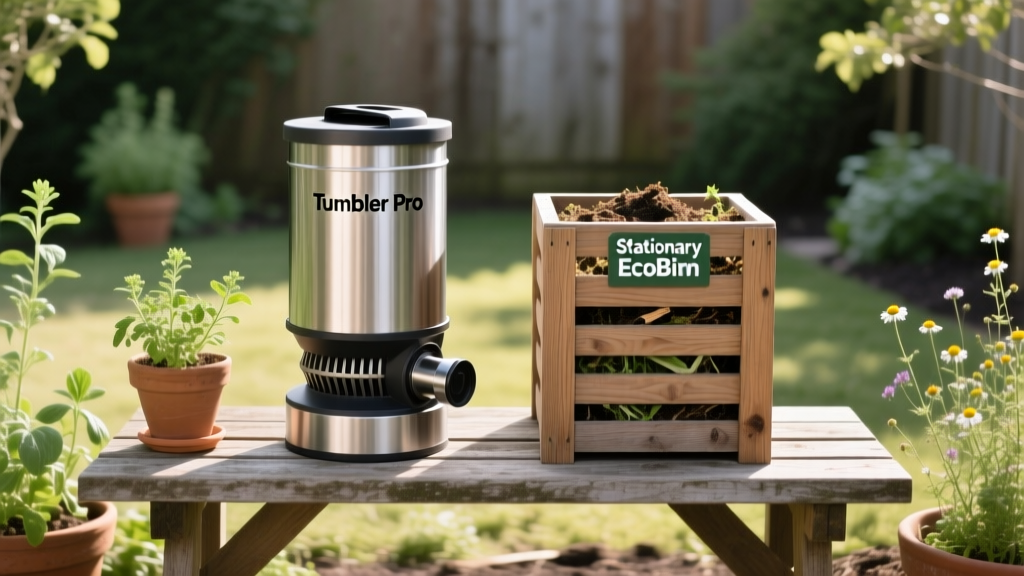
Compost Tumblers vs Stationary Bins: 2024 Buyer Guide
Robert HayesPublished
The Great Composting Debate: Tumblers vs. Stationary Bins
Transforming kitchen scraps and yard waste into black gold is one of the most rewarding practices for any home gardener. Compost enriches soil structure, boosts microbial life, and reduces your household's carbon footprint. However, when you decide to start composting, you are immediately faced with a critical choice: should you invest in a compost tumbler or a traditional stationary bin? Both systems have distinct advantages, and the right choice depends heavily on your garden size, physical mobility, and the volume of organic waste you generate. In this comprehensive product review and comparison guide, we break down the top composting systems on the market to help you make an informed decision for your 2024 garden setup.
Core Differences: Tumbling Composters vs. Stationary Bins
Before diving into specific product reviews, it is essential to understand the mechanical and biological differences between these two composting methods. Tumbling composters are elevated, sealed drums that rotate on an axis. Their primary advantage is aeration; a simple spin mixes the materials and introduces oxygen, which accelerates the decomposition process. They are also highly effective at deterring rodents and pests due to their elevated, sealed design. However, they generally offer smaller capacities and can become heavy and difficult to spin when fully loaded.
Stationary bins, on the other hand, sit directly on the ground. They offer much larger capacities, making them ideal for gardeners with significant yard waste like autumn leaves and grass clippings. Because they rest on the soil, they allow beneficial earthworms and ground microbes to enter the pile naturally. The trade-off is that turning a stationary bin requires manual labor with a pitchfork or compost aerator tool, and they can be more vulnerable to burrowing pests if not properly secured.
Top Compost Tumblers Reviewed
1. FCMP Outdoor IM4000 Dual Chamber Tumbler
The FCMP IM4000 is widely considered the best entry-level tumbler on the market. It features a 37-gallon capacity split across two separate chambers. This dual-chamber design is a massive practical advantage: you can fill one side with fresh scraps while the other side cures, allowing for continuous composting. The drum is constructed from BPA-free, UV-protected polypropylene, and the frame is made of galvanized steel with a rust-resistant powder coating. Inside, deep fins act as baffles to break up clumps and aerate the mix. Cost: Approximately $100. Drawback: Assembly can take 45 to 60 minutes, and the sliding door can be slightly stiff when new.
2. Envirocycle The Most Beautiful Composter
If aesthetics and premium build quality are your top priorities, the Envirocycle is unmatched. It boasts a 35-gallon drum and a unique 2.5-gallon base that collects nutrient-rich compost tea, which you can drain and apply directly to your garden beds. Made in the USA from BPA-free, rust-free materials, it requires zero tools for assembly. The snap-lock mechanism makes spinning smooth, even when the bin is heavy. Cost: Approximately $300. Drawback: The premium price tag is steep, and the base can occasionally leak tea if not monitored on uneven ground.
Top Stationary Compost Bins Reviewed
3. Algreen Products Soil Saver Classic Compost Bin
For high-volume composters, the Algreen Soil Saver is a powerhouse. It offers a massive 12-cubic-foot capacity (roughly 89 gallons), constructed from thick, 100% recycled plastic. The bin features a locking lid that is highly effective at keeping out raccoons and neighborhood pests. At the base, two sliding doors allow you to harvest finished compost from the bottom without disturbing the active decomposition happening at the top. Cost: Approximately $110. Drawback: Turning the pile requires reaching in with a pitchfork, and the thick plastic can retain too much heat in peak summer if not properly balanced with dry browns.
4. Gronomics Rustic Cedar Compost Bin
The Gronomics Cedar Bin is perfect for gardeners who want a natural, attractive structure that blends into the landscape. It provides 22 cubic feet of space and is built from untreated western red cedar, which is naturally resistant to rot and insects. The open-air slat design promotes excellent airflow, while the front slats can be easily removed one by one to harvest finished soil from the bottom. Because it is open to the ground, it encourages robust earthworm activity. Cost: Approximately $160. Drawback: The open top and slatted sides can dry out the compost quickly, requiring more frequent watering during dry spells.
Feature Comparison Chart
| Product | Type | Capacity | Material | Est. Cost | Best For |
|---|---|---|---|---|---|
| FCMP IM4000 | Dual Tumbler | 37 Gallons | Polypropylene / Steel | $100 | Beginners & Continuous Batching |
| Envirocycle | Single Tumbler | 35 Gallons | BPA-Free Plastic / Aluminum | $300 | Urban Gardens & Compost Tea |
| Algreen Soil Saver | Stationary Bin | 89 Gallons | Recycled Thick Plastic | $110 | High-Volume Yard Waste |
| Gronomics Cedar | Stationary Bin | 22 Cu. Ft. | Western Red Cedar | $160 | Aesthetics & Earthworm Access |
How to Choose the Right Composter for Your Garden
When selecting between a tumbler and a stationary bin, evaluate your physical capabilities and spatial constraints. If you have back issues or limited mobility, a tumbler like the FCMP IM4000 eliminates the need for heavy lifting and pitchfork turning. Conversely, if you have a large property with mature trees generating dozens of bags of autumn leaves, a 37-gallon tumbler will fill up in a single weekend. In that scenario, a high-capacity stationary bin like the Algreen Soil Saver or a multi-bay wooden system is mandatory.
Consider your local wildlife, too. Urban and suburban gardeners dealing with rats, mice, or raccoons should strongly favor sealed tumblers or heavy-duty locking stationary bins. Open wooden bins, while beautiful and breathable, can become unintended feeding stations for local pests if kitchen scraps are not buried deeply within the pile.
Expert Tips for Faster, Hotter Composting
Regardless of the vessel you choose, the biology of composting remains the same. To achieve hot composting—which breaks down materials in weeks rather than months—you must manage the Carbon-to-Nitrogen (C:N) ratio, moisture, and oxygen. According to the Environmental Protection Agency (EPA), a healthy compost pile requires a balanced mix of 'browns' (carbon-rich materials like dried leaves, cardboard, and twigs) and 'greens' (nitrogen-rich materials like vegetable scraps and grass clippings).
Experts at Cornell University's Compost Science and Engineering recommend a C:N ratio of roughly 30:1 for optimal microbial activity. In practical terms, this means adding two to three parts brown materials for every one part green material by volume. If your pile smells like ammonia, it has too much nitrogen; add shredded paper or dry leaves. If it is doing nothing, it lacks nitrogen; add coffee grounds or fresh grass clippings.
A well-managed compost pile should reach internal temperatures between 130°F and 150°F. This thermophilic phase is essential for killing weed seeds and plant pathogens, ensuring your finished compost is safe for vegetable gardens.
— Penn State Extension
Moisture is the final critical variable. Your compost should feel like a wrung-out sponge. Tumblers tend to dry out faster due to their sealed nature and elevation, so be prepared to add water with a watering can when you spin. Stationary bins, especially open wooden ones, may require a tarp cover during heavy autumn rains to prevent the pile from becoming anaerobic and waterlogged.
Final Verdict
For the average suburban gardener looking for a clean, pest-proof, and low-effort solution to handle daily kitchen scraps, the FCMP IM4000 Dual Chamber Tumbler is the undisputed value champion. Its dual-chamber design solves the biggest flaw of traditional tumblers by allowing continuous use. However, if you are managing a large vegetable garden with significant seasonal yard waste, the Algreen Soil Saver Classic provides the necessary volume and ground-level ecology to process heavy loads efficiently. Match the tool to your garden's scale, maintain your C:N ratios, and you will be rewarded with rich, dark compost for years to come.
