Gardening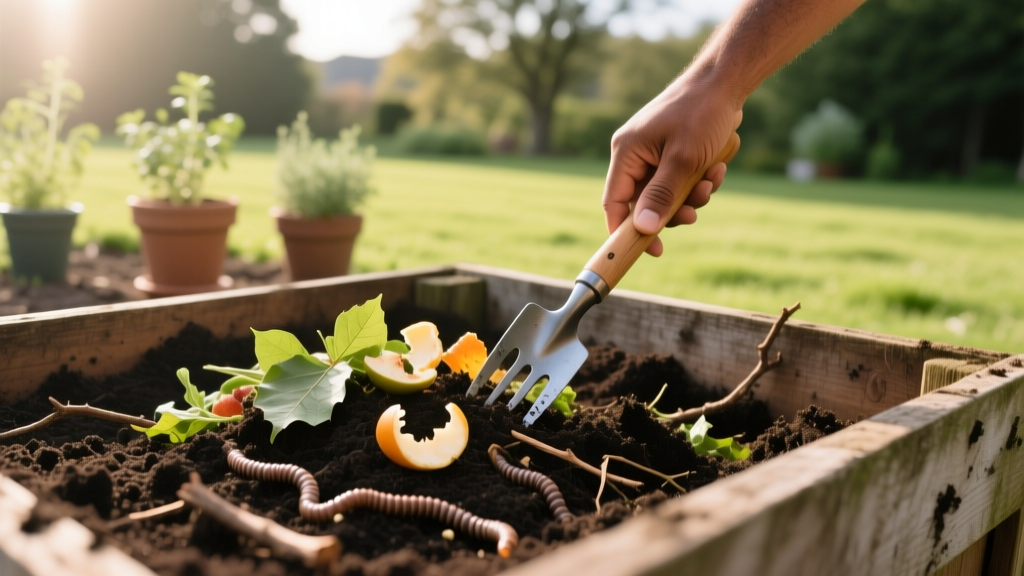
Gardening Myths Busted: Compost and Soil Prep Facts
Emily WatsonPublished
Introduction: Separating Horticultural Fact from Fiction
Gardening is a practice deeply rooted in tradition, with wisdom passed down through generations of backyard growers and commercial farmers alike. However, not all inherited gardening advice is grounded in science. Over the decades, several persistent myths regarding soil preparation and composting have taken root in the gardening community. These misconceptions can lead to wasted money, stunted plant growth, and frustrating seasons of trial and error. According to the USDA Natural Resources Conservation Service, understanding the fundamental biology and physics of soil is the first step toward building a resilient, productive garden. In this comprehensive guide, we will dig into the science to bust four of the most common composting and soil preparation myths, providing you with actionable, cost-effective, and scientifically backed solutions for your garden.
Myth 1: Adding Sand to Clay Soil Improves Drainage
The Fiction
One of the most widespread pieces of advice given to gardeners dealing with heavy, poorly draining clay soil is to mix in coarse sand. The logic seems sound on the surface: sand has large particles and drains quickly, so adding it to dense clay should theoretically open up the soil structure and improve water infiltration.
The Fact
Adding sand to clay soil without adding massive amounts of organic matter actually creates a concrete-like matrix. Clay particles are microscopic, flat platelets, while sand particles are large, spherical grains. When you mix the two, the tiny clay particles simply fill in the microscopic pore spaces between the larger sand grains. The result is a compacted, brick-hard soil that restricts root growth and worsens drainage. Soil scientists note that to actually change the physical structure of clay soil using only sand, you would need to amend it with roughly 50% sand by volume—an impractical and incredibly expensive undertaking for any home garden.
The Actionable Fix
Instead of sand, focus on building soil aggregation through organic matter and specific mineral amendments.
- Organic Compost: Apply a 2 to 3-inch layer of high-quality compost (such as Black Kow composted cow manure or locally sourced leaf mold) over your garden beds. Till or fork it into the top 6 to 8 inches of soil. This costs approximately $30 to $50 per cubic yard in bulk and provides slow-release nutrients while improving soil structure.
- Expanded Shale: If you need a mineral amendment for drainage, use expanded shale. This porous, lightweight aggregate holds water and air, permanently improving clay soil aeration without compacting. Apply a 1-inch layer and incorporate it into the top 6 inches of soil.
- Gypsum (Calcium Sulfate): For sodic clay soils, gypsum can help flocculate (clump together) clay particles, improving drainage over time. Apply 40 pounds per 1,000 square feet annually.
Myth 2: You Must Buy Commercial Compost Activators
The Fiction
Garden center shelves are lined with expensive 'compost activators' and 'starters,' claiming that these proprietary blends of chemicals and microbes are absolutely necessary to kickstart the decomposition process in a new compost pile.
The Fact
The Environmental Protection Agency (EPA) emphasizes that the microorganisms responsible for decomposition (bacteria, fungi, and actinomycetes) are already naturally present on your yard waste and kitchen scraps. You do not need to buy a starter. What a compost pile actually needs to 'activate' is the correct balance of Carbon (browns) and Nitrogen (greens). Commercial activators are often just overpriced, concentrated sources of nitrogen. Understanding the Carbon-to-Nitrogen (C:N) ratio is the real secret to rapid composting. The ideal C:N ratio is roughly 30:1.
The Actionable Fix
Save your money and use readily available, low-cost nitrogen sources to activate your pile:
- Coffee Grounds: Despite their brown color, used coffee grounds are a 'green' nitrogen source (roughly 2% nitrogen by weight). They are free from local coffee shops and excellent for heating up a sluggish pile.
- Blood Meal: If your pile is entirely dry autumn leaves (high carbon), sprinkle a cup of organic blood meal (such as Espoma Organic Blood Meal, costing about $15 for 3 lbs) over every 10 gallons of leaves as you build the pile. Water it thoroughly.
- Fresh Grass Clippings: Layer fresh, untreated grass clippings with your brown materials at a 2:1 ratio (browns to greens by volume) to naturally introduce massive amounts of nitrogen and moisture.
Myth 3: Pine Needles Make Soil Too Acidic for Most Plants
The Fiction
Many gardeners refuse to use pine straw (pine needles) as mulch or compost them, fearing that their high acidity will drastically lower the soil pH and kill vegetables, flowers, and turfgrass.
The Fact
While fresh, green pine needles are indeed acidic (with a pH ranging from 3.2 to 3.8), they undergo a chemical change as they age, brown, and decompose. By the time pine needles fall to the ground and turn brown, they have lost most of their acidity. Fully composted pine needles have a nearly neutral pH of around 6.0 to 6.5, which is the exact sweet spot for the vast majority of garden plants. As noted by Penn State Extension, the belief that pine mulch permanently acidifies soil is a horticultural myth. The slight, temporary acidification at the very surface level is easily buffered by the soil's natural chemistry and is entirely beneficial for acid-loving plants like azaleas, blueberries, and camellias.
The Actionable Fix
Pine straw is an exceptional, weed-suppressing, and aesthetically pleasing mulch that interlocks to stay in place on slopes.
- Mulching Application: Apply a 3 to 4-inch layer of aged, brown pine straw around your garden beds. Keep the mulch about 2 inches away from the base of plant stems and tree trunks to prevent moisture-related rot and rodent damage.
- Cost and Coverage: Pine straw is highly economical, typically costing $6 to $8 per bale, with one bale covering roughly 25 to 30 square feet at a 3-inch depth.
- Composting Pine Needles: Because they have a waxy coating, pine needles break down slowly. Shred them with a lawnmower before adding them to your compost bin to speed up decomposition, treating them as a 'brown' carbon material.
Myth 4: A Healthy Compost Pile Should Smell Like Manure
The Fiction
There is a prevailing belief that if a compost pile smells strongly of ammonia, sulfur, or rotting manure, it means the pile is 'cooking' and working hard to break down materials.
The Fact
A properly functioning compost pile should smell earthy, rich, and reminiscent of a forest floor after a rainstorm. Foul odors are a massive red flag indicating that your pile has gone anaerobic (lacking oxygen) or contains too much nitrogen. When oxygen is depleted, anaerobic bacteria take over, producing hydrogen sulfide (rotten egg smell) and organic acids. An ammonia smell indicates an excess of nitrogen (too many 'greens') that the microbes cannot process quickly enough, causing the nitrogen to off-gas into the atmosphere.
The Actionable Fix
Maintain an aerobic environment to eliminate odors and speed up decomposition:
- Aeration: Turn your compost pile with a pitchfork or compost aerator tool every 7 to 14 days. This introduces oxygen to the core of the pile, feeding the aerobic thermophilic bacteria that generate heat.
- Add 'Browns': If the pile smells like ammonia, immediately mix in high-carbon bulking agents. Shredded corrugated cardboard (with tape removed), dry autumn leaves, or wood chips will absorb excess moisture and restore the C:N ratio.
- Moisture Control: Your compost should feel like a wrung-out sponge. If it is too wet and smelly, stop adding kitchen scraps until you mix in enough dry browns to absorb the excess water, and consider covering the pile with a tarp during heavy rainstorms.
Summary: Fact vs. Fiction at a Glance
To help you remember these science-backed gardening practices, refer to the quick-reference table below:
| Gardening Myth | The Scientific Fact | Actionable Fix & Cost |
|---|---|---|
| Sand fixes clay soil | Sand + Clay = Concrete-like compaction. | Use expanded shale or 3 inches of bulk compost ($30-$50/cu yd). |
| Buy compost activators | Microbes are naturally present; piles just need Nitrogen. | Use free coffee grounds or Blood Meal ($15 for 3 lbs). |
| Pine needles kill plants via acid | Aged/composted pine needles are near neutral (pH 6.0-6.5). | Use as a 3-inch mulch layer ($6-$8 per bale). |
| Compost should smell bad | Odors mean anaerobic conditions or excess nitrogen. | Turn every 7-14 days and add shredded cardboard (Free). |
Conclusion
Successful gardening relies on observing nature and understanding the underlying science of soil biology and chemistry. By abandoning outdated myths—like adding sand to clay or fearing pine straw—you can save time, reduce your gardening budget, and foster a much healthier environment for your plants to thrive. Always look to university extensions and agricultural organizations for verified, data-driven advice, and remember that the best soil amendments are often the simplest and most natural ones available.
