Tree Care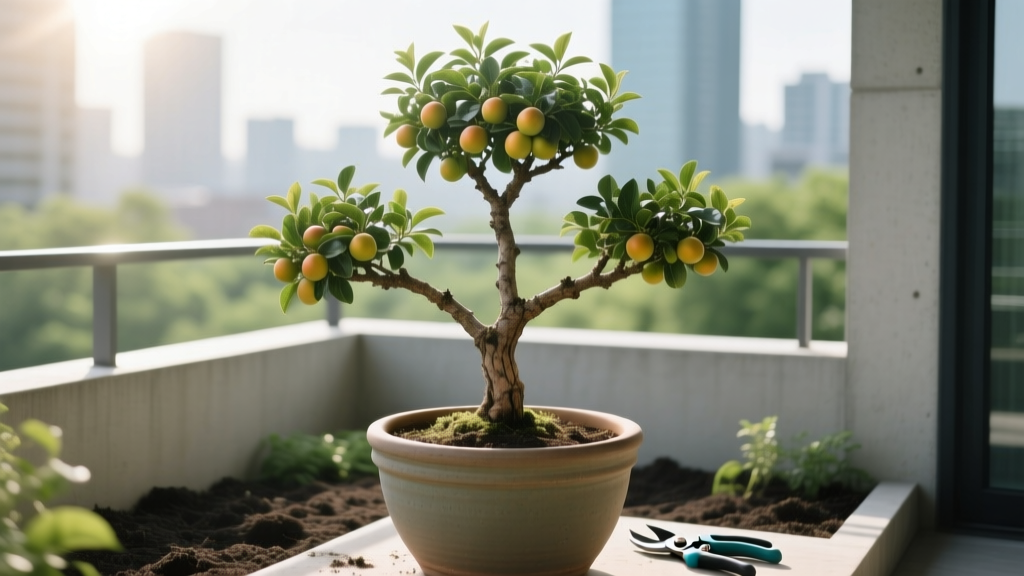
Potted Fruit Trees 2026: Open Center vs Central Leader Pruning
Mike RodriguezPublished
Introduction to Container Fruit Tree Pruning in 2026
Container and pot gardening has evolved dramatically over the last few years, and as we navigate the 2026 growing season, urban homesteaders and patio gardeners are achieving unprecedented fruit yields in small spaces. Growing fruit trees in pots requires a deep understanding of spatial limitations, root-to-shoot ratios, and precise canopy management. When cultivating dwarf and semi-dwarf fruit trees in containers, the two dominant architectural training methods are the Central Leader and Open Center (or vase) pruning systems. Choosing the right system for your specific potted tree species is critical for maximizing sunlight penetration, air circulation, and ultimately, fruit production.
Unlike orchard trees with sprawling root systems, potted fruit trees rely on a restricted root zone. This means every ounce of energy the tree produces must be carefully directed. Improper pruning can lead to excessive vegetative growth, snapped branches under the weight of fruit, or a complete failure to produce a harvest. In this comprehensive 2026 guide, we will break down how to successfully apply both the open center and central leader pruning systems to your container-grown fruit trees.
The Science of Root-to-Shoot Ratio in Pots
Before making a single cut with your pruners, it is vital to understand the root-to-shoot ratio. According to the University of Minnesota Extension, pruning directly impacts the balance between a tree's root system and its canopy. In a 15- to 25-gallon container, the root mass is physically capped. If you allow the canopy to grow too large, the restricted roots cannot supply adequate water and nutrients, leading to fruit drop, stunted growth, and increased susceptibility to pests like spider mites and aphids.
By utilizing structured pruning systems like the central leader or open center, you artificially maintain this balance. Pruning removes excess wood, reducing the tree's overall water demand while stimulating the growth of fruiting spurs in the remaining branches. In 2026, modern air-pruning fabric pots and advanced dwarfing rootstocks (such as Geneva 41 for apples and Gisela 5 for cherries) make this balance easier to achieve, but they still require strict adherence to proven pruning architectures.
The Central Leader System for Potted Trees
The central leader system mimics the natural shape of a Christmas tree, featuring one dominant, upright main trunk (the leader) with lateral branches spiraling outward at uniform intervals. This system is ideal for potted fruit trees that naturally exhibit an upright growth habit and bear fruit on spurs.
Best Species for Central Leader in Containers
- Apples: Especially columnar varieties (e.g., 'Scarlet Sentinel', 'Northpole') or dwarf apples on Malling M9 rootstock.
- Pears: Dwarf European pears grafted onto Quince rootstock.
- Sweet Cherries: Dwarf varieties on Gisela rootstocks.
How to Prune a Potted Central Leader Tree
When training a young potted apple or pear tree to a central leader, your primary goal is to protect the main vertical trunk. If a competing lateral branch attempts to grow vertically and challenge the leader, it must be removed or bent downward. According to Penn State Extension, maintaining a single dominant leader ensures structural integrity, which is crucial for potted trees that might be subjected to wind tipping.
- Establish the Leader: Select the strongest, most upright shoot as your central leader. Do not cut the tip of this leader during the growing season; allow it to grow to the top of your container support trellis or cage (usually 6 to 8 feet for patio trees).
- Select Scaffold Branches: Choose 3 to 4 lateral branches spaced evenly around the trunk (like the spokes of a wheel) and vertically separated by 4 to 6 inches.
- Angle Management: Use wooden clothespins or soft twine to spread these lateral branches to a 45-to-60-degree angle from the trunk. This wide crotch angle slows vegetative growth and encourages early fruiting.
- Thinning: Remove any branches that grow inward toward the trunk or cross over one another. Keep the lower canopy slightly wider than the upper canopy to ensure sunlight reaches all leaves.
The Open Center (Vase) System for Potted Trees
The open center system, often called the vase shape, involves removing the central leader entirely to create a hollow center with 3 to 4 main scaffold branches radiating outward. This system is highly recommended for stone fruits, which are prone to fungal diseases in humid, shaded centers and naturally prefer a spreading habit.
Best Species for Open Center in Containers
- Peaches and Nectarines: Dwarf patio varieties like 'Bonanza' or 'Elberta Queen'.
- Plums: Japanese plums like 'Santa Rosa' or 'Methley'.
- Apricots and Almonds: Dwarfing selections suited for large half-barrels or 20-gallon smart pots.
How to Prune a Potted Open Center Tree
Creating an open center in a container requires aggressive early pruning to force the tree to abandon its natural apical dominance. The Old Farmer's Almanac notes that stone fruits require this open architecture to allow sunlight to reach the inner wood, which is essential for ripening fruit and preventing brown rot.
- Head the Main Trunk: Upon planting your bare-root or potted nursery tree, cut the main central leader off at a height of 18 to 24 inches above the soil line. Make the cut at a 45-degree angle just above a healthy bud.
- Select Primary Scaffolds: The following spring, select 3 or 4 vigorous shoots that are growing outward in different directions. These will become your main scaffold branches. Remove all other shoots.
- Secondary Branching: In the second year, prune the tips of your scaffold branches to encourage lateral sub-branching. Always cut just above an outward-facing bud to force the new growth away from the center of the tree.
- Maintain the Vase: Every winter, ruthlessly remove any "water sprouts" (vigorous, perfectly vertical shoots) that grow up into the center of the vase. The center must remain completely open to the sky.
Comparison Chart: Open Center vs. Central Leader for Pots
| Feature | Central Leader System | Open Center (Vase) System |
|---|---|---|
| Ideal Species | Apples, Pears, Sweet Cherries | Peaches, Nectarines, Plums, Apricots |
| Tree Shape | Pyramidal / Christmas Tree | Vase / Bowl Shape |
| Container Size | 15-20 Gallon (Taller pots) | 20-25 Gallon (Wide-base pots for stability) |
| Sunlight Penetration | Good, if lower branches are wider | Excellent, due to hollow center |
| Wind Resistance | High (lower center of gravity if managed) | Moderate (top-heavy canopy requires staking) |
| Harvest Ease | Requires reaching up; use step stool | Very easy; fruit hangs down within reach |
Year-by-Year Pruning Guide for Container Trees
Managing a potted fruit tree is a multi-year commitment. Here is a streamlined timeline for establishing your chosen pruning system.
Year 1: Establishment and Structure
Winter: Plant the tree in a high-quality, well-draining potting mix (avoid heavy garden soil). For central leader trees, stake the main trunk to a bamboo or fiberglass pole to ensure perfectly vertical growth. For open center trees, make the initial heading cut to 24 inches to force lateral branching.
Summer: Perform "pinching." When new lateral shoots reach 12 inches, pinch off the soft growing tip. This halts vegetative extension and forces the branch to thicken and develop fruiting buds.
Year 2: Scaffold Selection and Spreading
Winter: Prune away any dead, diseased, or crossing branches. For central leaders, ensure the lowest scaffold branch is the longest, and each subsequent tier is slightly shorter. For open center trees, head back your 3-4 main scaffolds by one-third to an outward-facing bud.
Summer: Thin out excess fruit. Potted trees cannot support a full crop in their second year. Leave one fruit every 6 to 8 inches to prevent branch breakage and root exhaustion.
Year 3 and Beyond: Maintenance and Renewal
By year three, the architecture is set. Transition to maintenance pruning. Remove no more than 20% of the live canopy each winter. In the summer, focus on thinning water sprouts and managing the height of the tree so it remains manageable for your patio or balcony space.
Essential Tools and Sanitation Protocols for 2026
Because potted trees are essentially a closed ecosystem, diseases can spread rapidly through contaminated tools. Always keep your pruning gear sharp and sterile.
- Bypass Pruners: Invest in a high-quality pair of ratcheting bypass pruners. Ratcheting mechanisms, which have become highly refined in 2026 models, reduce hand fatigue when making repetitive cuts on dense fruit tree wood.
- Sanitization: Wipe your blades with a 10% bleach solution or 70% isopropyl alcohol between every single tree. This prevents the spread of bacterial canker and fire blight.
- Wound Sealant: While generally discouraged for large orchard trees, applying a thin layer of grafting wax or pruning sealant to large cuts (over 1 inch in diameter) on potted stone fruits can help prevent borers and fungal spores from entering the heartwood in humid patio environments.
Conclusion
Successfully growing fruit trees in containers requires more than just adequate watering and fertilization; it demands architectural precision. By selecting the central leader system for your potted apples and pears, and the open center system for your patio peaches and plums, you align the tree's natural growth habits with the physical limitations of a pot. As you head into the 2026 pruning season, remember that every cut is a directive to the tree. Maintain the root-to-shoot balance, keep your tools sterile, and enjoy a bountiful, space-efficient harvest right on your patio.
