Gardening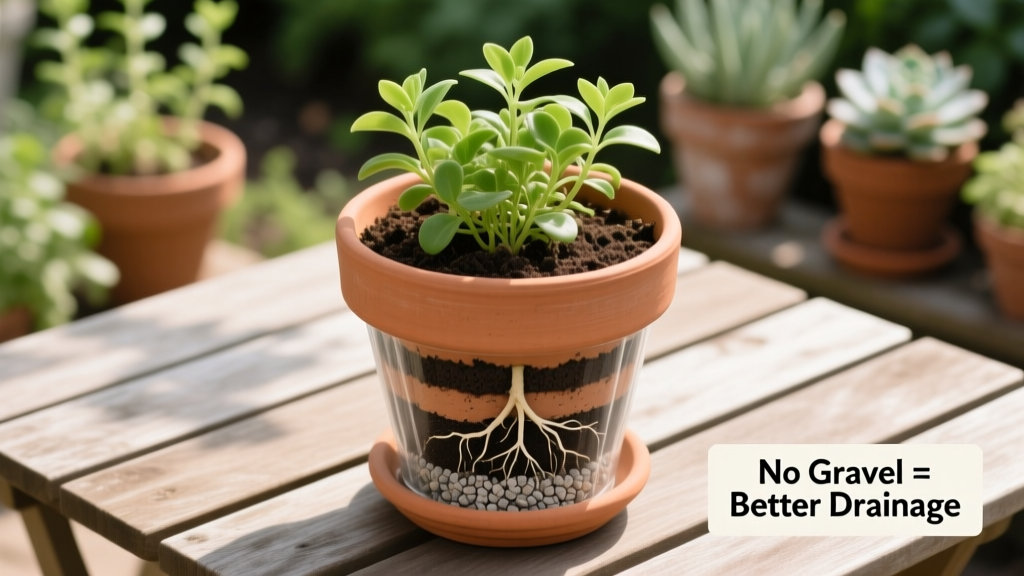
Container Gardening Myths: Gravel, Drainage, and Soil Facts
Mike RodriguezPublished
Introduction: Separating Garden Fact from Fiction
Container gardening is one of the most accessible and rewarding ways to grow vegetables, herbs, and ornamental flowers, especially for those with limited yard space. However, the internet and old gardening almanacs are flooded with well-meaning but scientifically inaccurate advice. Following these outdated myths can lead to stunted growth, root rot, and wasted money. As a gardener, understanding the physics of soil and water is crucial for cultivating a thriving container garden. In this comprehensive guide, we will bust the most pervasive container gardening myths, explore the science of soil drainage, and provide actionable, science-backed strategies to ensure your potted plants flourish all season long.
Myth 1: Adding Gravel to the Bottom of Pots Improves Drainage
This is arguably the most persistent and damaging myth in the gardening world. For decades, gardeners have been told to place a layer of rocks, gravel, or broken pottery shards at the bottom of a container to 'improve drainage' and prevent root rot. In reality, this practice does the exact opposite.
The Science of the Perched Water Table
Water movement in soil is governed by capillary action. Water moves more easily through fine-textured materials (like potting soil) than it does through coarse-textured materials (like gravel). When you place a layer of gravel at the bottom of a pot, the water will not cross the boundary from the soil into the gravel until the soil is completely saturated. This creates what soil physicists call a 'perched water table.' Instead of draining away, the water pools at the soil-gravel interface, effectively moving the anaerobic, waterlogged zone higher up into the pot and directly into your plant's root zone. According to The Garden Professors, a highly respected group of university extension agents, adding drainage material to the bottom of containers actively harms plant health by reducing the volume of usable soil and suffocating roots.
Actionable Advice: Fill your containers from top to bottom with a single, high-quality, well-draining potting mix. If you have a very deep decorative pot and want to save on the cost of soil, place an inverted plastic nursery pot or a layer of empty, crushed plastic bottles in the bottom to take up space, ensuring the soil above remains uniform and well-aerated.
Myth 2: Garden Soil is a Suitable Base for Container Mixes
Another common misconception is that you can simply dig up soil from your backyard, mix it with a little compost, and use it to fill your containers. While garden soil might be perfectly fine for in-ground raised beds, it is a recipe for disaster in pots.
Understanding Pore Space and Compaction
In the ground, earthworms, freezing and thawing cycles, and deep root systems constantly aerate the soil. In a confined container, garden soil quickly compacts under the weight of repeated waterings. This compaction destroys the 'macropores'—the large air pockets that roots need to breathe. Furthermore, garden soil often harbors soil-borne pathogens, fungal spores, and weed seeds that can devastate a closed container environment. The Texas A&M AgriLife Extension strongly advises against using native topsoil in containers due to its poor drainage and tendency to form a hard, impermeable crust on the surface when dry.
Actionable Advice: Always use a dedicated 'potting mix' or 'container mix' rather than 'garden soil' or 'topsoil' sold in bags. Potting mixes are soilless and rely on ingredients like peat moss, coco coir, pine bark, and perlite to maintain a light, fluffy structure that retains moisture while allowing excess water to drain freely.
Myth 3: Terracotta Pots Are Universally the Best Choice
Terracotta (unglazed clay) pots are beautiful and traditional, leading many to believe they are the superior choice for all plants. While they do offer excellent aeration, their porous nature is not always beneficial.
Moisture Wicking and Temperature Fluctuations
Because terracotta is porous, it wicks moisture out of the soil and evaporates it into the air. In hot, dry, or windy climates, this means you may need to water your container plants twice a day to prevent them from wilting. Additionally, the wicking action pulls dissolved fertilizer salts to the outside of the pot, which can build up and burn the roots of sensitive plants. Conversely, plastic and glazed ceramic pots retain moisture much longer, making them ideal for water-loving plants or hot climates. Fabric pots (like Smart Pots) offer a middle ground; they air-prune roots to prevent circling but dry out incredibly fast.
Container Material Comparison Chart
| Material | Moisture Retention | Weight | Best Used For | Relative Cost |
|---|---|---|---|---|
| Terracotta (Unglazed) | Low (Wicks moisture) | Heavy | Succulents, cacti, Mediterranean herbs | Medium |
| Plastic / Resin | High (Non-porous) | Lightweight | Tropicals, vegetables, hot climates | Low |
| Glazed Ceramic | High (Sealed) | Very Heavy | Statement plants, moisture-lovers | High |
| Fabric (Grow Bags) | Very Low (Evaporates) | Lightweight | Root crops, tomatoes, air-pruning | Low |
Myth 4: More Fertilizer Equals a Bigger Harvest
Container plants rely entirely on the nutrients you provide, which leads many gardeners to over-fertilize in an attempt to boost yields. However, excess fertilizer does not create larger plants; it creates toxic soil conditions.
The Danger of Salt Buildup
Most synthetic and even many organic fertilizers are salt-based. In a container, these salts cannot leach deep into the earth as they would in a garden bed. Over time, they accumulate in the potting mix, altering the osmotic pressure and making it impossible for roots to absorb water—a condition known as 'fertilizer burn.' Symptoms include brown, crispy leaf margins and stunted growth. The University of Minnesota Extension recommends regular leaching to prevent this issue.
Actionable Advice: Use a slow-release granular fertilizer (such as Osmocote or Espoma Garden-tone) mixed into the soil at planting time, which feeds the plant gradually over 3 to 4 months. If you use liquid fertilizers (like Miracle-Gro or fish emulsion), apply them at half the recommended strength every two weeks. Once a month, 'flush' your containers by pouring water equal to twice the volume of the pot through the soil to wash away accumulated salts.
The Science-Backed DIY Potting Mix Recipe
Skip the expensive pre-bagged mixes and create your own premium, well-draining container soil. This recipe provides the perfect balance of water retention, aeration, and nutrition for vegetables and flowers.
- 2 Parts Coco Coir: A sustainable alternative to peat moss that holds moisture beautifully while resisting compaction. (Rehydrate a compressed brick first).
- 1 Part Coarse Horticultural Perlite: Provides essential macropores for oxygen and drainage. Do not substitute with vermiculite, which holds too much water.
- 1 Part Vermicompost (Worm Castings):strong> Adds a gentle, microbially rich source of nutrients and improves soil structure without the risk of burning roots.
- Amendments: For every 1 gallon of mixed soil, add 1/4 cup of a balanced, organic granular fertilizer (e.g., a 4-4-4 or 3-4-4 NPK ratio) and 1 tablespoon of garden lime to buffer the pH of the coco coir.
Mix these ingredients thoroughly in a wheelbarrow or large tote before filling your pots. This ensures an even distribution of nutrients and prevents dry pockets of coir.
Final Actionable Takeaways
Successful container gardening relies on physics and biology, not old wives' tales. By abandoning the gravel drainage myth, avoiding garden soil in pots, selecting the right container material for your specific climate, and managing fertilizer salts, you set the stage for a vibrant, high-yielding garden. Remember that the foundation of any great potted plant is its root zone; protect it with uniform, high-quality potting mix, and your plants will reward you with vigorous growth and abundant blooms season after season.
