Tree Care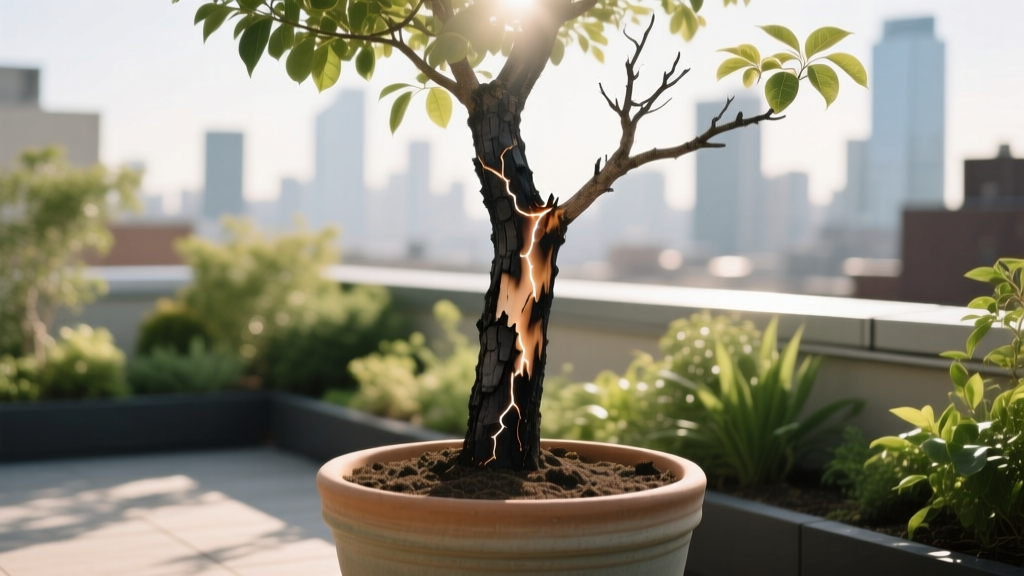
Container Tree Lightning Strike Recovery Guide 2026
Anna KowalskiPublished
The Unique Vulnerability of Potted Trees to Lightning
As urban gardening and rooftop landscaping continue to surge in popularity throughout 2026, more homeowners are cultivating large specimen trees in containers. From patio-grown Japanese maples and balcony citrus trees to massive rooftop olive trees, container gardening allows us to bring the forest into elevated and paved environments. However, this shift introduces a unique and often overlooked hazard: lightning strikes. While in-ground trees have massive root systems that help dissipate electrical charges deep into the earth, container trees are isolated, elevated, and confined. This makes their assessment and recovery process vastly different from traditional landscape trees.
When lightning strikes a potted tree, the electrical current travels down the trunk and hits the potting mix. Because the roots are confined within a relatively small volume of soil, the energy has nowhere to go but laterally. The intense heat generated by the electrical resistance can literally cook the root ball, boil the moisture within the soil, and cause catastrophic failure of the container itself. According to Penn State Extension, the rapid expansion of steam and sap is what typically causes the explosive bark shedding and trunk splitting associated with lightning damage. In a container, this same physics principle can shatter the pot and sever the entire root system in a fraction of a second.
Assessing the Damage: A Material-by-Material Breakdown
Before beginning any recovery care, you must assess both the tree and the container. The material of your planter plays a massive role in how the lightning charge behaves and what kind of collateral damage occurs. Below is a breakdown of how different 2026 container materials react to a direct or nearby strike.
| Container Material | Lightning Interaction | Typical Damage Profile |
|---|---|---|
| Terracotta / Ceramic | Absorbs moisture; rapid steam expansion | Catastrophic shattering, root exposure, soil displacement |
| Corten Steel / Aluminum | Highly conductive; channels current | Arcing to nearby metal furniture, localized root scorching |
| High-Density Polyethylene | Insulative but heat-sensitive | Melting, structural warping, toxic chemical leaching into soil |
| Fiberglass / Composite | Variable conductivity | Delamination, cracking, internal resin blistering |
| Wood (Cedar / Teak) | Splinters along the grain | Vertical splitting, structural compromise, fire risk |
If your tree is housed in a metal planter, exercise extreme caution. Even hours after a storm, residual static charges or compromised grounding wires on a rooftop deck can pose a shock hazard. Always wear thick, insulated gardening gloves and use a non-conductive wooden dowel to probe the soil before touching the tree trunk.
Step-by-Step Recovery Protocol for Container Trees
Recovering a lightning-struck potted tree requires patience and a departure from standard in-ground arboriculture practices. Because container trees have limited energy reserves and restricted root zones, aggressive interventions can actually hasten the tree's decline. Follow this step-by-step protocol to give your tree the best chance of survival.
Step 1: Wait and Observe (The 14-Day Rule)
Immediately following a strike, the tree will be in a state of severe hydraulic shock. Do not prune, do not fertilize, and do not attempt to repot the tree within the first two weeks. The TreesAreGood.org guidelines emphasize that immediate pruning of scorched branches can expose the tree to secondary pathogens before its natural compartmentalization processes have begun. Simply keep the soil consistently moist—but not waterlogged—and observe where the dieback lines form.
Step 2: Root Ball Extraction and Triage
Unlike in-ground trees, you have the unique advantage of being able to inspect the entire root system. After the initial observation period, gently slide the root ball out of the container. Inspect the roots for necrosis (dead, blackened, or mushy tissue). If more than 40% of the root mass has been thermally damaged or cooked by the electrical charge, the tree is unlikely to survive, and resources should be redirected to replacement. If the root ball is mostly intact, use a sterile, sharp hori-hori knife to carefully excise any visibly melted or blackened roots.
Step 3: Repotting with Biochar and Mycorrhizae
Lightning strikes fundamentally alter the soil chemistry, often sterilizing the potting mix and destroying beneficial microbial life. In 2026, the gold standard for post-strike repotting involves using a high-quality, well-draining potting mix heavily amended with biochar and mycorrhizal fungi. Biochar acts as a porous refuge for beneficial bacteria and helps buffer the soil against sudden pH swings, while mycorrhizal inoculants will rapidly colonize the surviving roots, artificially expanding their ability to uptake water and nutrients. Avoid using any synthetic, high-nitrogen fertilizers during the first year of recovery, as this will force the tree to push vulnerable new canopy growth at the expense of root regeneration.
Step 4: Precision Canopy Pruning
Once the 14-day observation window has passed, the dead branches will become obvious. The leaves will turn crisp and brown, while living branches will retain flexible, green cambium tissue under the bark. Using sterilized bypass pruners, make clean cuts just outside the branch collar. Do not apply wound sealants or pruning paints; modern arboriculture has proven these products trap moisture and encourage fungal rot, which is especially lethal to stressed container trees.
Advanced 2026 Monitoring and Hydration Techniques
Water management is the most critical factor in lightning strike recovery. The tree's vascular system (the xylem and phloem) has likely suffered internal cavitation or physical tearing. This means the tree struggles to pull water from the soil to the canopy, even if the soil is wet.
To manage this, leverage modern smart-gardening technology. Utilizing Bluetooth-enabled soil moisture and electrical conductivity (EC) probes allows you to monitor the exact hydration levels deep within the root ball without disturbing the soil. Insert a smart probe halfway down the root zone and set your mobile app alerts to notify you when the soil moisture drops below 30%. When watering, use a liquid kelp or humic acid drench. These organic biostimulants help reduce plant stress hormones and encourage new root hair formation without the burning risk associated with traditional NPK fertilizers.
Prevention: Grounding Elevated and Rooftop Gardens
If you maintain a rooftop garden or an elevated balcony with large, prized container trees, prevention is far cheaper and more emotionally rewarding than recovery. In 2026, landscape architects frequently integrate localized lightning protection systems into hardscapes. For large, permanent planters, consider installing a copper grounding rod that penetrates deep into the soil of the planter, connected via a thick copper wire to the building's primary grounding grid or a dedicated grounding plate on the patio surface.
Additionally, consider the placement of your pots. Avoid placing tall, potted trees near metal railings, HVAC units, or rooftop antennae that might attract a strike and arc into the soil. If a severe convective storm is forecasted, smaller container trees should be temporarily relocated to a sheltered, interior courtyard or a garage to eliminate their exposure entirely.
When to Call a Certified Arborist
While container trees are smaller and more manageable than towering landscape oaks, they can still pose significant hazards if a strike has compromised their structural integrity. If your potted tree is leaning, if the main trunk exhibits deep, spiraling cracks, or if the tree is located in a high-traffic pedestrian area, contact a Certified Arborist immediately. They can perform advanced resistance drilling to determine if the hollowed-out trunk can support the canopy's weight, ensuring your beautiful container garden remains a safe haven for years to come.