Lawn Care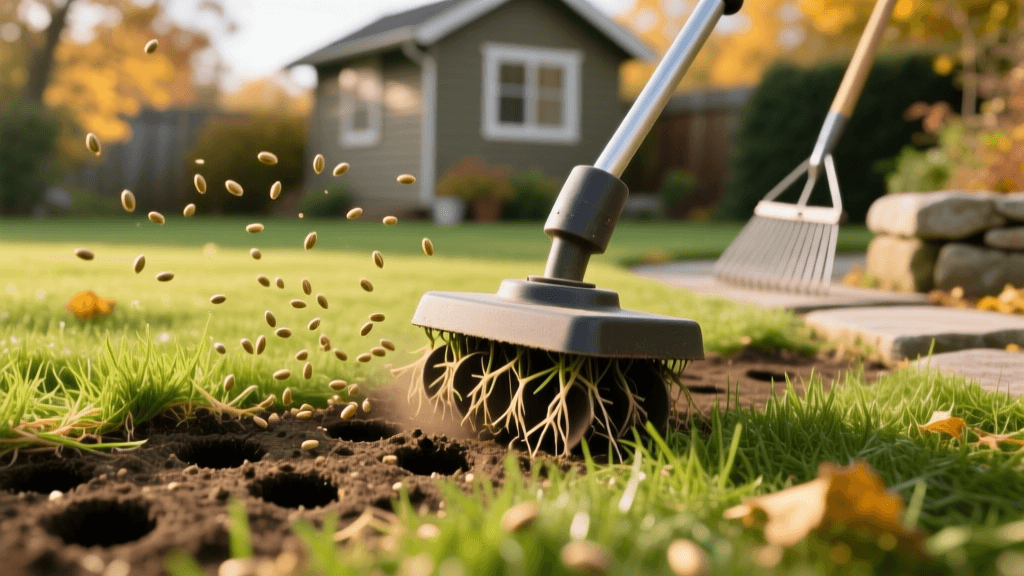
How to Core Aerate and Overseed Your Cool-Season Lawn
Why Fall is the Ultimate Time for Cool-Season Lawns
Cool-season grasses—Kentucky Bluegrass, Tall Fescue, and Perennial Ryegrass—struggle through hot summer months. By late August, your lawn may feel hard underfoot, look patchy, or hold too much thatch. That’s why fall works so well for renovation: the soil is still warm, air temperatures are milder, and weeds aren’t as aggressive. Core aeration and overseeding in fall gives new grass time to settle in before winter, leading to thicker, greener turf next spring.
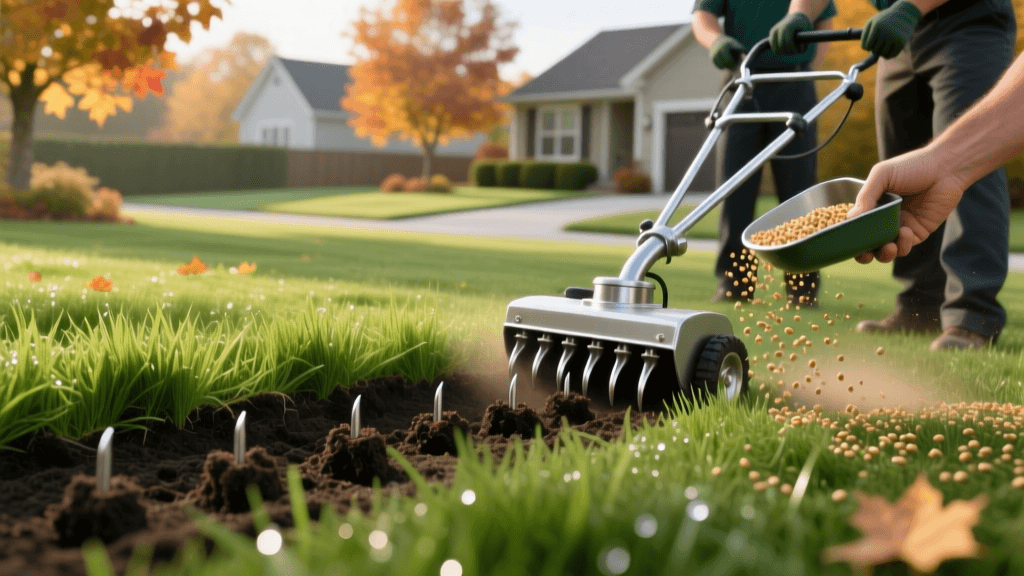
Core aeration pulls small plugs of soil from the lawn. This eases compaction, helps water soak in, and lets oxygen reach the roots. When you overseed right after, the seeds drop into those holes—making good contact with soil, holding moisture, and sprouting more reliably. Here’s how to do it, step by step, with gear suggestions and timing tips.
Tools and Materials Checklist
Gather what you’ll need first. Most items are available at hardware stores or rental centers.
- Core Aerator: Rent a walk-behind model (like Billy Goat or Ryan Lawnaire). Half-day rentals usually cost $80–$120. Skip spike aerators—they press soil down instead of loosening it.
- Grass Seed: A clean, high-quality cool-season blend with low weed content.
- Starter Fertilizer: One with extra phosphorus (e.g., 10-18-10) to help roots grow. Scotts Turf Builder Starter Food for New Grass is a solid pick.
- Broadcast Spreader: To spread seed and fertilizer evenly.
- Soil Thermometer: To check actual soil temperature—not just air temp.
- Lawn Flags: To mark sprinkler heads, valves, and shallow lines.
- Compost (Optional): For light topdressing—around $30–$50 per cubic yard.
Step 1: Timing and Lawn Preparation
Aim for late August through mid-October, depending on where you live. You want daytime air temps between 60°F and 75°F, and soil temps between 50°F and 65°F. Stick your soil thermometer two inches deep to confirm.
Preparation Steps:
- Mark Hazards: Walk the yard and flag all sprinkler heads, valve boxes, and shallow utility lines so the aerator doesn’t hit them.
- Mow Low: Cut the grass to about 1.5–2 inches and bag the clippings. Bare soil helps the aerator tines go in cleanly and gives seed better access.
- Water Deeply: Two days before aerating, give the lawn about 1 inch of water. Soil should feel moist—not dry and dusty, not soggy. Dry soil blocks the tines; wet soil gums up the machine and tears turf.
Step 2: The Core Aeration Process
A walk-behind aerator handles like a heavy mower. Start at the edges and work in straight lines. For best coverage, go over the whole yard twice—once north-south, once east-west. You’ll pull around 20–40 plugs per square foot.
The plugs should be 2–3 inches deep and about half an inch to three-quarters of an inch wide. Don’t rake them up. Let them sit. Rain and regular mowing will break them down over a few weeks, adding organic matter and microbes back into the thatch.
Step 3: Selecting the Right Grass Seed
Good seed matters. Skip bargain bags from big-box stores—they often contain filler grasses and more weed seeds than advertised. Look for certified seed labeled with at least 90% germination and less than 0.1% weed seed.
| Grass Type | Seeding Rate (per 1,000 sq ft) | Germination Time | Best Use Case |
|---|---|---|---|
| Tall Fescue | 5 - 8 lbs | 7 - 14 days | High traffic areas, deep shade, and drought tolerance. |
| Kentucky Bluegrass | 2 - 3 lbs | 14 - 28 days | Full sun, lush appearance, and self-repair via rhizomes. |
| Perennial Ryegrass | 5 - 7 lbs | 5 - 10 days | Quick cover, erosion control, and high-wear sports turf. |
Pro Tip: If you’re filling in thin spots in an existing lawn, use the lower end of the seeding rate. For bare ground or full renovation, use the higher end.
Step 4: Overseeding and Starter Fertilizer Application
Seed and fertilize right after aerating—while the holes are open and fresh.
- Apply Starter Fertilizer: Set your spreader to match the instructions on the fertilizer bag. Spread evenly. Some states limit phosphorus unless you’re starting new grass or overseeding—keep your receipt and seed bag handy if someone asks.
- Spread the Seed: Adjust your spreader to the setting listed on the seed bag (e.g., 5.5 on a Scotts Whirl spreader for many Tall Fescue mixes). Walk steadily and overlap passes slightly to avoid bare stripes. For bare or damaged patches, sprinkle extra seed by hand.
- Topdress with Compost (Optional but Highly Recommended): A thin layer—about 1/4 inch—of screened compost helps cover seed, holds moisture, and adds organic matter. Use a leveling rake or the back of a push broom to gently work it into the aeration holes.
Step 5: The 21-Day Watering and Establishment Schedule
Watering is where most people slip up. Grass seed needs steady moisture until it’s rooted. Let it dry out even once in the first two weeks, and many seeds won’t make it.
The Post-Aeration Watering Schedule
- Days 1 to 14 (Germination Phase): Water 2–3 times a day for 5–10 minutes per zone. Keep the top inch of soil damp—not soaked. Early morning (6 AM), noon (12 PM), and late afternoon (4 PM) work well.
- Days 15 to 21 (Establishment Phase): Once new grass hits about 1 inch tall, water once a day for 20–30 minutes. This pushes roots deeper.
- Day 22 and Beyond (Maintenance Phase): Shift to deep, infrequent watering—about 1–1.5 inches per week, delivered in one or two sessions.
First Mow: Wait until the new grass reaches 3.5–4 inches. Sharpen your mower blade first—dull blades rip young shoots. Set the deck to 3 inches and never cut off more than the top third.
Guidelines and Expert Citations
University turf programs back these practices—and skip the guesswork. Penn State Extension recommends aerating when soil is moist and leaving the plugs on the surface to decompose naturally. Purdue Extension points out that fall overseeding avoids the crabgrass rush of spring, since soil is warm enough for grass seed but cool enough to slow down many weeds.
'Fall is the optimal time for cool-season lawn renovation. The combination of core aeration and overseeding in early September allows the turf to establish a robust root system before winter dormancy, resulting in a significantly denser canopy the following spring.' — Purdue University Turfgrass Science Program
Follow these steps, keep an eye on soil moisture, and you’ll get a lawn that handles summer heat and winter cold better than before. No shortcuts needed—just consistent care.